The problem at ColorTokens was almost embarrassingly ordinary. A cybersecurity company had a fast-changing product, enterprise trials ahead, and too much manual testing. In Zymr’s account, quality was falling short and checking the software was slowing the people building it. The next useful invention was a better way to find out what had broken.
- Zymr builds software and the infrastructure around it for businesses.
- Its concrete work spans security testing, healthcare connections, and retail forecasting.
- ZOEY and ZAIQA package parts of that expertise into AI engineering accelerators.
That assignment is a useful introduction to Zymr. Founded in 2012, the company now describes itself as an AI-native product engineering business. Its service menu covers cloud development, data engineering, design, automation, and operations. Read those categories quickly and they blur together. Follow an actual customer problem and the distinctions become much more interesting.
The tests were slowing the product
For ColorTokens, Zymr assembled an extensible framework using open-source tools and libraries. It automated checks at the interface and API layers and used containers to deploy and test the analytics cluster. The reported coverage reached 100 percent for APIs and streaming analytics, and 90 percent for the user interface.
Those figures describe automated coverage in this engagement. They do not mean the product became incapable of failure. The practical gain, according to Zymr, was more predictable releases and fewer regressions. A team could change its software with a clearer view of what the change had disturbed.
Five connectors, one larger idea
Consider a different customer, Mozzaz, a Canadian digital healthcare company. Its care platform needed to exchange information with electronic health records. That sounds like a connection problem. It is also a timing problem, a workflow problem, and a question of whether separate systems can evolve without constantly tripping each other.
Zymr reports building five EHR connectors, a workflow engine, and Azure-based analytics with Power BI reporting. The integration used microservices and rules-based components following HL7/FHIR standards. A visual workflow designer let people arrange the steps. Testing included a simulated EHR before real-world integration.
The detail worth borrowing is that last one. You can rehearse a connection before entrusting it with a live workflow. In Zymr’s description, loosely coupled components also allowed the core cloud platform and orchestration layer to evolve independently. For a buyer, that turns architecture into a practical question: how much must change when one neighboring system changes?
A forecast needs a supply chain
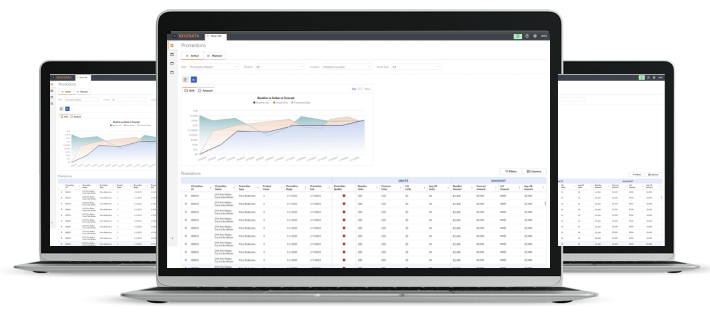
The same pattern appears in retail. An unnamed New York decision-science business wanted a platform to predict item sales and evaluate promotions. The assignment required a useful relationship between historical information, business expectations, and a forecast someone could act upon.
Zymr describes an Azure-hosted solution with an ingestion pipeline and SQL storage for raw, engineered, and curated datasets. Its team worked with business stakeholders on the model. Classification separated items by sales behavior; forecasting included ARIMA, an established time-series method. The machinery surrounding the prediction received as much attention as the prediction itself.
There is something refreshing about ARIMA appearing inside an AI portfolio. It encourages a sensible reading of the company’s expertise: choose techniques that fit the problem, then make the data and delivery reliable enough to use them. An expensive model cannot negotiate with a missing dataset.
Turning the tools into accelerators
Zymr’s newer offerings move some of this engineering into reusable tools. In March 2025 it introduced ZOEY, short for Zymr Orchestration Engine for Agentic AI. The framework is intended to connect language models, enterprise knowledge, and tools so agents can carry out multi-step work.
The current product page describes a visual workflow builder, API connections, audit logs, policy controls, and live monitoring. Suggested applications include support, onboarding, and finance workflows. These are advertised capabilities and proposed uses. They give buyers specific things to examine during a demonstration.
“Short-term pilots can show promise, but without the right architectural foundation, they rarely scale.”
Jay Kumbhani / April 2026 company update
ZAIQA takes aim at testing. Zymr describes it as an agentic platform that generates web tests from recorded interactions and API tests from OpenAPI specifications. It also advertises test maintenance, prioritization, and reporting. There is a recognizable thread connecting this offering to the earlier ColorTokens engagement: reducing the repeated labor around changing software.
The leadership biographies help explain the emphasis. Founder and CEO Haresh Kumbhani leads solution architecture and technology strategy; his background includes software product work at Cisco, Qualcomm, and Novell. Co-founder Ashok Desai is now listed as a board advisor. The company presents a team formed around enterprise systems, where integration and release discipline are familiar obligations.

The handoff is part of the product
The business remains rooted in engineering services. Customers hire Zymr to build, modernize, and operate software; its accelerators sit alongside that work. AWS, Salesforce, and Databricks partnerships extend the platforms it works with. A March 2025 announcement added services for enterprises establishing technology capabilities in India.
This puts Zymr in a crowded market alongside internal engineering departments and external development partners. Its case for consideration rests on combining application work with data, testing, and cloud operations. For customers whose bottleneck crosses those boundaries, a team that can follow the problem through the stack has an intelligible appeal.
The approach also has conditions. A small, standard workflow may be cheaper to buy as existing software. A custom engagement needs access to the relevant systems, usable data, and someone responsible for the result after delivery. Those are sensible buying tests, rather than promised outcomes.
The retail case suggests another buying discipline: bring the business owner into the engineering conversation early. Zymr says its data scientists developed the forecasting model in consultation with stakeholders. A forecast has to answer a business question before its technical accuracy becomes useful. Deciding which decision the forecast will change belongs in the brief, alongside the choice of cloud.
For an engineering supplier, the commercial test is equally concrete. Separate the initial build from the recurring work of running it. Ask who handles a failed integration, a changed API, or a model that needs retraining. These questions make competing proposals easier to compare because they describe responsibilities a customer will actually need.
A useful brief for Zymr would name the bottleneck, define an acceptance test, and assign operational ownership. Ask for a scoped quote covering implementation, infrastructure, and maintenance. Its culture page emphasizes retrospectives and early automation; the buyer can make that concrete by agreeing what will be measured at each review. Start with one troublesome workflow. Make it work. Then decide what deserves to grow.