The trouble at the textile retailer was a problem of agreement. The business had grown from a small shop on Chennai’s Ranganathan Street, opened in 1969. Now its stores, warehouses and headquarters needed to operate together. Instead, Zieta’s account describes disconnected systems, manual processes and inventory mismatches. The merchandise could move. The information had trouble keeping up.
- SAP is the machinery. Zieta implements, connects and supports it.
- The work crosses departments. Stock, purchasing, finance and HR have to fit together.
- Launch is a beginning. Training, maintenance and support carry on afterward.
One item on the retailer’s requirements list deserves a second look: centralizing the article master. This is the shared catalog that lets different parts of a retailer identify its merchandise consistently. It sounds like housekeeping. Yet the case puts it beside avoiding duplicate work and inventory write-offs. Before management can make a better decision, the departments have to agree on what they are counting.
The seam is the business
Zieta Technologies works at that seam. The Atlanta-based company implements and supports enterprise applications, particularly SAP. Its own history begins with professionals confronting supply-chain problems in 1999 and an early chemical-industry client. Its LinkedIn profile dates the company’s founding to 2001. The thread running through the story is operational: work out how a business functions, then give those functions a connected system.
That distinction matters when reading its product list. SAP Business ByDesign and SAP S/4HANA are SAP products. Zieta supplies the implementation, customization, integration and support around them. Think of the buying decision as two connected choices: which software fits, and which team can make it fit the way the organization needs to work.

Business ByDesign is its cloud ERP offering for midmarket companies and subsidiaries, connecting functions such as finance, purchasing and sales. Its S/4HANA practice addresses a broader enterprise suite, including manufacturing and supply-chain processes. Zieta also markets SAP customer-experience applications, Ariba for spend management and SuccessFactors for HR. These are different doors into the same commercial problem: departments that need to exchange usable information.
Its fashion offering gets more specific. Zieta describes bringing retail, wholesale and manufacturing into a common platform, with stock segmentation and allocation across channels. It also advertises a predictive engine. The attraction for a buyer is the attention to an industry’s working details. A garment business needs someone who understands assortment and stock allocation as well as someone who understands the software.
This places Zieta among SAP implementation consultancies and systems integrators. Its pitch emphasizes sector knowledge, custom connections and continued support. Its partner program adds another route to market: backend delivery and integration help for businesses managing their own customer relationships. The business model combines project work with ongoing services. Buyers are paying for people, configuration and operational responsibility around enterprise software.
A solar mission has purchase orders, too
The International Solar Alliance makes an instructive second example. Zieta’s published case describes an organization facing manual processes, insufficient IT infrastructure and missing workflow approvals. Its needs included managing member-state funds and grants, procurement and projects. A mission about energy still produces ordinary administrative questions. Who can approve an expense? Which project should carry it? Where is the record?
Zieta describes implementing Business ByDesign and SuccessFactors across the organization. The stated goals included common processes, clearer fund management and capacity for growing transaction volumes. Those are project objectives, rather than quantified savings. What makes the example useful is the specificity of the task: finance and procurement systems supporting an organization whose public purpose lies elsewhere.
After the cake comes Monday
A more tangible moment appears in INDIC EMS Electronics’ January 2025 announcement of its S/4HANA implementation. The customer thanked both its own employees and Zieta’s team. The accompanying photographs show a celebration, complete with cake. Enterprise software is usually discussed in diagrams. Here, briefly, it has faces.
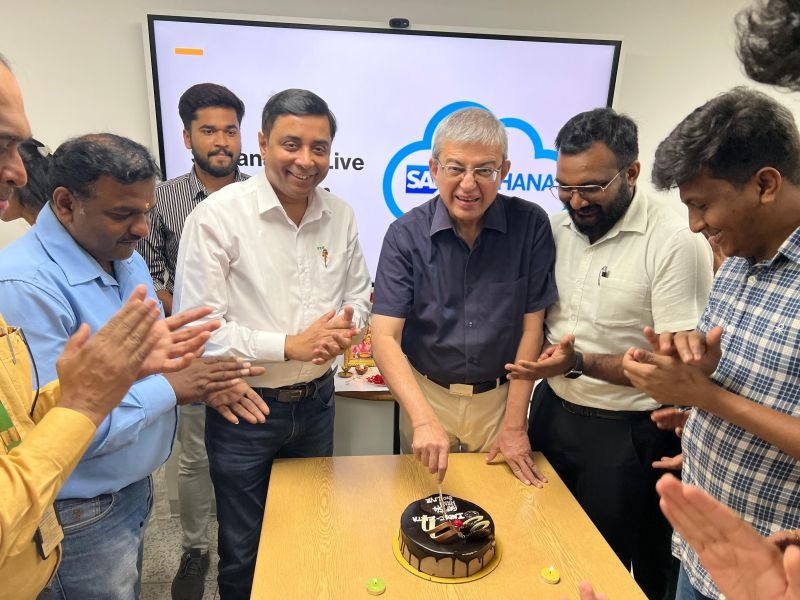
“Thrive after go-Live”
Zieta’s name for the part that follows the celebration.
The phrase appears in Zieta’s ByDesign support offering. Its services include continued training, enhancements and upgrades. Its managed-services practice lists monitoring, backup and recovery alongside functional and technical support. This is a useful way to evaluate an implementation business: look beyond the launch date to the responsibilities it accepts afterward. A company has to keep buying, selling and paying while its software evolves.
Customer praise is one part of that assessment. Zieta’s website carries testimonials attributed to Stonex India, CV Sciences and Hilti. The public record also contains a dispute: an April 2026 federal order records P.C. Richard & Son’s allegations of intentional fraudulent conduct against Zieta and named individuals. The order addresses jurisdiction and does not decide those allegations. That distinction matters when weighing the record.
Delivery also depends on consultants learning the business they are changing. Zieta describes investing in employee knowledge and wellbeing. Anonymous employee reviews offer a mixed, more everyday picture: opportunities to work on SAP projects and learn from colleagues, alongside complaints about payroll timing or busy project periods. Such accounts vary by person. They are a reminder that this business ultimately delivers through the people assigned to a customer’s project.

Start with one transaction
For a prospective customer, the practical exercise is to follow one transaction through the company. Start with a purchase or sale. Note every repeated entry, disputed definition and approval that depends on asking somebody in person. This is a lesson drawn from Zieta’s cases: describe the handoffs before drawing up the software shopping list.
Then make the proposal answer those problems. Ask who owns data cleanup, which integrations are included, how acceptance will be tested and who supports the first difficult month. Budget across software, implementation, migration, training and ongoing service. A cloud subscription still leaves work for the organization. Consistent data and clear process ownership are prerequisites; an integrated application cannot settle those decisions by itself.
The Chennai retailer’s article master is a useful place to end. A shared product record is a small, almost comically unglamorous ambition. But it offers a concrete test of the whole undertaking. When the store sells something, can the warehouse and finance team understand the same event? Zieta’s business is built around helping them answer together.