Consider a cinema ticket. To the person buying it, the transaction ends with a seat number. To the business selling it, the transaction has barely begun. There is a screening to schedule, a customer to recognize, food to sell, inventory to replenish and money to reconcile. The movie lasts two hours. The administrative consequences have a longer run.
Savantis Solutions works in those connections. The SAP systems integrator builds and supports the software that carries information between customer activity and business operations. Its cinema work makes a usually abstract proposition unusually visible: the website, the popcorn counter and the finance department need a shared account of what happened.
- The work: SAP implementation, customer experience, analytics, cloud operations and support.
- The useful example: cinema software connecting ticketing, concessions, loyalty and back-office processes.
- The buying question: does your operational complexity justify the integration effort?
One ticket, many departments
Savantis’s Intelligent Entertainment Suite, or IES, extends SAP Commerce and Marketing into the particulars of running a venue. The company describes more than 25 accelerators: packaged capabilities that supply industry functions around the underlying platform. A cinema needs more than an online shopping basket. It needs that basket to understand tickets, food, seats and showtimes.
The scope reaches from customer-facing commerce to venue operations and SAP S/4HANA back-office functions. Savantis’s published examples include kiosks, loyalty management, digital signage, kitchen displays, an usher application and inventory workflows. This is where specialization becomes tangible. A generic checkout can sell something. A cinema workflow has to know what happens when that something is a particular seat at a particular performance.
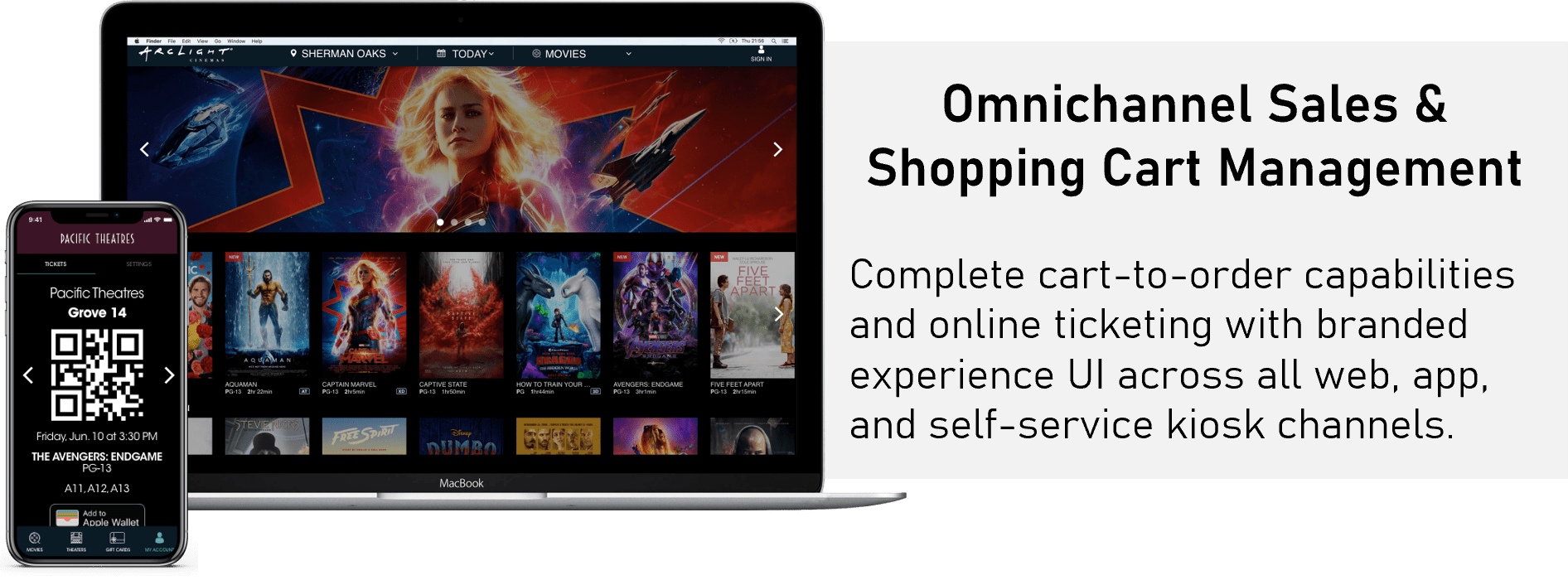
In the company’s 2020 brochure, Decurion executive Bryan Ungard described the operational benefit in plain terms:
“We’ve gained immeasurable insight into all aspects of our business.”
Bryan Ungard · The Decurion Corporation · 2020 product brochure
Two businesses, one name
The company’s shape helps explain that ambition. Its lineage runs through Vedicsoft, founded in 1999, whose work included staffing and business intelligence. In December 2017, Vedicsoft acquired Savantis Group, adding SAP expertise, and announced that the combined business would use the Savantis name. The deal brought delivery resources and specialist applications work together.
The acquisition announcement described more than 500 employees and 230 customers across five continents. Those are historical figures, but they reveal the intended market: organizations needing specialist knowledge with delivery capacity across borders. Today, Savantis explicitly positions itself as an alternative to larger systems integrators. That is its competitive pitch; a buyer still has to test the proposed team and scope.
- 01CustomerDiscover · book · buy
- 02VenueAdmit · serve · fulfill
- 03Back officeCount · reconcile · plan
The rollout meets the outside world
The cinema story also contains a useful interruption. In a September 2021 CinemaCon interview, then-CEO Keith Hontz said Savantis had been replacing Vista at five of ArcLight and Pacific’s eighteen cinemas when the pandemic arrived. The account describes a rollout disrupted by circumstances outside the software. It offers no basis for calling the entire deployment complete.
Price mattered, too. A December 2020 trade review reported an SAP App Center starter listing of $75,000 per site annually. That historical figure is no current quote, and it cannot establish a project’s total implementation cost. The same review said Savantis was considering an à la carte option for smaller operators. Packaging was under discussion while cinema budgets were under pressure.
There is a practical distinction here. An integrated platform can address complicated handoffs. An operator with simple requirements may have fewer handoffs worth rebuilding. The interview also acknowledged custom integration work when connecting IES to another vendor’s financial system. Compatibility still takes work, even when the brochure makes the finished experience look effortless.
The relationship after opening night
Cinemas are one expression of a broader services business. Savantis offers S/4HANA advisory, implementation and conversion, alongside customer-experience and analytics work. Its consulting portfolio includes data cleansing, custom development, security, organizational readiness and training. These are the less photogenic parts of enterprise change, and they help determine whether employees can use what has been installed.
Sports Basement provides a retail example. Savantis describes a relationship lasting more than a decade, covering back-office systems, store operations and mobile retailing, followed by AWS hosting, Basis administration and application support. The company also claims North America’s first S/4HANA Retail conversion. The longer relationship is the more instructive detail: implementation becomes an ongoing operating responsibility.
Commercially, the offer combines project work with continuing support. Cloud hosting, application maintenance and a 24-hour service desk keep Savantis involved after launch. Its staffing history needs precision: Futuris announced the purchase of a staffing operating unit in June 2022. That unit’s reported revenue belongs to that unit, rather than serving as a financial shorthand for all of Savantis.
The people side also carries a documented obligation. In 2020, Savantis agreed to $345,365 in restitution to resolve government allegations concerning H-1B wage and employment practices, with three years of outside monitoring. The Justice Department said the company cooperated and undertook compliance efforts. A services company’s operating record includes how it manages its workforce.
Start with a handoff
The most transferable idea is Savantis’s stated approach to capabilities: standardize core activities, accommodate critical local needs and concentrate distinctive work where it has business value. A buyer can put that principle to work before selecting software. Follow one transaction. List every department it touches. Record where someone copies information, waits for an answer or resolves a mismatch.
For a retailer, that exercise might begin with a return. The customer expects a refund; the business must also account for the item, its availability and the original payment. For a venue, start with a changed booking. These are illustrative buying exercises, rather than claims about a particular deployment. Their value is that they expose the places where a polished demonstration can skip over everyday friction.
Make the commercial comparison just as specific. Separate the platform, implementation, integration and continuing service responsibilities in each proposal. Ask who handles a failed interface and who trains the employee encountering the exception. A lower opening price tells you little if the proposals cover different work. Equally, an ambitious platform earns its place only when the organization has enough consequential problems for it to solve.
Then ask prospective partners to explain those specific handoffs, the migration work and the support responsibility after launch. Savantis’s appeal is easiest to assess at that level. The cinema example turns a sprawling technology proposition into an ordinary operational question: when the customer buys a ticket, does the rest of the business know what to do next?