Six people can carry a remarkable amount of responsibility. At Life is Good, the clothing retailer, a six-person IT team supported what its technology chief described in 2025 as a $170 million business. The company was moving its online operation from Salesforce to Shopify Plus. Somewhere between a customer buying a T-shirt and the business completing the transaction, the software had to agree.
- SAGE IT connects applications, automates work and manages the platforms afterward.
- Life is Good expanded a migration relationship into ongoing Boomi support.
- Its AI and integration trials put a defined scope around the first buying decision.
That last mile of agreement is SAGE IT’s territory. The Frisco company works across integration, automation, cloud, data, enterprise applications and technical staffing. Its current pitch includes AI agents. But the retailer’s experience supplies a more tangible introduction: a small internal team, a consequential migration and an outside specialist that stayed useful afterward.
Six people, a lot of handoffs
Life is Good already used Boomi, the platform that connects applications and their data. As the retailer grew and moved infrastructure into the cloud, its implementation needed attention. SAGE IT helped with the Shopify transition; the retailer subsequently secured a maintenance agreement for its expanding Boomi environment.
“So, when something breaks, we call them.”
David Lemaire · VP of IT, Life is Good
Lemaire also described help with smaller changes and observability: making workflow traces visible in a monitoring tool. Think of the difference between knowing a delivery is late and knowing precisely which depot has the parcel. An integration can exist on an architecture diagram while still being difficult to diagnose on a busy Tuesday.
The revealing decision was the second purchase. Work on a defined transition gave the retailer reason to buy continuing support. For a prospective customer, that is a useful question to bring to a reference call: what did you trust this supplier with after the original job?
The business inside the handoff
SAGE IT belongs to the systems-integration and IT-services market. Customers buy advice, implementation, migration, continuing operations or technical talent. Proprietary tools help deliver those engagements. The economic pattern is visible in the retailer’s story: a project can lead to a managed-services relationship.
Its MOST offering packages platform management, optimization, savings and transformation. Workforce services address a different decision: a customer may want people to join its own delivery effort. Cloud engineering and data work broaden the assignment further, from connecting applications to preparing the infrastructure and information they depend on.
Large integrators and specialist consultancies offer overlapping services. SAGE IT’s particular combination is its integration background, reusable migration tools and willingness to run the resulting systems. TIBCO lists it as a Gold Consulting Partner. Its Boomi practice covers implementation through ongoing management. That is evidence of relevant specialization; the fit still depends on the customer’s actual stack.
Start with the interface that hurts
A company-published tax-compliance case makes the problem concrete. Boomi interfaces slowed under load. Error handling varied between connections. Releases introduced instability. The business needed filing-critical workflows to stay on schedule, especially when transaction volumes climbed.
SAGE IT describes an assessment, a phased optimization plan, standardized retries and escalation paths, and checks before and after releases. It reports 50% faster integration performance and 30% fewer errors. Those are results from one anonymized engagement, not forecasts for every buyer.
A separate pediatric-healthcare case tackles financial handoffs. Dynamics 365 Business Central became the common ledger; Power Automate handled approvals and payroll-to-ledger synchronization. Azure access controls and logging supported oversight. SAGE IT reports 40% fewer manual financial errors.
The practical lesson travels beyond either product. Follow one transaction across the applications. Count the repeated entries. Look for inconsistent failure handling. Test at peak volume. A workflow that behaves politely during a demonstration may become a different creature during payroll or filing season.
Eight weeks to earn the next decision
SAGE IT has put a small, bounded purchase at the front of two complicated decisions. boomStrap targets four production interfaces in eight weeks on Boomi. Its advertised zero-cost language is tied to moving forward with the offering. Buyers should establish licensing, eligibility and subsequent delivery scope in the contract.
mAITRYx applies a similar structure to AI: discovery, use-case alignment, data preparation, a prototype, integration and handoff. The advertised customer commitment is two to four hours a week over eight weeks. That implies 16 to 32 hours of customer participation, before allowing for the realities of an individual engagement.
Discover → align → prepare data → prototype → integrate → hand off
2-4 customer hours per week · 16-32 hours across the trialThe copyable idea is the decision boundary. Before starting, agree what the prototype must demonstrate and who takes responsibility afterward. A successful mock-data exercise still needs validation against production data, access permissions and operational constraints. For a simple workflow with little maintenance burden, an external delivery engagement may be more machinery than the problem requires.
More places to pick up the phone
Founded in 2003, SAGE IT identifies Sagar Pelaprolu and Shiva Jasti as co-founders. Its delivery footprint includes India, where a Bengaluru hub announced in September 2025 joined operations in Hyderabad and Chennai. The announcement connected that expansion to global capability centers and round-the-clock support.
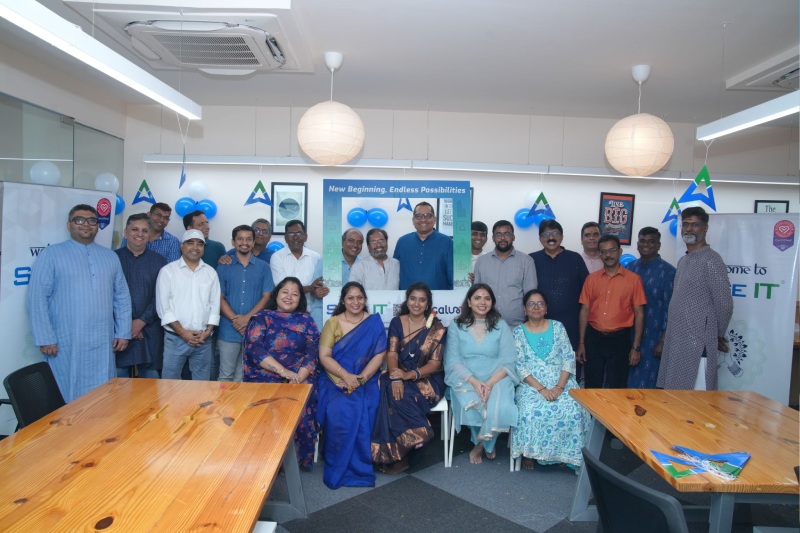
The people matter to this model. SAGE IT’s stated values emphasize employee development and collaboration, and its employee newsletter records leadership gatherings and community initiatives. A services company has to reproduce useful judgment across teams and time zones; an accelerator alone cannot answer the customer’s next question.
In August 2026, SAGE IT announced OpenAI Select Partner status, extending its enterprise-AI positioning. The interesting test will be familiar to anyone who has managed a migration: whether the new capability survives contact with existing applications, permissions and daily work. Life is Good’s six-person team offers a sensible buying standard. Get the connections working. Make them observable. Know whom to call.
Follow the connections
Website · LinkedIn · X · Instagram · Facebook
Company news · Articles and case studies
Watch the work
Life is Good customer conversation ↗
SHIP AI migration demo ↗
MOST platform-management demo ↗
Boomi + boomStrap demo ↗