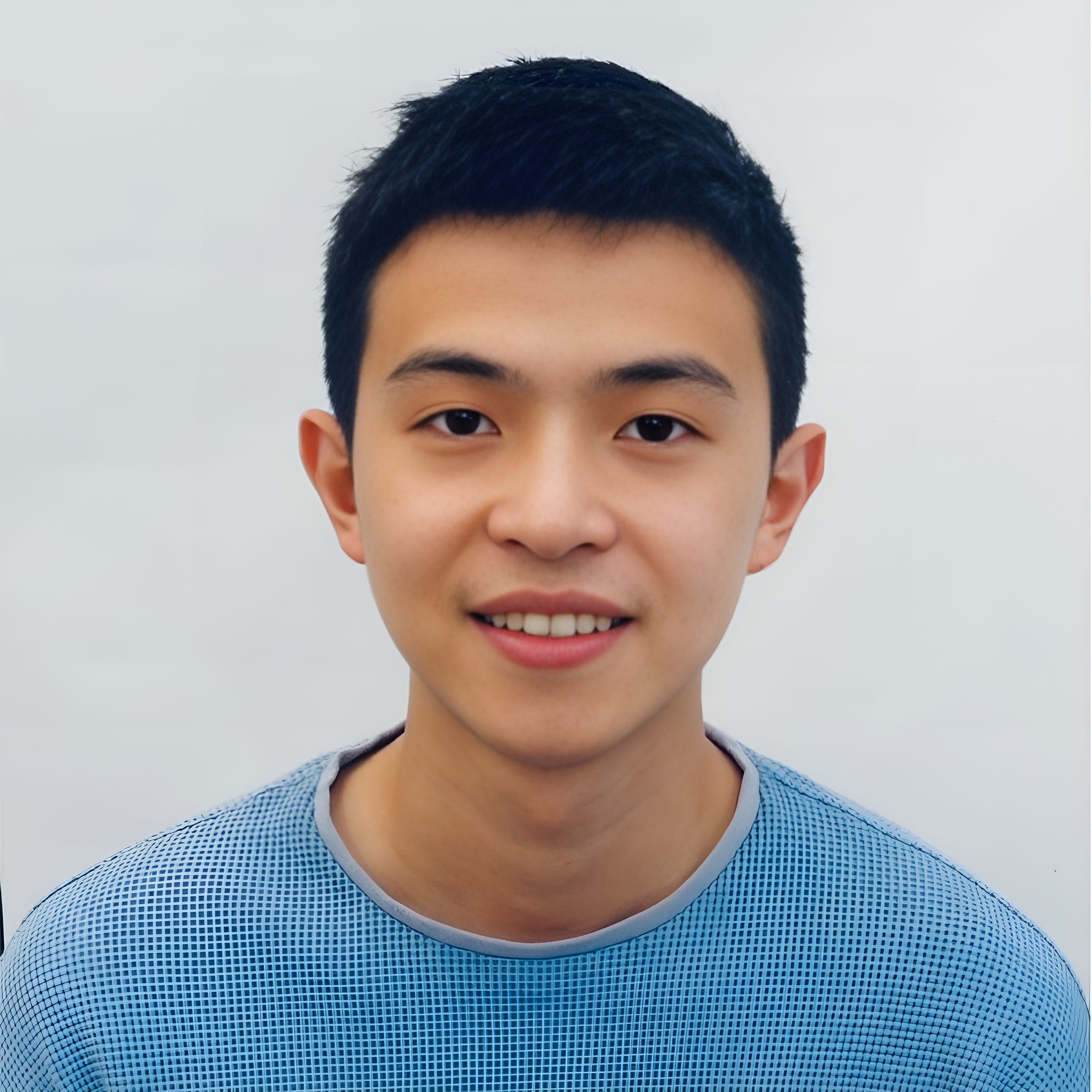
The Return Nobody Wanted to Own
In ecommerce, the return is the thing no one wants to talk about. Merchants hate them. Customers dread the friction. Carriers just count them. By 2020, online return rates had climbed past 30% in fashion categories, and the industry's collective answer was to either tighten return windows or eat the cost. Zack Peng looked at that situation and saw a mispriced risk - something any actuary, insurer, or options trader would recognize immediately as an opportunity.
The insight wasn't about logistics. It was about information asymmetry. At the moment a consumer clicks "buy," there's a probability - calculable, data-rich, historically precedented - that they will return that item. The merchant absorbs that probability as a silent liability. Peng's question: what if you priced it at checkout instead?
For example, with items like sneakers and jewelry, people will buy real items, and return fake ones. If this isn't taken care of, businesses will imminently see its end.
- Zack Peng, Founder & CEO, SeelPhilosophy, Physics, and the Theorem-to-Practice Gap
UNC Chapel Hill doesn't exactly churn out AI founders at scale. Peng studied philosophy and physics there - dual degrees in the two disciplines most concerned with first principles and rigorous proof. He describes his early career as an exercise in translating theorems into practical applications. His first role out of undergrad was at a vision company, where he applied that theorem-to-practice logic to real engineering problems.
From 2017 to 2020, he worked as a Core Software Engineer at Orbital Insight, a geospatial intelligence company that uses satellite imagery and AI to derive macro-level economic signals - think: counting cars in Walmart parking lots to estimate quarterly sales before the earnings call. The work required holding two things simultaneously: massive, ambiguous data and high-stakes business decisions. That is exactly the skill set that would define Seel.
Building Seel: Insurance as a Software Product
Seel launched in 2020 under the name Kover AI - a name that still lingers in old URLs and Facebook pages like the vestigial branding of a company that grew faster than its first instincts. The product concept was clean: let merchants offer extended return windows on otherwise non-returnable items - final-sale goods, custom products, items with tight policies - with Seel absorbing the refund liability.
The technical core is an AI underwriting engine that evaluates hundreds of data signals at the moment of purchase to calculate the probability of a return. It's not a static formula. It learns. It adjusts for category, merchant history, consumer behavior patterns, fraud signals, even seasonality. When you add return coverage at checkout on a Seel-integrated store, you're looking at a price that reflects a real-time risk calculation - not a flat fee.
The Fraud Problem Nobody Talks About Loudly
Most discussions of ecommerce returns focus on the logistics headache. Peng is more interested in the fraud layer beneath it. Sneakers and jewelry represent one of the clearest examples: buyers purchase authentic items, return counterfeits, and pocket the difference. This kind of return fraud isn't a fringe case - it's a structural vulnerability that compounds as brands scale. Seel's AI is trained to detect it before the refund processes.
The detection mechanism is signal-based: behavioral patterns, purchase history, item category risk profiles, timing anomalies. Peng frames it bluntly - if fraud isn't managed at the return layer, businesses that specialize in high-value authenticatable goods face an existential risk over time. Seel's value to merchants isn't just offsetting costs. It's protecting revenue integrity.
Return Assurance
Customers buy extended 30-day return windows on final-sale or non-returnable items. Seel covers the refund liability, merchants keep the sale.
AI Underwriting
Hundreds of data signals evaluated at the moment of purchase. Dynamic risk pricing per transaction, not flat fees. Fraud detection built into the model.
Delivery Guarantee
On-time delivery coverage with carbon offsetting baked in. Seel offset 250,000+ kg of CO2 in just the first half of 2024 through this program.
Lightspeed Trusts Twice
Getting Lightspeed Venture Partners to lead your Series A is meaningful. Getting them to come back and lead your Series B is a different signal entirely. Lightspeed led both rounds for Seel, joined by Foundation Capital, Afore Capital, West Loop Ventures, and Fox Ventures across the two fundraises.
The January 2022 Series A closed at $17M - a number that Lightspeed's Justin Overdorff described as the largest Series A in the U.S. insurance actuarial space at the time. The framing mattered. Seel wasn't being categorized as an ecommerce tool or a logistics startup. It was being underwritten as an insurance company with a software interface. The May 2025 Series B brought total raised to $29.12M, with 150 employees and a platform powering returns across DTC brands and multibillion-dollar marketplaces alike.
The Circular Economy Angle
Returns that get absorbed by Seel don't disappear into a landfill equation. Peng built a circular economy principle into the core product logic: every returned item gets individually inspected and routed to resale partners - eBay being one prominent channel - rather than being discarded or incinerated. The item stays in the commercial economy. The product lifecycle extends.
This isn't greenwashing copy. It's operationally load-bearing. The unit economics of Seel's insurance model improve when returned items retain resale value. The sustainability framing and the financial model point in the same direction. Peng's observation: second-hand sales happen with or without a brand's participation. Companies that recognize this early position themselves for a high-capitalization future in circular commerce.
Every Return Inspected
Seel individually evaluates each returned item and routes it through resale channels rather than disposal - keeping products in the commercial ecosystem.
250K+ kg CO2 Offset
Seel's delivery guarantee program offset over a quarter-million kilograms of carbon dioxide in just the first six months of 2024.
Watch Zack Peng Talk
Two interviews that capture how Peng thinks about risk, insurance, and ecommerce:
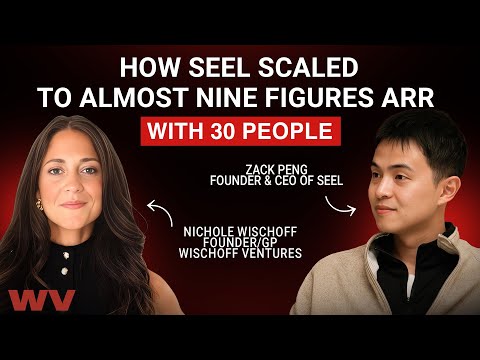
From Software Engineer to 8-Figure AI Returns Platform in 5 Years
First Money In Podcast · Nov 2025
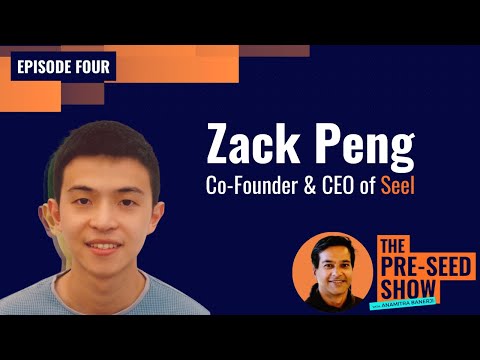
Revolutionizing E-Commerce Insurance & the Importance of Curiosity
Pre-Seed Show with Anamitra Banerji · Feb 2024
What Makes This Hard to Copy
The moat isn't the checkout widget. Anyone can build a checkout widget. The moat is the underwriting model - specifically, the training data. Every transaction that flows through Seel is a data point: purchase behavior, return probability, fraud signal, resale outcome. After five years and 2,000+ merchants, Seel's AI has seen enough volume to make predictions that a new entrant simply cannot replicate without the same years of transaction history.
This is the standard network-effects argument applied to insurance data, and it holds here. Return risk is category-specific, merchant-specific, and consumer-specific. The more Seel underwriters, the better the model prices. The better the model prices, the more attractive the product to merchants and consumers. The attach rate - 20-25% at checkout, unprompted - is itself a signal that the price point is right.
Demand for new items will always exist, as will the need for guaranteed resale items.
- Zack Peng, Founder & CEO, SeelFive Facts That Define the Man
Dual Philosopher-Physicist
Philosophy and Physics at UNC Chapel Hill - not the most obvious route to AI insurance underwriting, but exactly the right preparation for first-principles thinking about risk.
Forbes 30 Under 30
Named to the U.S. Forbes 30 Under 30 list - recognition that arrived as Seel was scaling its merchant base and defining a new category.
The Kover AI Ghost
Seel was originally called Kover AI. The Facebook page URL still reads "koverai" - a small reminder that the company grew faster than it could rename everything.
Orbital Insight Alumnus
Spent 2017-2020 at Orbital Insight turning satellite imagery into economic signals - the data-intensive, inference-heavy work that shaped how he thinks about AI and prediction.