Zack Naylor had a product for helping people decide what to build. His customers were quietly helping him decide what to stop building. They kept gravitating toward the research and insights part of Aurelius, leaving the larger product strategy proposition with an awkward problem: the smaller idea was proving more useful. For a founder who cared about evidence, this was an inconveniently good result.
The temptation in that situation is easy to imagine. Explain the bigger vision again. Improve the presentation. Add another feature to make the original argument more persuasive. Naylor and his co-founder, Joseph Szczesniak, eventually took the other route. They concentrated on the part people used. Aurelius became a research repository and insights platform. The founders had to apply their own advice to something considerably more personal than a client's roadmap.
That episode gives his career its shape. Naylor keeps returning to the gap between making a thing competently and choosing a worthwhile thing to make. He has approached it as a designer, a research practitioner, a founder, a podcast host and, more recently, an AI strategist. The tools have changed. The question has been remarkably persistent.
The designer who kept backing up
By 2010, Naylor was user experience manager at Pikimal in Pittsburgh. He had already worked at ModCloth and Lockerz, with experience spanning user experience design and front-end development. His interests extended beyond the screen: he taught introductory web design and Photoshop classes through Pittsburgh Center for the Arts and Pittsburgh Filmmakers.
There are some pleasingly specific details in that early public portrait. A dog named Zeus. A fondness for Vibram Five Finger shoes. An appetite for reading about user research. Professional biographies usually try to establish that their subject is a serious person. Toe shoes are a useful reminder that seriousness need not become a dress code.
His work at The Nerdery made the relationship between business questions and design questions explicit. In a June 2012 presentation, he was identified as a senior UX designer and user research practice lead. The material began with business discovery: define the problem, identify success criteria, understand risks and establish how goals would be measured.
These are sensible questions, which may explain why they can sound less exciting than a new interface. They also make an interface answerable to something. A team can argue indefinitely about a button. It is harder to argue usefully until someone agrees on what the button is meant to accomplish.
Speed had already caught his attention
In 2014, Naylor was writing about the industry's enthusiasm for lean and agile methods. His concern was that getting to a design quickly could distract teams from understanding why they were making it. He allowed plenty of room for iteration. His objection concerned applying the same approach regardless of what a team already knew.
An established product with an understood audience has a different starting point from a new service looking for its purpose. Testing a proposed design can tell you how that design performs. It may leave a much larger possibility unexplored. Naylor wanted teams to choose their methods with that distinction in mind.
Read alongside his later work, the argument has an almost comic durability. Software keeps finding new ways to make production faster. The question of what deserves to be produced keeps arriving at the meeting on time, carrying the same briefcase.
A basement, then a smaller idea
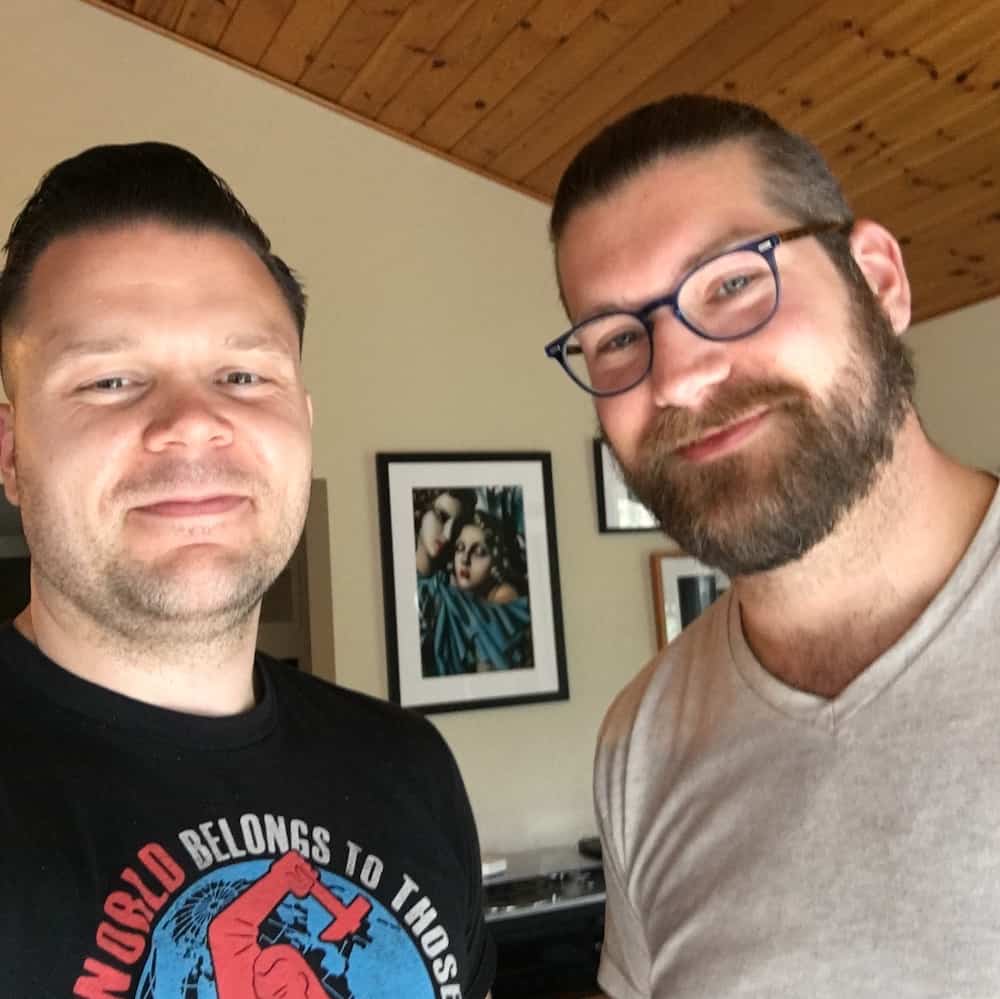
Aurelius began in 2015, after Naylor and Szczesniak discussed product strategy in Naylor's basement. They built it around their existing jobs. In 2019, Naylor described starting work on the company at four in the morning; he was also raising two young children. The picturesque basement origin came with a decidedly practical calendar.
By late 2017, customers' use of a research-focused beta was helping establish a different direction for the company. The broader strategy product would give way to a tool for collecting, organizing and making sense of research. Their customers had supplied the evidence. The founders still had to act on it.
In the 2021 telling, the change involved several versions of the software and difficult decisions about rebuilding. The code had to support the narrower purpose and allow a small team to develop features efficiently. Naylor described comparing future development time with Szczesniak. A rewrite consumes the time you wanted to spend shipping; keeping an unsuitable foundation consumes time on every subsequent job.
“We built too much too soon.”
Zack Naylor, on Aurelius's early product
There is something useful about hearing a research advocate admit to overbuilding. Expertise does not supply an exemption from being wrong. At best, it supplies a method for noticing, and a vocabulary for having the unpleasant conversation before the costs get larger.
- 2015Start with product strategy
- 2017Follow the research use case
- 2021Join TinySeed
- 2026Bring product judgment to AI
Milestones, rather than a scale of company growth.
Keeping a say in what happens next
For its first years, Aurelius was funded by its founders and its customers. In May 2021, the company joined TinySeed, an accelerator that combines funding with mentorship and a community for SaaS founders. Naylor addressed the apparent change directly: he and Szczesniak had resisted a model that demanded growth at all costs.
The attraction was the ability to accept help while retaining control over product direction. That distinction matters to the story because the product had already changed in response to customers. Financing would affect whose expectations the founders had to satisfy the next time they changed their minds.
It is possible to turn bootstrapping into a badge, and then become oddly reluctant to accept a useful offer. Naylor's explanation was more practical. Additional resources were welcome if the arrangement preserved the way they wanted to run the business. Independence could have terms more specific than refusing every cheque.
Research needs somewhere to go
The public side of Naylor's career has often involved helping other practitioners work through similar problems. He was part of the core team behind the global #WhatIsResearchOps project and served on the ResearchOps Community board from 2018 to 2019. Organizing research was also a community undertaking.
On the Aurelius podcast, he has talked with people whose work approaches product decisions from different directions. A 2018 conversation with Jeff Patton explored product discovery and research. The discussion even made room for mock numerical precision: Patton offered a 46.5 percent chance of success; Naylor countered with 57 percent. Neither figure belongs in a forecast. Both belong in a conversation between people who know how slippery certainty can be.
His practical teaching is less theatrical. A webinar with User Interviews addressed habits, consistent project organization and reusable findings. Naylor had heard researchers say that starting a new study could be easier than finding an old one. That is a rather expensive filing problem. It also explains why a repository can matter even when everyone already has somewhere to type.
The point reaches beyond tidiness. If previous findings can be retrieved and understood, a later decision can benefit from work already paid for. If they cannot, a company can keep interviewing customers while behaving as though it has met them for the first time.
In an April 2021 conversation with Jane Portman, Naylor covered using evidence to resolve product disagreements, weighing qualitative and quantitative data and declining roadmap suggestions. The social difficulty sits beside the analytical one: somebody still has to explain why a plausible proposal should wait.
A seat at the table comes with homework
Later that year, talking with Erin May and John-Henry Forster, Naylor argued that researchers need to understand the business around them. His recommendations included interviewing stakeholders and talking to people high in the organization. Internal colleagues deserve some of the curiosity researchers routinely extend to customers.
The implication is uncomfortable in a useful way. A finding does not arrive with automatic authority over every other consideration. Teams have commitments, constraints and competing obligations. Research becomes more persuasive when its practitioners can connect what they learned with a decision those colleagues actually face.
That approach also asks for patience. Naylor emphasized ordinary, repeated work over expectations of an immediate transformation. Anyone hoping that one presentation would permanently settle an organization's priorities might find this disappointing. Anyone who has attended the next meeting will recognize the advantage of his position.
Four hours, and the old question returns
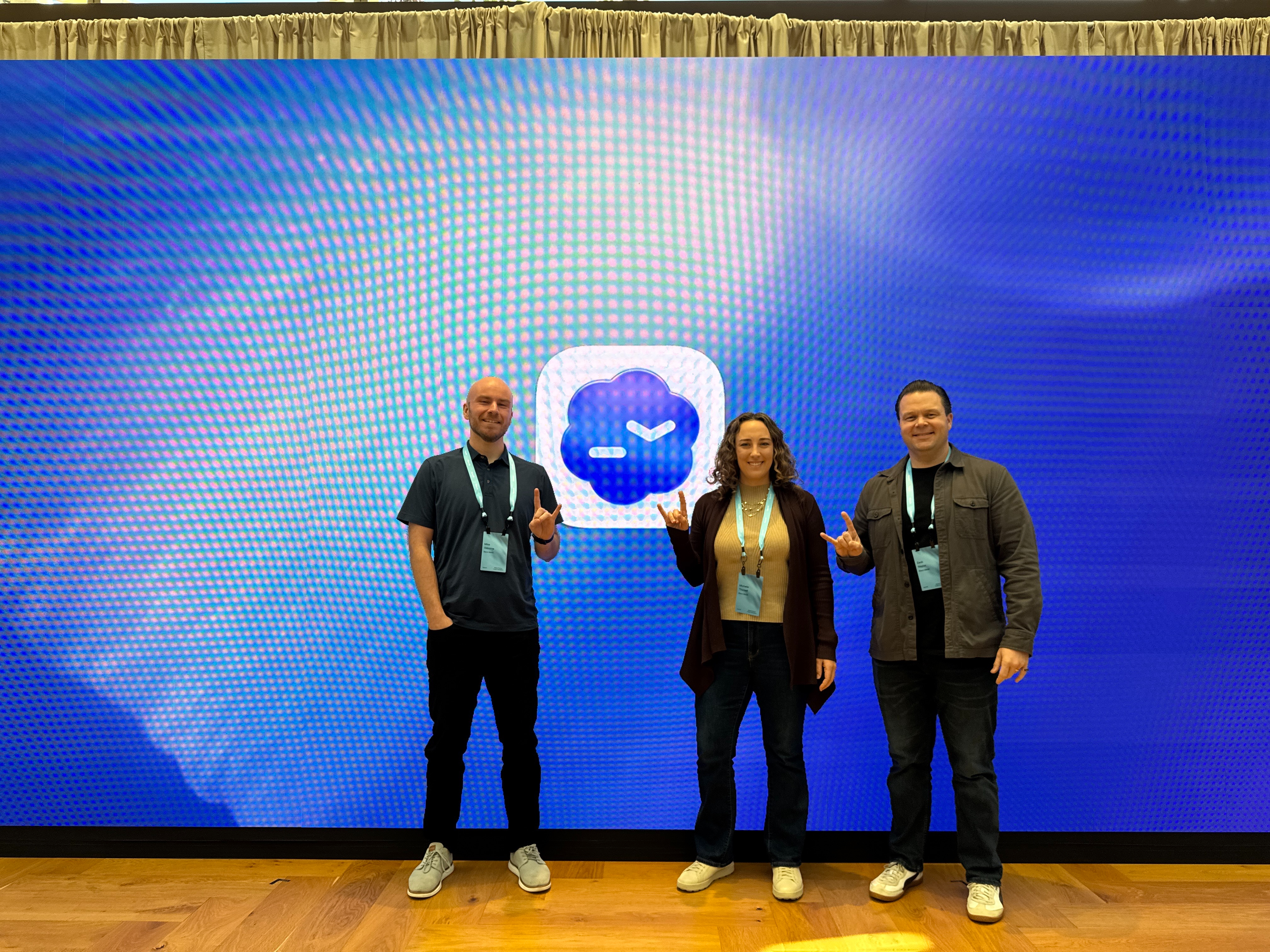
In July 2026, Blank Metal described a newer chapter: Naylor working as an AI strategist and product lead with Mike Osborne and Michelle Thorsell at OpenAI's Global Codex Hackathon. Their App Mapper project placed fourth among thirty teams. Over four hours, they developed a tool to crawl a website and map its pages and user flows.
Naylor helped steer the product, proposed a usability scoring layer and used Codex to build an export of findings into a presentation. The detail is telling. A map makes a website visible. A usable set of findings helps somebody decide what to do about it. His contribution extended the work toward the person who would receive it.
The technology makes that sequence move much faster than it did in the basement years. Judgment still has work to do. By October 2026, his LinkedIn carried a familiar warning: “The ability to build things fast does not guarantee an increase in ability to build the right thing.”
Across Naylor's career, the answer has required curiosity about people, attention to evidence and a willingness to revise something already made. Aurelius gave him an unusually direct test. Customers preferred a different part of his own product, and he followed them there. Being right had to wait its turn.
Keep the conversation going
READ, LISTEN & WATCH