Before there was a boardroom, there was a dinner table. In Ghana, Yvonne Greenstreet grew up in a large family whose home accommodated different languages, religions and opinions. Her parents worked in a university community. Visitors joined the conversation. A child could discover quite early that an interesting person might see the same thing quite differently.
Years later, as chief executive of Alnylam Pharmaceuticals in Cambridge, Massachusetts, Greenstreet would identify those conversations as part of her education in leadership. The lesson was listening. It is an unglamorous word for an executive biography. Nobody commissions a bronze statue of someone considering a colleague’s objection. Yet listening, in her account, is demanding work: it requires a person with authority to leave some air in the room.
Her career supplies a useful test of that idea. It crosses countries, disciplines and companies. Along the way, she has acquired the conventional evidence of executive accomplishment: senior appointments, board responsibilities, an OBE. The more revealing question is what she carried between those places. Her answer keeps returning to other people, and to the possibility that they know something she needs to hear.
A childhood with more than one vantage point
Greenstreet was born in London to a Ghanaian mother and an English father. Her parents met as students at the London School of Economics and later became professors at the University of Ghana. Her mother, Miranda Greenstreet, built a career in education. The family’s geography gave Yvonne an early experience of living across cultures rather than belonging to a single, uncomplicated national story.
She spent childhood years in Ghana and went to boarding school in England. Later came the University of Leeds and INSEAD in France. There is a temptation to arrange such a life as an itinerary, with each border crossing treated as another credential. That misses something more ordinary and more interesting: the repeated adjustment involved in arriving somewhere with habits and assumptions formed somewhere else.
Her own recollection of that Ghanaian dinner table gives the journey a human scale. A room containing different viewpoints was familiar territory long before she was responsible for assembling an executive team. She has explicitly connected the two. The connection matters because corporate talk about listening can sound ceremonial. Here it has a location, a family and a history.
“Representation matters.”Yvonne Greenstreet, 2022
The sideways move that became a career
At Leeds, Greenstreet earned her first professional degree. She later returned to education for an MBA at INSEAD in Fontainebleau. Going back to a classroom after qualifying for a profession is a substantial decision. It asks someone to trade established competence for the temporary awkwardness of being a beginner again. In Greenstreet’s case, the second degree opened the route into business.
She joined Glaxo in 1992, before it became part of GlaxoSmithKline. Over 18 years there, her responsibilities expanded. Eventually she served as a senior vice president and chief strategy officer for research and development. Strategy sounds abstract until one remembers what it requires: choosing where money, attention and people will go, while accepting that other plausible choices will have to wait.
Pfizer followed. She became a senior vice president and served on the executive team of a division with a reported $16 billion in revenue. That figure describes the scale of the division, rather than a personal financial achievement. It does, however, put the next move into perspective. When she joined Alnylam as chief operating officer in 2016, she was choosing a company with a few hundred employees and considerable uncertainty ahead.
She had already moved to the United States in 2004. By the time the Cambridge opportunity arrived, changing countries and changing professional settings were established parts of her experience. The Alnylam move added a different challenge: helping build the organization that the company intended to become. Experience at a large enterprise was useful; the job also demanded a willingness to work before every system was in place.
- 1992Joins Glaxo
- 2004Moves to the U.S.
- 2016Alnylam COO
- 2020President & COO
- 2022Chief executive
Before the title, the machinery
The operating years matter in this story. An organization can have an idea, ambition and talented people, yet still need the less photogenic apparatus of a working business. At Alnylam, Greenstreet oversaw the creation of commercial capabilities, including a sales force. She was also involved in partnerships and financing. These are responsibilities that rarely fit neatly into an inspiring quotation.
The record is unusually specific. Her 2024 award biography credits her with raising $2.2 billion over five years. In 2020, Alnylam added president to her chief operating officer title. The promotion to chief executive was announced in 2021 and took effect in January 2022. Those dates are worth keeping straight: an announcement and a first day are different events, even when a short biography squeezes them together.
She succeeded John Maraganore, the company’s longtime chief executive. An internal successor has an interesting assignment. Familiarity provides knowledge of the organization, while the new job brings responsibility for decisions that can no longer be referred upstairs. The colleague who helped run the place becomes the person expected to set its direction. Greenstreet’s route to that chair had included several years of learning how the place actually worked.
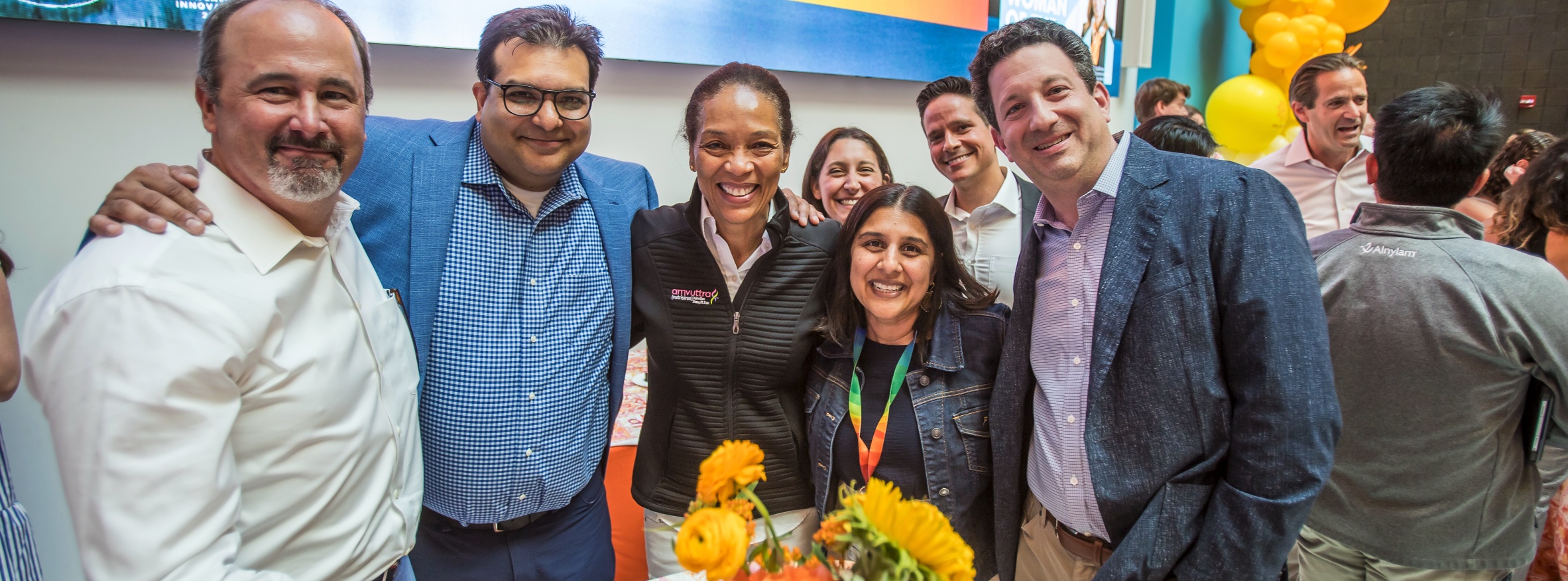
Who gets heard in the room?
When Greenstreet became CEO, she spoke openly about the significance of a woman of color holding the position. “Representation matters,” she said. She had spent earlier parts of her career in environments where the senior leadership did not include people who looked like her. Reaching a seat of authority made that absence something she could address from inside the room.
Representation also has a practical dimension. A team drawn from a wider range of experiences has more chances to question a comfortable assumption. Whether those questions are heard depends on the person running the discussion. Greenstreet has described bringing in different voices and actively listening as strengths of her leadership. A hiring decision gets somebody through the door; the conduct of a meeting determines whether their perspective can do useful work.
Her colleagues’ descriptions of the company’s culture offer a related picture. In July 2026, executive Pushkal Garg wrote about the need to preserve constructive tension as Alnylam grows. He described earlier meetings in which functions disagreed strongly while working toward a shared goal. His concern was that expansion could encourage easy agreement and add too many opportunities to stop an idea.
That concern belongs beside Greenstreet’s emphasis on listening. A company can grow large enough to lose the habits that helped it grow. Meetings multiply. Decisions acquire extra stages. A tidy consensus can become more comfortable than a troublesome question. The management challenge is concrete: keep enough trust in the room for someone to make the troublesome question audible.
An honor on either side of the Atlantic
In 2024, the Healthcare Businesswomen’s Association named Greenstreet its Woman of the Year. The recognition included her contribution to the advancement of women at work. It placed her operating achievements alongside the example her appointment offered to people imagining their own careers. An executive’s influence includes both the decisions she signs and the possibilities her presence makes easier to picture.
The following year brought a British honor. The official notice, dated June 14, 2025, records her full name as Yvonne Lydia Akua Greenstreet and appoints her an Officer of the Order of the British Empire for services to the UK/US biotechnology and life sciences industry. The wording neatly joins two parts of her working life. A career conducted across the Atlantic was being recognized across it, too.
In April 2026, the International Institute of New England honored her with its Golden Door Award. The award recognizes contributions to American society by people born outside the United States. The gala brought more than 600 guests to Boston and raised over $1.7 million for the organization’s work with refugees and immigrants. Greenstreet’s personal journey was part of an evening with a wider civic purpose.
There is an appealing symmetry here. Someone who had built a career by crossing borders was being honored by an organization that helps newcomers establish themselves. Her public response credited the openness and belief of others along the way. The emphasis fell on the welcome a person receives as well as the effort that person makes. Opportunity requires someone willing to open a door.
The person beyond the appointment
Executive profiles can become so solemn that even lunch sounds like a strategic initiative. Greenstreet supplies some relief. Asked whether she could secure any restaurant reservation in Kendall Square, she gave the credit to her executive assistant. Asked about Idris Elba’s looks, she first protected her husband’s standing. The answers are small, funny reminders that a job title has not swallowed the person holding it.
She has also identified time away from home as a difficult part of the job. That admission puts a cost beside the international appointments and public appearances. Travel creates connections; it also means being elsewhere. In a career celebrated for spanning countries, the wish to get home is an especially useful detail. It restores ordinary proportions to an extraordinary-looking calendar.
Today, Greenstreet’s responsibilities extend beyond Alnylam. She serves on the board of The American Funds and is a member of the Council on Foreign Relations. The range is consistent with a professional life spent moving between institutions and viewpoints. It also makes her original habit relevant beyond the company: entering a room prepared to learn is useful even when everyone already knows your title.
The next stretch of her tenure will involve the familiar pressures of a growing organization: decisions about people, resources and direction, with more at stake as the enterprise expands. Her stated ambition is to preserve boldness while building the operating strength that scale demands. The dinner table offers no ready-made business plan. It does offer a discipline that can survive a change of address: let another person finish, consider what they mean, and leave room to be surprised.