There is a particular kind of phone call that explains One Strategy Group better than its list of services ever could. It happens on Sunday night. A chief executive has a meeting on Monday morning. The subject may be an acquisition, an employee revolt, an abrupt change in policy, a product that has stopped behaving, or a sentence the CEO is about to say in public. The official brief has not been written because the problem refuses to sit still long enough to be briefed. What the caller wants is not a press release. It is company in the uncertainty.
David Meadvin, the firm's co-founder and CEO, has called this the “Sunday night phone call before the Monday morning meeting.” It is a tidy phrase for a business that resists tidy categories. One Strategy Group advises leaders on corporate positioning, reputation, media, change, transactions, growth, digital strategy and crises. Those look like separate departments on a large agency's website. Here they are presented as different faces of the same decision.
The sentence is rarely the problem
Meadvin arrived at this idea by way of words. He wrote for the U.S. Senate Majority Leader and the U.S. Attorney General, helped shape Facebook's external story around its IPO period, and later led executive communications at Bloomberg and Citadel. A speechwriter learns an inconvenient lesson early: polishing the sentence does not rescue a confused decision. Before a leader can say the thing well, someone must work out what the thing is, who will hear it, what they may do next and whether the institution is prepared to act consistently with its language.
When Meadvin and journalist-turned-strategist Everett Rosenfeld launched the firm at the end of 2022, the ordinary agency pyramid looked vulnerable. Senior executives sold the relationship; layers of junior staff produced the work. Meanwhile, younger CEOs were inheriting a world in which employees, customers, investors, politicians and online audiences could all arrive at the same corporate controversy before lunch. Then generative AI began making routine production cheaper. The first thing to lose value was the handoff-heavy middle - the briefing documents, first drafts and repeatable outputs that once justified layers of labor.
“We often describe it as being the Sunday night phone call before the Monday morning meeting.”David Meadvin, co-founder and CEO
One Strategy Group's answer was to move experienced judgment nearer the problem. Its public roster is full of people who have worked inside government, newsrooms, global companies and major agencies. The pitch is not that specialists are unnecessary. It is that a client's problem should not be chopped into specialties before anyone understands it.
One problem, eight doors
The firm works with companies from Series A to the Fortune 500. A founder entering a new market might need go-to-market positioning, coaching for the CEO, a digital launch and a plan for the employees who will have to deliver the promise. A public company facing a transaction might need investor logic, internal sequencing, media preparation and a crisis tree for the questions nobody wants to ask. One Strategy Group sells advisory engagements that can cross those boundaries. Its prices are not public; the economic proposition is access to senior people and the execution team around them.
The decision before the deliverable
That order matters. Conventional communications work often begins with a requested object: the speech, the launch, the response statement. One Strategy Group's more useful habit is to begin one floor above the object. What outcome does the company need? Which stakeholder can block it? What must be true before anyone talks? The reader can copy this with no consultant at all: write the decision in one sentence, list the audiences in order of consequence, and separate what the organization must do from what it merely wants to say. If the two columns do not agree, stop drafting.
A dinner party with deadlines
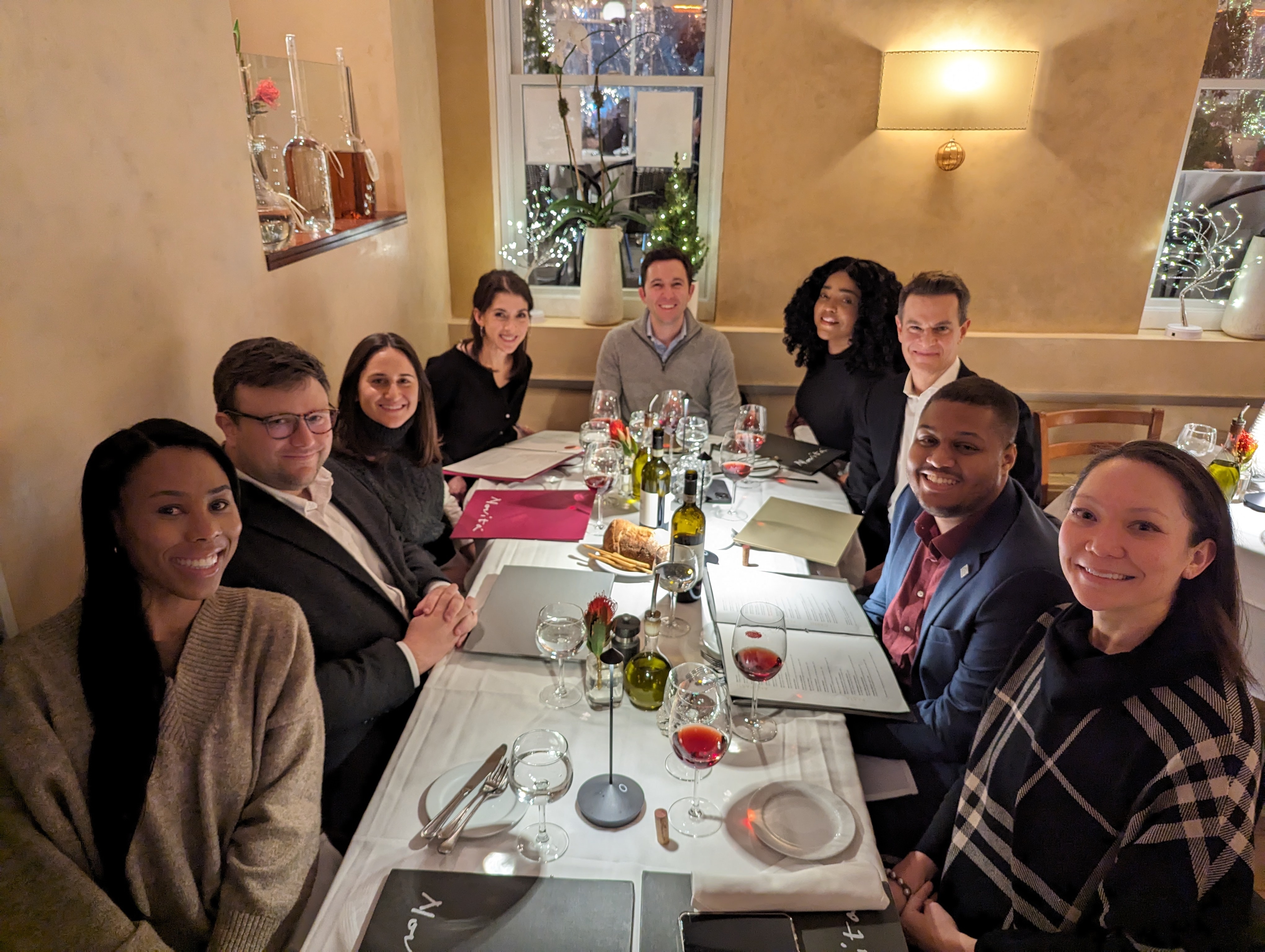
The company's best culture metaphor is culinary. Meadvin has described recruiting as curating a dinner party - not a row of identical résumés, but people with different backgrounds who are curious, creative and willing to challenge one another. This squares with the firm's declared “democracy of ideas.” It also doubles as a service design. A political operative notices coalitions. A journalist notices the missing fact. A corporate operator notices whether the organization can actually keep its promise.
There is a harder edge beneath the convivial image. The firm says speed matters and borrows the logic of a situation room: watch the environment, decide who owns what, prepare branches before events force them. That method is particularly suited to consequential, ambiguous moments where the leadership team will participate. It is less persuasive for a buyer seeking the cheapest possible stream of standardized outputs, a global commodity campaign that rewards enormous production capacity, or a leader who wants the adviser to bless a decision already made. Senior counsel only pays off when the client allows counsel close enough to disagree.
The challenger joins a network
Young firms like to tell stories of independence. One Strategy Group's more interesting story is what it did with dependence. In January 2024 it bought Liz Stein Consulting, adding a boutique with strength in media, technology, education and nonprofits. That year PRWeek named One Strategy Group an Up and Comer. In February 2026, international advisory group Paritee acquired it for an undisclosed amount. Meadvin stayed CEO and also became president of Paritee Holding U.S.
A Washington and New York challenger built around senior advisers, fast decisions and cross-silo work.
Paritee's international footprint, research, analytics, creative, technology and AI capabilities, plus Brands2Life's U.S. technology practice.
The One Strategy Group brand, leadership, direct client model and stated preference for experienced people close to the work.
The 2026 purchase of Gottlieb Group Consulting extended the firm's reach to Denver and Seattle.
The cost of the Paritee transaction was not disclosed. The strategic exchange is easier to see. One Strategy Group gave a global network an American platform for senior corporate advice. In return, it gained capabilities and geography it would have taken years to assemble alone. Soon afterward, it acquired Gottlieb Group Consulting, the two-decade-old advisory led by Steven Gottlieb. The acquired had become an acquirer.
This is also the wager's most delicate test. A firm founded against silos now belongs to a portfolio of specialist agencies. A company skeptical of bureaucracy now has a parent organization, sister firms and cross-border coordination. The arrangement works if the network behaves like a cupboard - useful capabilities within reach - rather than a corridor full of approvals. It fails if senior access becomes a sales ritual and the work falls back down a ladder.
What judgment looks like after AI
The firm's position on AI is neither denial nor surrender. It created an AI working group and argues that technology can improve research, analysis and production. But if competent copy becomes abundant, competent copy cannot remain the premium product. The scarce thing is the decision about what deserves to be made, the context that changes the recommendation, and the trust that lets an adviser tell a powerful person they are wrong.
That idea appears in the firm's content work too. Meadvin has described helping a client answer the arrival of cheap AI writing by building a newsroom staffed with experienced financial reporters. The counterintuitive move was to invest in reporting rather than flood the channel with more synthetic material. The lesson is not that every company needs a newsroom. It is that when a tool collapses the cost of average output, moving toward distinct expertise can be more valuable than producing average output faster.
One Strategy Group occupies the narrow ground between management consultancy and communications agency. Its alternatives include firms such as Brunswick, FGS Global, Teneo, Joele Frank, Collected Strategies and the corporate-affairs arms of large networks. The difference it claims is structural: fewer handoffs, senior people in the room, and strategy carried through to execution. That difference cannot be proven by a slide. It is proven at 9:47 on Sunday night, when the caller does not need a larger team. The caller needs the right person to answer.