The useful thing about a village shop is that it refuses abstraction. A customer wants cooking oil, not a theory of cooking oil. The sack of rice occupies space. The bottle breaks. Credit extended to a neighbor is not a line in a deck; it is a promise between two people who will meet again. Yue Lihua learned retail in such a place, helping at the small shop his family ran near Dongting Lake in Hunan. Years later, when billions of dollars and the attention of China’s largest technology companies arrived at his door, he still judged a business by what happened at the counter.
That habit produced Xingsheng Selected, one of the defining experiments of China’s grocery boom. Its proposition was almost cheekily plain. Order household goods or fresh food online before night. Collect them the following day from a nearby convenience store. The customer surrendered immediacy; in return came price and reach. The store owner acquired foot traffic and a commission. Xingsheng bought against known demand and sent the goods through a deliberately constructed chain of warehouses, local stations and shops.
There was an app, certainly. There were WeChat groups, data and investment bankers. Yet the clever part was the thing technology businesses often try to remove: a shopkeeper.
The education of a shopkeeper
Yue was the youngest of seven children. His parents’ modest shop emerged in a poor rural world where a trip to the nearest large town meant miles of rough road. He helped watch the store and handle stock, then, as a teenager, borrowed under his parents’ name and opened a wholesale counter with his brother. It was an education in movement: what merchants needed, what they could pay, which goods sat still and which disappeared.
The lessons were not uniformly gentle. A later manufacturing venture failed and left debts. Yue returned to retail with borrowed money, delivering purchases by tricycle while his wife minded a store. In 2001, he and partners brought their shops together under what became Furong Xingsheng. When large supermarkets advanced into smaller Chinese cities, they stopped pretending to be large. Yue focused on compact community stores, many only 30 to 80 square meters, close enough to become a habit.
By 2014, thousands of those habits had formed a network. They were also under pressure from online shopping. Yue tried to put the stores on the internet. First came local home delivery, before customers or unit economics were ready. Then a capital-heavy self-operated model. Then distribution through market vendors. None became the answer. The attempts reportedly consumed two years and about 20 million yuan. Failure, in retail, arrives as unsold stock and an invoice. It does not permit philosophical distance.
The fourth arrangement worked because it used what Yue already owned without quite owning it: neighborhood relationships. Storekeepers became “group leaders.” They posted selected products into community chat groups, collected orders, received a consolidated delivery and handed purchases across the counter. Pre-selling reduced inventory risk. Pickup removed the expense of sending a courier to every apartment. A small shop became part showroom, part depot and part social network.
What happens after the tap
warehouse
station
store
Xingsheng called its promise “211”: order by 11 p.m., arrive at the shop by 11 a.m. next day. The slogan is brisk. The work beneath it is not. Vegetables have tempers. Roads have weather. A cheap bundle of spring onions will not forgive an expensive delivery route. What looked like a modest inconvenience for the customer - waiting overnight and walking to a store - created room for the machinery to breathe.
“To do something in the retail industry, it takes three to five years - or even 10 years.”Yue Lihua, on the impatience of large technology rivals
When the giants came to Changsha
In 2018, the retail investor Xu Xin reportedly began a meeting with Yue’s team at two in the afternoon. It ended at four the next morning with a decision to invest. Soon the waiting room became more distinguished. Tencent, KKR, Sequoia China and JD.com joined financing rounds. JD.com put in $700 million. A $3 billion round followed in 2021. One later investment reportedly placed the company’s value at $12 billion.
Alibaba executives visited Changsha. Yue was said to have prepared no PowerPoint. One group toured headquarters while another went to township stores and studied the numbers. This was either a charming rejection of corporate theater or its own very effective kind of theater. The stores were the slides.
Meituan, Pinduoduo and other platforms entered community group buying, applying money, engineers and armies of operators to a model assembled in Hunan. Yue welcomed observation, confident that seeing the mechanism was not the same as reproducing it. He compared an impatient entrant to a thirsty person jumping into a river. His stated ambition for Xingsheng was “an online version of Costco,” but its anatomy looked nothing like an American warehouse club. Its bulk was distributed among small rooms and familiar faces.
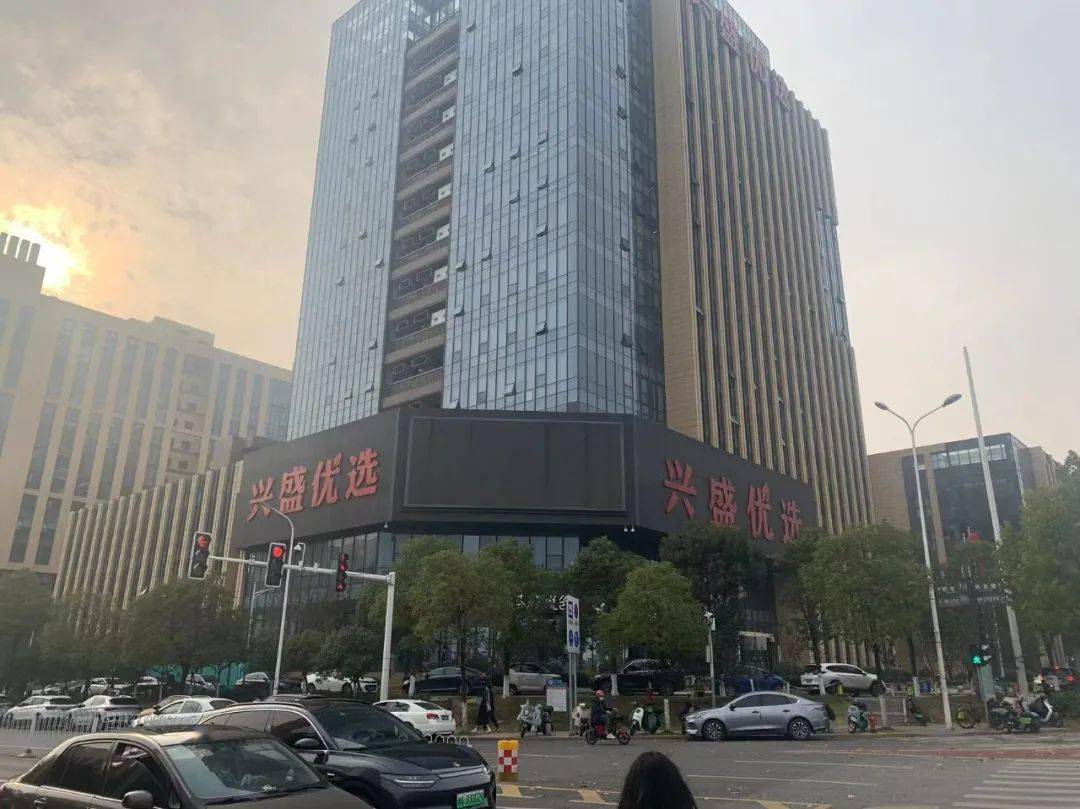
Capital changed the tempo. Xingsheng moved from its dense central-China base into 18 provinces. At its 2020 peak, reported gross merchandise volume reached roughly 40 billion yuan. More than 300,000 stores had joined as pickup points by September that year. Expansion made a regional curiosity legible as a national market, but it also changed the competition. The company that had patiently fitted routes to local shops was now expected to color a map before equally funded rivals did.
The warehouse test
Yue’s management culture could be severe in its devotion to the concrete. Executives hired from large internet firms were reportedly sent to carry goods in warehouses for three months, then sort orders in stores. A manager’s credibility came from knowing today’s troublesome shop, not reciting tomorrow’s framework. Yue’s distilled instruction was blunt: “We want people who get things done.”
There is wisdom in making an executive meet a cabbage. There is also danger in treating every system as an evasion. As the company expanded, the founding team’s hands-on, loyalty-heavy culture collided with managers recruited to standardize a national operation. Reporting in 2023 described rapid leadership turnover, obscure promotions and tension between veterans and newcomers. Longtime colleagues had earned Yue’s trust in the hard years; professional managers wanted authority that did not depend on having shared them.
The contradiction was intimate. The local knowledge that made Xingsheng difficult to copy also made it difficult to translate. A driver network designed for Hunan was not a universal grammar. Neither was a meeting held in the local dialect. Scale demands repetition; retail insists that every place is slightly inconvenient in its own way.
Pre-order and store pickup clicks after three earlier models stall.
JD.com invests $700 million as national competition accelerates.
A reported $12 billion valuation crowns the expansion era.
The operating map contracts from 18 provinces to three.
Yue returns to market visits in Jiangxi and Hubei.
A smaller map
From late 2022 through 2023, Xingsheng withdrew from a succession of provinces. Guangdong, Sichuan, Henan, Shandong and others vanished from the map. By the end of the retreat, the business was concentrated in Hunan, Hubei and Jiangxi. Reported annual GMV had nearly halved from its summit, though the company was described as approaching break-even and retaining substantial cash.
Retreat is not the sort of motion that venture capital likes to animate. Yet the narrower territory brings Yue back to an old argument: density can be more valuable than acreage. A route serving many orders in a compact area has an economy that a scattered national presence cannot flatter into existence. The customer does not eat market share. She eats dinner, and she notices whether the pork arrived.
Xingsheng has tested a “Million Thriving Stores” concept that asks the pickup point to become more ambitious: supermarket, parcel station, online-sales hub and community operator at once. The ideal resembles Yue’s entire career compressed into one storefront. The burden does too. Such a store requires capital, discipline and a proprietor capable of performing several jobs without resenting all of them.
In April 2025, Yue said he intended to visit Jiangxi and Hubei to search for new ways to release consumer demand. He spoke of concentrating on the main business, improving quality, building brands and extending products. The language is more sober than the old valuation headlines. The behavior is recognizable: go to the market and look.
Yue’s story resists the clean finish usually given to founders. His invention worked, then worked at astonishing scale, then encountered the price of being expected to work everywhere. He has been a shrewd observer of ordinary commerce and a leader whose faith in the old team could harden into resistance. He proved that an unglamorous physical network could teach technology companies something. He has not yet proved what that network becomes after the excitement leaves.
Perhaps the answer is waiting in one of those three provinces, inside another small shop. There will be boxes in the aisle, messages arriving on a phone and someone behind the counter who knows which customer will come before lunch. For Yue Lihua, the future has always had the same inconvenient address: the place where the goods must actually arrive.