The package is already late when it becomes interesting. A pharmacist is calling a patient. A laboratory is wondering whether a specimen was collected. A parts manager has a machine idle on the floor. Somewhere between pickup and doorstep, a routine errand has become an expensive little mystery. Dropoff, an Austin company founded in 2014, built its business in that gap - the anxious stretch after a company hands over a package but before anybody can prove what happened to it.
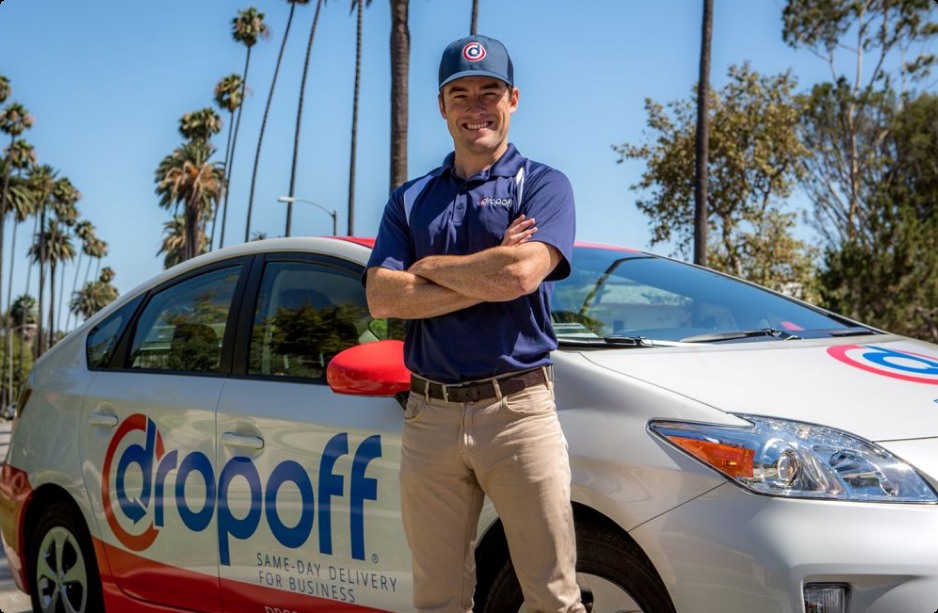
The company's proposition sounds ordinary until the cargo is not. Dropoff runs same-day, scheduled, fixed-route, urgent and long-distance delivery for businesses. Its customers can place an order through a portal or API, watch the route on a live map, require a signature or photograph and inspect performance later. Behind that interface sit dispatchers, local operating teams, vetted drivers in marked vehicles and support that runs around the clock.
This is delivery as an operating system with tires. The distinction matters. A meal app optimizes for convenience and a giant parcel carrier optimizes for networks measured in days. Dropoff sits between them: local and quick, but designed for repeatable business rules. Its most important vertical is healthcare, where prescriptions, blood, specimens and medical supplies add compliance, temperature and chain-of-custody requirements to the usual traffic problem. Retail and industrial customers use the same machinery for store orders, premium food, legal documents and parts.
The first failure was not speed
Sean Spector's origin story begins with a bad courier experience and a survey of an industry that appeared stuck several decades back. Local firms could move an envelope across town. What they often could not offer was consistent technology, national reach or a professional service standard that an enterprise could safely attach to its own brand. Spector co-founded Dropoff with Christian Carollo and Ted Hong. He had already helped build GameFly, the video-game rental subscription business, so he knew a logistics headache could hide inside a consumer promise.
The team made a consequential choice: businesses, not the crowded consumer-on-demand market. B2B routes bring awkward requirements, but also recurring demand. A pharmacy needs pickups every day. A retailer that works in Austin may want the same arrangement in Phoenix. An industrial customer pays to avoid downtime, not to satisfy an impulse. In 2017, Spector told Crunchbase News that a city could generally become profitable in less than a year; eight of 17 markets were then profitable even while the company overall was still investing in expansion.
“This isn't just pick-up and delivery, this is logistics.”Sean Spector, co-founder and CEO
The accountability loop
That loop is the differentiator. Dropoff introduced Intelligent Dispatch in 2016 and Dropoff Tracker in 2017, giving multi-location customers a common view of deliveries and driver status. The company offers customer notifications, ETAs, ratings, spending and order-pattern reports. Its API can connect a warehouse or e-commerce site directly to dispatch. The package still travels through traffic; what changes is the amount of guessing around it.
What customers are actually buying
Consider Partell Compounding Pharmacy in Las Vegas. Its previous courier lost packages and sent drivers patients found unprofessional. Pharmacists spent about eight hours a week handling 10 to 15 delivery issues, sometimes replacing costly customized medication. Partell researched six couriers. What changed its mind was not a glossy claim but a one-week trial: Dropoff's team visited, mapped the workflow and demonstrated custom routes, live tracking, analytics, email confirmations and signature verification.
After the trial, Partell moved its full local-delivery base to Dropoff. The pharmacy reported that weekly courier issues fell to zero, no package had been lost and thousands of dollars a month were saved across wages, replacement medication and customer appeasement. The important number is not miles per hour. It is eight pharmacist hours returned to pharmacy work.
Elite Medical Lab had a related problem. Specimens were being left, lost or forgotten, and slow routing stretched turnaround to 2.9 days. Dropoff redesigned the routes and added visibility. The lab's published case study says turnaround fell 55 percent, to 1.3 days, while lost shipments were eliminated. Biodesix later said it stopped using other local couriers for direct service; parcel shipping could add a full day to testing.
The stealable bit: sell the vanished headache
Do not pitch a faster feature in isolation. Inventory the calls, replacements, manual entries and staff hours caused by the old process. Run a narrow trial. Make the before-and-after legible. Dropoff's strongest case studies sell time returned and exceptions removed, not motion for motion's sake.
The cat tree, the API and the growth loop
Tomlinson's Feed, an Austin pet retailer, initially considered running delivery itself. Then the real bill appeared: vehicles, software, drivers, dispatch and layered customer support. It partnered with Dropoff in late 2018 and connected the courier API to its new website the following March. Online orders could move straight into operations without an employee retyping them. Free local delivery above $75 and on auto-ship orders gave customers a reason to try it.
The first month produced 16 deliveries. Within the period covered by the case study, volume passed 1,000 a month, 45 percent of online orders were auto-ship subscriptions and on-time performance was reported at 98 percent. The charming proof of culture was smaller: one courier carried a huge cat tree into an elderly customer's second-floor apartment, then removed the old one. That is what Dropoff means when it says drivers operate as an extension of the customer's brand.
This creates a useful expansion loop. Win one business in one city. Integrate into its workflow. Follow it into the next market. BlackBox Meats started with Dropoff in Las Vegas, then expanded the relationship to Phoenix, Irvine and Seattle. Its case study reported more than 4,500 monthly deliveries and 95 percent on-time performance. Repeat routes supply density; enterprise accounts supply new maps.
Dropoff financed that map aggressively but not extravagantly by consumer-delivery standards: a $1.85 million seed round in 2014, $7 million Series A in 2015 and $8.5 million Series B in 2017. In 2021, Horizon Technology Finance led a $30 million venture loan facility, with $20 million funded at the initial draw. The proceeds were intended for working capital and acquisitions. Dropoff bought 23-year-old Michigan operator Rightaway Delivery in 2022, gaining experienced healthcare routes and reach across Michigan, Ohio and Indiana. At the time, Dropoff said it operated in 53 markets across 20 states.
A physical business with a software memory
Dropoff makes money from delivery fees and contracted logistics programs rather than a pure software subscription. It advertises upfront, all-inclusive pricing without fuel charges or surge pricing, while program economics vary by distance, speed, volume and handling. That makes the software less a standalone product than a way to improve fleet utilization, customer retention and the evidence attached to every completed job.
The competitive set is wide. A customer can call a local courier, build a fleet, use a national specialist such as USPack or American Expediting, tap a crowdsourced network such as Roadie, or send a parcel through FedEx or UPS. Dropoff's wedge is the combination: B2B workflows, branded professional drivers, healthcare capability, flexible routes, integrations and a support team awake when the specimen is not where it should be.
The model has limits. A courier network is still a density business. Software cannot repeal traffic, and service quality depends on the driver at the door. Fast geographic expansion can create uneven local execution. Customer reviews outside company case studies are mixed, as they are for many delivery networks, which is exactly why dispatch discipline and exception handling matter. And when a shipment can arrive tomorrow with no consequence, a standardized parcel network will usually be simpler.
When the playbook bends
- Low-density territory makes dedicated same-day routes costly and harder to staff.
- Cheap, non-urgent parcels do not justify a premium layer of proof and support.
- A huge, predictable daily route may be cheaper to own once fleet fixed costs are fully used.
- Global freight, warehousing and multi-day parcel needs sit outside a last-mile specialist's center.
Still, the company's five consecutive Inc. 5000 appearances from 2019 through 2023 suggest that boring infrastructure can compound. Dropoff says more than 270 brands trust its network. The roster shown on its site ranges from Quest Diagnostics, Labcorp and McKesson to Whole Foods, Neiman Marcus, HOLT CAT and the American Red Cross.
The lesson to copy is precise. Look for an old, fragmented service market where the buyer's reputation leaves the building in someone else's hands. Add visibility before adding magic. Standardize the evidence, not every customer's workflow. Charge where failure is expensive. Then turn one successful local route into a repeatable operating template. Dropoff does not make the last mile glamorous. It makes it harder for the last mile to become a mystery - which, for a pharmacist waiting on a specimen, is far more useful.