Story · SaaS · Product Strategy
You Can't Buy FigJam Without Buying Figma
Miro will sell a whiteboard to anyone for a few dollars and never mention the rest of its catalog. FigJam refuses to sell you anything unless you also buy a Figma seat. That one difference explains two very different companies.
Open a Miro board and open a FigJam board side by side and you will struggle to tell them apart. Infinite canvas. Sticky notes in the same six colors. Cursors with names attached, drifting around while people talk. Both have templates for retros and roadmaps. Both added AI that turns a messy cluster of notes into a tidy list. On the surface, these are the same product built twice.
The difference does not show up on the canvas. It shows up at the cash register. You can buy Miro. You cannot buy FigJam. You can only buy Figma, and FigJam comes with it.
That sounds like a small billing detail. It is actually the whole story. A pricing page is where a company stops describing what it built and starts admitting who it is willing to sell to. Miro's page says anyone. Figma's page says Figma customers. Everything else - the growth, the ceiling, the risk each one carries - follows from that single sentence.
01The tool you can walk in and buy
Miro started in 2011 as RealtimeBoard, took the name Miro in 2019, and spent that whole time doing one thing: selling a whiteboard to whoever wanted one. There is a free tier with a few boards. There is a Starter plan around eight dollars per user each month. There is a Business plan around twenty. There is an Enterprise tier where a salesperson learns your company's name. You can sign up on a Tuesday afternoon with a personal card and never explain yourself to anyone.
This is the front-door model. Miro's job is to be a door that opens onto the entire market - product managers, teachers, consultants, agile coaches, a couple planning a wedding. It does not care whether you own any other software. It never mentions a design tool, because it does not have one to protect. The whiteboard is the product, the whole product, and the thing it is trying to sell you.
The upside of the front door is reach. Anyone can walk through it. The cost is that Miro has to convince every single person to walk through - one at a time, forever. Nobody arrives already owning it. Every customer is earned.
02The tool that comes with the house
FigJam launched in 2021 as Figma's take on the whiteboard. For a while you could treat it as its own thing with its own small price. Then, in March 2025, Figma stopped selling it separately. FigJam is now bundled into paid Figma seats. It is not a product on a shelf. It is a room inside a house you rent for another reason.
Look at how access works and the strategy is obvious. A Full seat, around sixteen dollars a month, gets you everything including design editing. A Dev seat, around twelve, gets Dev Mode plus FigJam and a few others. A Collab seat, around three dollars, covers FigJam and the lightweight tools with view-and-comment rights on the design files. Notice what you cannot do at any price: buy a seat that is only FigJam. The whiteboard never stands alone.
- Who can buy it: anyone, no other product required
- Entry: free tier, then ~$8/user/mo
- Growth: earn every customer from scratch
- Depends on: nothing else you own
- Who can buy it: only Figma seat holders
- Entry: free to start, then via a Figma seat (~$3+)
- Growth: rides on seats Figma already sold
- Depends on: you keeping Figma
The genius of this is distribution. Figma already sells to design and product teams by the millions. Those teams already log in every day. Putting FigJam inside the seat means it does not need its own marketing, its own free-trial funnel, its own reason to exist. It is already there when you arrive. The best distribution channel is the one you already own, and Figma owns the design team.
03Why cheap and unbuyable are the same sentence
Here is the part that trips people up. FigJam can look like the cheapest whiteboard in the building. A Collab seat at roughly three dollars is well under Miro's standalone Starter, and comparisons routinely peg FigJam at a large discount per seat against standalone whiteboards. So is FigJam cheaper?
Only if you were already going to buy Figma. The three-dollar seat is not the price of a whiteboard. It is the price of a whiteboard for someone who already lives in Figma and just needs comment access to the design files. For a team that wants a whiteboard and nothing else, that seat is not an option - because it drags along a design platform they did not ask for. The cheap number and the you-can't-buy-it-alone rule are not two facts. They are the same fact, seen from two directions.
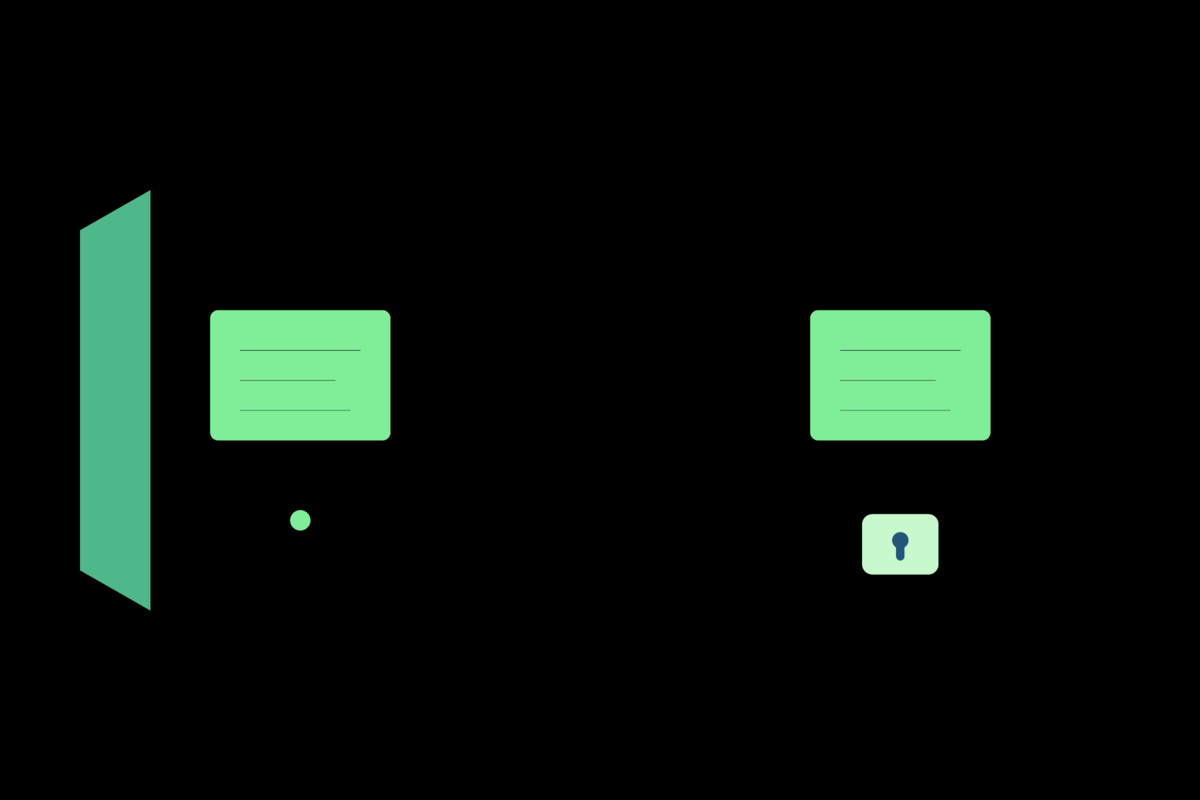
Not market share - a picture of addressable buyers. Miro can sell to the whole market. FigJam can only reach people willing to buy into Figma first.
04What each company is really betting
Strip away the sticky notes and you are looking at two different bets about how software spreads. Miro is betting on the open market. Its ceiling is enormous - the whole world of teams that whiteboard - and its burden is that it has to keep winning strangers, quarter after quarter, with no other product carrying it along. When a Miro customer leaves, they take the whole relationship.
Figma is betting on gravity. FigJam does not have to win anyone. It just has to be present, sticky enough that a team using it feels one more reason to keep paying for Figma. The moment FigJam stopped being sold on its own, it stopped being a product that competes for customers and became a feature that defends a subscription. Its ceiling is smaller - it is capped by how many people buy Figma - but it never pays to acquire a single one of them.
The exposure is a mirror image, too. Miro's risk is the open field: it competes head-on with every whiteboard, priced entirely on its own merits, with nothing to hide behind. FigJam's risk is the leash. It grows exactly as fast as Figma does and no faster, and a team that ever leaves Figma leaves FigJam whether they liked the whiteboard or not. Bundling is a strategy with a bill attached, and the bill lands on anyone who wants the whiteboard but not the design tool.
05So which should you use
If your team already lives in Figma, FigJam is close to free-of-friction. It is in the seat you already pay for, it opens next to the files you already have, and there is no new invoice to approve. Using anything else means talking yourself into a second tool when a perfectly good one is already sitting there.
If you just want a whiteboard - if the design tool is not part of your life and you do not want to adopt one to get sticky notes - Miro is the honest answer. It will sell you exactly the thing you came for, at a price that is only the price of that thing, and it will not ask what else you own. That is the quiet luxury of a product sold on its own: you can buy it without buying anything else.
Which is the whole point. Two whiteboards, nearly identical on screen, are actually two different arguments about how to reach people. One knocks on every door in the market. The other is already inside the house. You can tell them apart, but not by looking at the canvas. You have to look at what happens when you try to pay.
Go deeper
- Miro - pricing and plans: miro.com/pricing
- FigJam - product page: figma.com/figjam
- Miro on LinkedIn: linkedin.com/company/mirohq
- Miro on X: @MiroHQ · Figma on X: @figma
- Miro on YouTube: youtube.com/c/Miro
Common questions
Can you buy FigJam without buying Figma?
No. Since March 2025, Figma no longer sells FigJam as a standalone product. Access is bundled into paid Figma seat types, so you have to buy into Figma to use FigJam beyond the free tier.
Is Miro a standalone product?
Yes. Miro is sold as its own subscription that anyone can purchase directly, with a free tier and paid plans starting around $8 per user per month, independent of any design tool.
Which is cheaper, Miro or FigJam?
It depends. FigJam can be reached through a low-cost Figma Collab seat (around $3 per user per month), which looks cheaper than most standalone whiteboards - but only if you already need Figma. For a team that just wants a whiteboard, Miro's standalone Starter plan is the more direct buy.
Do Miro and FigJam do the same thing?
On the canvas they are very similar: infinite boards, sticky notes, live cursors, templates and AI features. The main strategic difference is how they are sold and who they are sold to, not what they let you draw.
Why did Figma stop selling FigJam separately?
Bundling FigJam into Figma seats ties the whiteboard to the platform Figma already sells. It turns FigJam into a reason to keep a Figma subscription rather than a separate product that has to win its own customers.