design-tools
(18)
LottieFiles and the business of a tiny moving heart
A little animation can create a surprisingly large amount of work. LottieFiles built a business around making that work disappear - from the first keyframe to the app in your hand.

SVGator and the art of skipping the handoff
A moving icon should not need a production committee. SVGator puts drawing, animation and web-ready exports in one browser tab - and makes the last step part of the design.

Spline makes 3D a team sport
A black cube on an email company’s website explains Spline’s appeal: designers can build something that moves, reacts, and actually ships. Now the company is inviting AI into the same file.

Blush lets you change the drawing without learning to draw
The illustration platform turns artists’ work into parts anyone can rearrange. Its real product is the distance between “I need a picture” and having one that fits.

Freepik Put Every AI Model Behind One Counter
The former stock-library staple assembled image, video, audio, upscaling and workflow automation under one roof. Then it changed its name to Magnific. Here is what creators actually gain, what the credit meter complicates, and who should pay.

Magnific Ate Freepik - Now It Wants the Whole Creative Desk
The two-person upscaler that made pixels invent details now fronts a 15-year-old creative empire. For working creators, the real question is whether one crowded subscription can replace a folder full of specialist tools.

Jordan Taylor Is Teaching AI to Respect the Sketch
The Vizcom co-founder began with car sketches, eight months of savings and one viral Reddit post. His bet now is that AI can accelerate the messy middle of design without taking the pencil out of the designer's hand.

Samraaj Bath Keeps Turning Creative Restlessness Into Products
Before ION became an AI growth team for ecommerce, its founder sold chai ice cream from a garage, danced professionally and rebuilt a 1981 motorcycle. The through-line is less software than craft - and a stubborn wish to let more people make things.

You Can't Buy FigJam Without Buying Figma
Miro will sell a whiteboard to anyone for a few dollars and never mention the rest of its catalog. FigJam refuses to sell you anything unless you also buy a Figma seat. That one difference explains two very different companies.

The Whiteboard War Is Really a Budget War
Miro sells a room for collaboration. FigJam and monday.com sell a reason not to buy another room - and that changes how teams should choose.

The Whiteboard War Nobody Bought And Everybody Won
FigJam only stayed independent because a twenty billion dollar Adobe deal fell apart in 2023. Now it and Miro are fighting over the same blank canvas - and picking one says more about your team than the pricing page ever will.
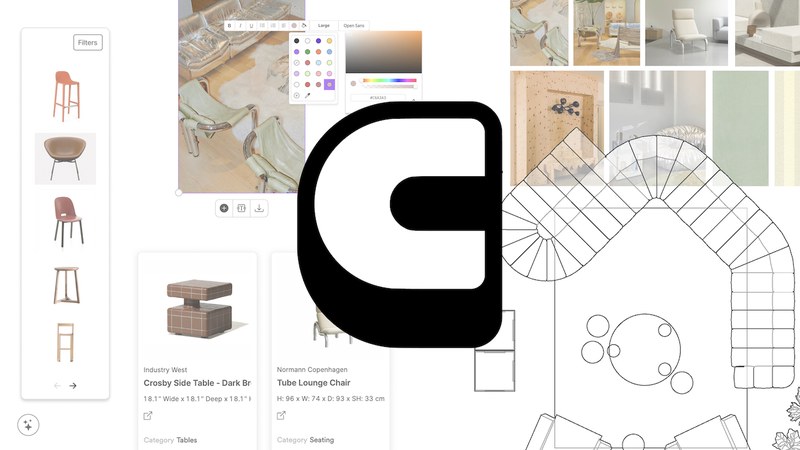
Canoa
Canoa is a browser-based design platform that gives interior designers and architects one connected workflow to collect inspiration, build data-rich mood boards, lay out furniture to scale, pull real product data, and generate FF&E schedules. Founded in 2019 by Federico Negro out of the Brooklyn Navy Yard, Canoa replaces the scattered stack of Revit, AutoCAD, Excel, and PowerPoint with a single AI-assisted canvas, while pushing the furniture industry toward circular, low-carbon practices.

Jonathan Widawski
Jonathan Widawski (known as Jo) is the co-founder and CEO of Maze, a continuous product discovery platform that lets teams run user research at the speed of product development. A veteran product designer and former UX instructor who worked with McKinsey, Rocket Internet, and PSG, he launched Maze in 2018 after experiencing firsthand how impossible it was for product teams to get reliable user data fast enough to matter. Under his leadership, Maze grew 6x during the pandemic, expanded to 60,000+ brands across 35 countries, and raised $60M total — including a $40M Series B in 2022 led by Felicis Ventures.

Sergie Magdalin
Sergie Magdalin is the co-founder and Chief Experience Officer of Webflow, the visual web development platform that lets designers build production-ready websites without writing code. Alongside his brother Vlad Magdalin and Bryant Chou, Sergie — a former freelance graphic designer and UX designer — built Webflow from a rejected Y Combinator application into a $4B company with over 3.5 million users. His design sensibility shaped Webflow's core UX, including pioneering visual interaction tools and a responsive design system that democratized professional web publishing.

Krea
Krea is a San Francisco-based generative-AI creative suite that lets designers, artists and brands generate, enhance and remix images, video and 3D in real time. Founded in 2022 by Victor Perez and Diego Rodriguez, the company unifies leading AI models behind a single, designer-friendly interface and reached a $500M valuation in 2025.

Victor Perez
Víctor Pérez is the co-founder and CEO of Krea.ai, a San Francisco-based generative AI platform that has raised $83 million and grown to 20 million users. A Barcelona native who studied audiovisual systems engineering at UPF, Perez received the prestigious laCaixa Fellowship (a scholarship from the King of Spain) to pursue graduate studies at Cornell University — but spent just one day on campus before convincing his co-founder Diego Rodriguez to drop out and build Krea instead. A researcher whose work has appeared at NeurIPS and ICCV, and a graffiti artist at heart, Perez leads a company whose mission is to put creators in control of AI — not replace them with it.

Aaron Epstein
Aaron Epstein is a General Partner at Y Combinator, the world's most prestigious startup accelerator. A serial founder who built his first software product in a college dorm room, he went on to co-found Creative Market (YC W10) — a design asset marketplace he grew to a 2014 Autodesk acquisition in under 16 months, then spun back out as an independent startup in 2017. At YC, he has reviewed over 8,000 applications, advised companies now collectively valued at $57 billion, and helped define how the accelerator thinks about marketplaces, business models, and pricing.

Andrew Reed
Andrew Reed is a Partner on Sequoia Capital's growth team - possibly the youngest junior partner in Sequoia's history when he joined at 23 from Goldman Sachs in 2014. Over a decade, he's built one of the most impressive growth-stage portfolios in venture capital, with board seats at Figma, Klarna, Bolt, Vanta, Strava, Warp, and Harmonic, and investments in Robinhood, ElevenLabs, Zapier, Phantom, and Sourcegraph. A childhood stutter made him a listener first, which turned into his greatest edge in founder assessment.