The flying part is easy to notice. The rope is easier to overlook. Yet a power-line stringing job depends on getting that rope through the right hardware, at the right tension, so the heavier wire can follow. Infravision has built a business around this apparently modest problem. Its aircraft attract the camera; the equipment below them explains the company.
- The job: construct and repair overhead power lines with coordinated drones and ground equipment.
- The buyers: utilities, contractors and infrastructure developers.
- The evidence: repeat deployments, a Powerlink agreement and a public trial report that includes the awkward bits.
The rope is the point
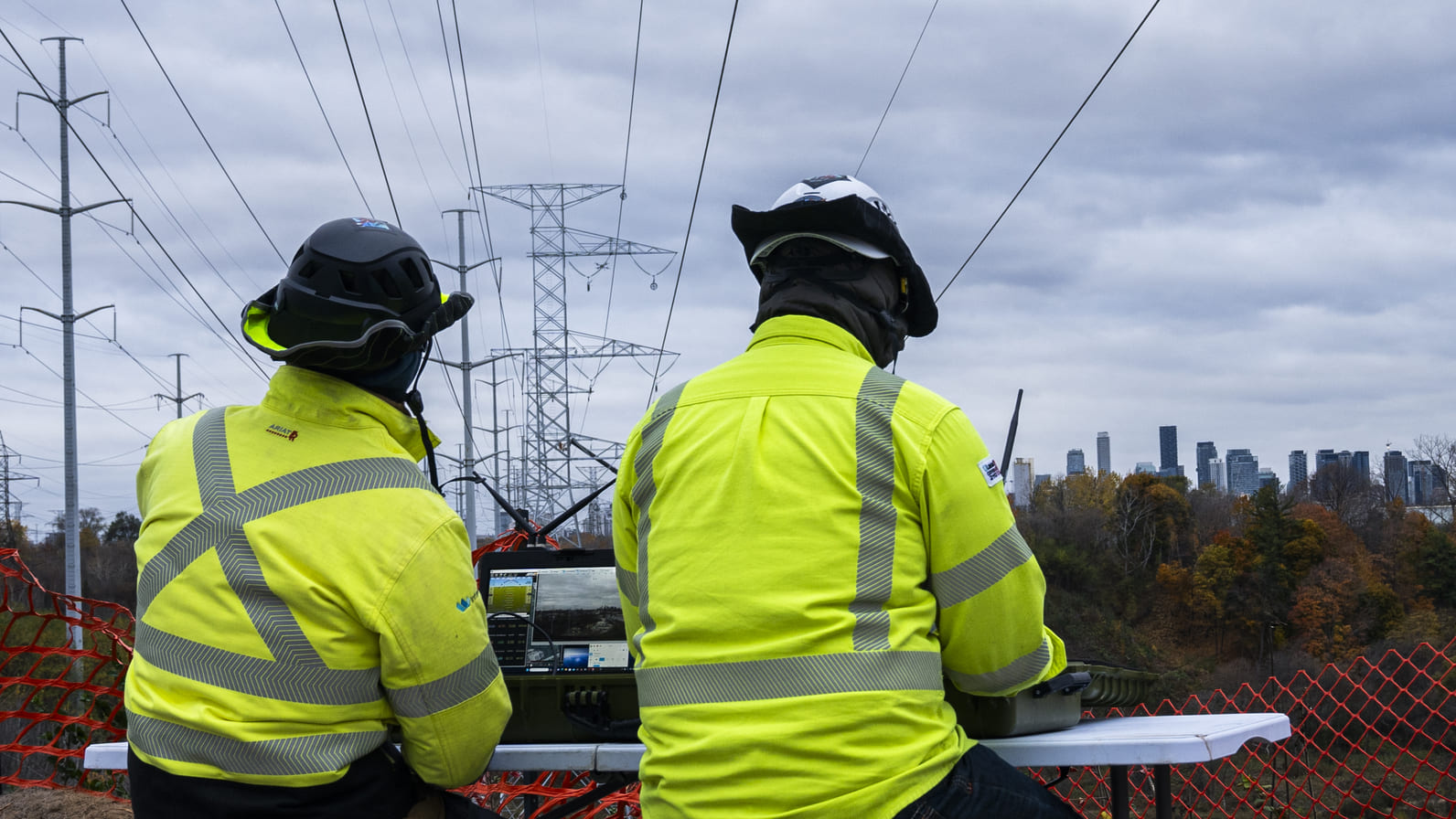
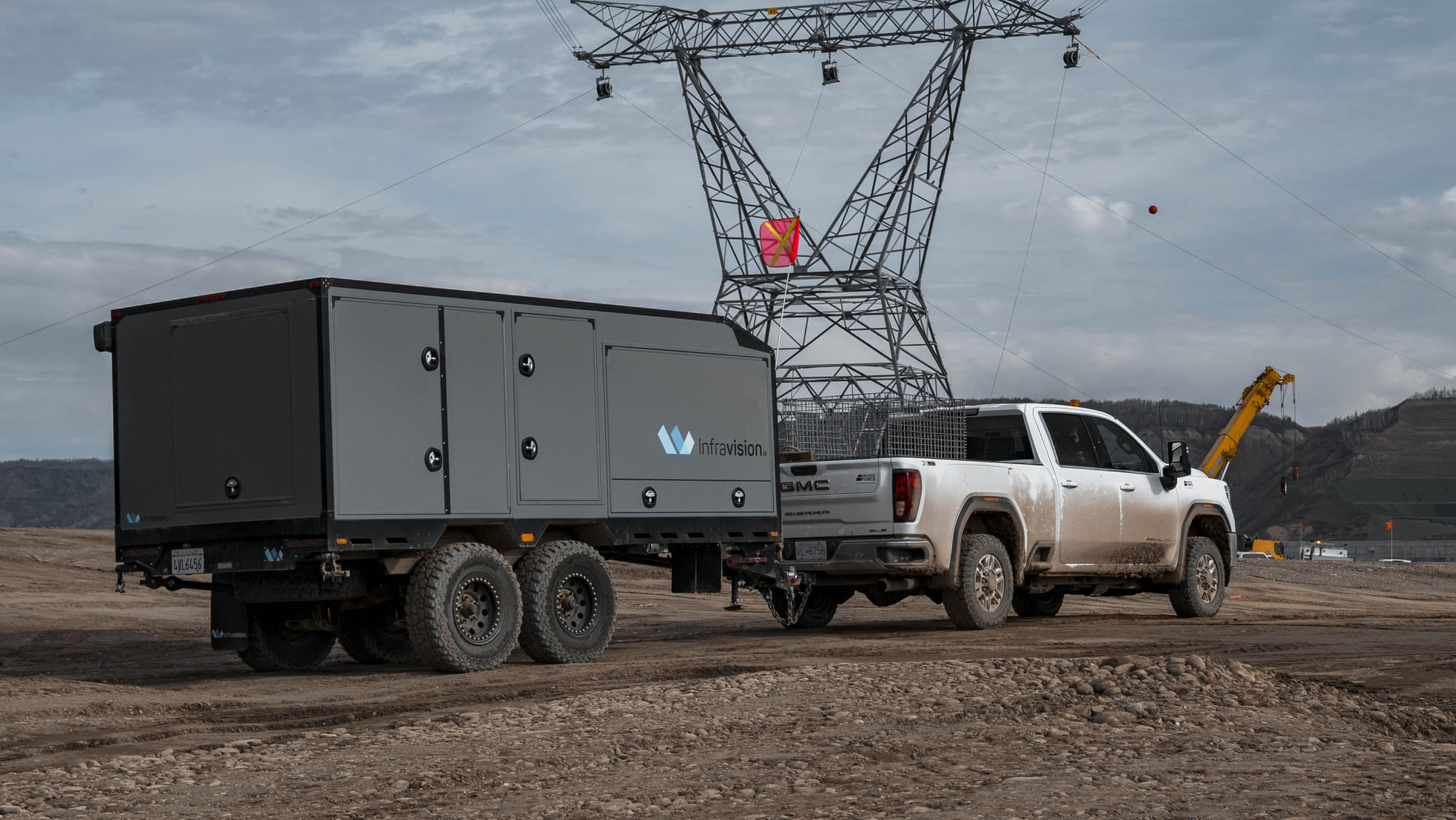
The TX System combines an aircraft and payloads, specialized line and adapters, an intelligent puller-tensioner, and software. The ground machine manages the pull while the drone carries the line. Infravision’s current product description gives that puller 1.5 tons of capacity. That number belongs to the ground equipment; imagining a drone lifting a ton and a half would produce a rather different story.
Compatibility matters. Infravision says its hardware works with existing towers and standard stringing blocks, with adapters supporting latching without workers in towers. The pitch is practical: change the installation method while working with infrastructure the customer already has. Helicopter crews and conventional ground methods are the principal alternatives. The useful comparison concerns an entire job: access, people, outages, equipment and time.
Conceptual workflow. The equipment works as an integrated system.
Fifty kilometres, then a commitment
Consider Queensland’s Genex Kidston connection. Powerlink’s July 2024 newsletter describes a 186-kilometre transmission route, including 50 kilometres of drone-strung line. Helicopter stringing also appears in the account. The distinction matters: a working construction project can use several methods. The drone earns its place by being useful on particular sections, rather than by winning an argument about the future.
By October, Powerlink and Infravision had announced a multi-year agreement under which drone stringing would be considered for all transmission projects across Queensland. The package covered stringing, hardware installation and inspections. A procurement decision is a more demanding endorsement than applause for a demonstration: somebody must expect to use the equipment again.
186 km transmission route
PG&E offers another test: repetition. The utility said in December 2023 that it had used the TX system 20 times since introducing it in 2022, largely on storm-damaged distribution lines, with transmission reconductoring too. Emergency restoration is an unforgiving setting for a new tool. The customer needs electricity restored, not a particularly handsome flight.
The clamp that refused to cooperate
A separate monitoring trial with Transgrid supplies the less photogenic evidence. Infravision’s published knowledge-sharing report records a sensor detachment failure on span 652, traced to a faulty third-party clamp. The unit required forced removal. In response, the company introduced stricter inspections of incoming components. This is a wonderfully ordinary industrial lesson: the clever system still depends on the purchased part.
Other problems arrived through the physics of the workplace. Static discharge between the aircraft and an overhead earth wire disrupted a drone camera. Engineers added cable shielding and changed payload-guide materials. Strong winds shook sensors and muddied their laser-based readings; a tuned mass damper and software filtering improved stability. These were monitoring-trial findings, not evidence that every TX construction deployment suffered the same faults.
The report also describes progressing from tests on non-energized infrastructure to live installations. The transferable habit is to test removal, sensing and communications alongside installation. Equipment that can be placed successfully still needs to be retrieved and trusted.
More electricity, fewer assumptions
Monitoring tackles a different constraint. A conductor heats and sags as conditions change. Traditional static ratings rely on conservative assumptions; real-time measurements can help operators judge when a line can safely carry more electricity. The gain depends on conditions. A sensor cannot negotiate with hot metal or waive a clearance requirement.
ARENA committed A$732,493 to a project described in 2022 as costing about A$1.8 million, with Transgrid supporting a field trial of at least 20 sensors. The agency records completion in April 2025. That is a research-project budget, rather than a price tag for buying a TX system. The distinction keeps the economics honest.
“We started by reducing risks to the workforce”Chris Cox, speaking to ARENA in 2022
A construction company’s kind of robot
Cameron Van Der Berg and Chris Cox founded Infravision in 2018. ARENA recounts their chance meeting in a Townsville dive shop: infrastructure experience met military drone experience. Cox later described extending the original concern with workforce safety toward using the grid more efficiently. The opportunity widened as the founders understood more of the customer’s problem.
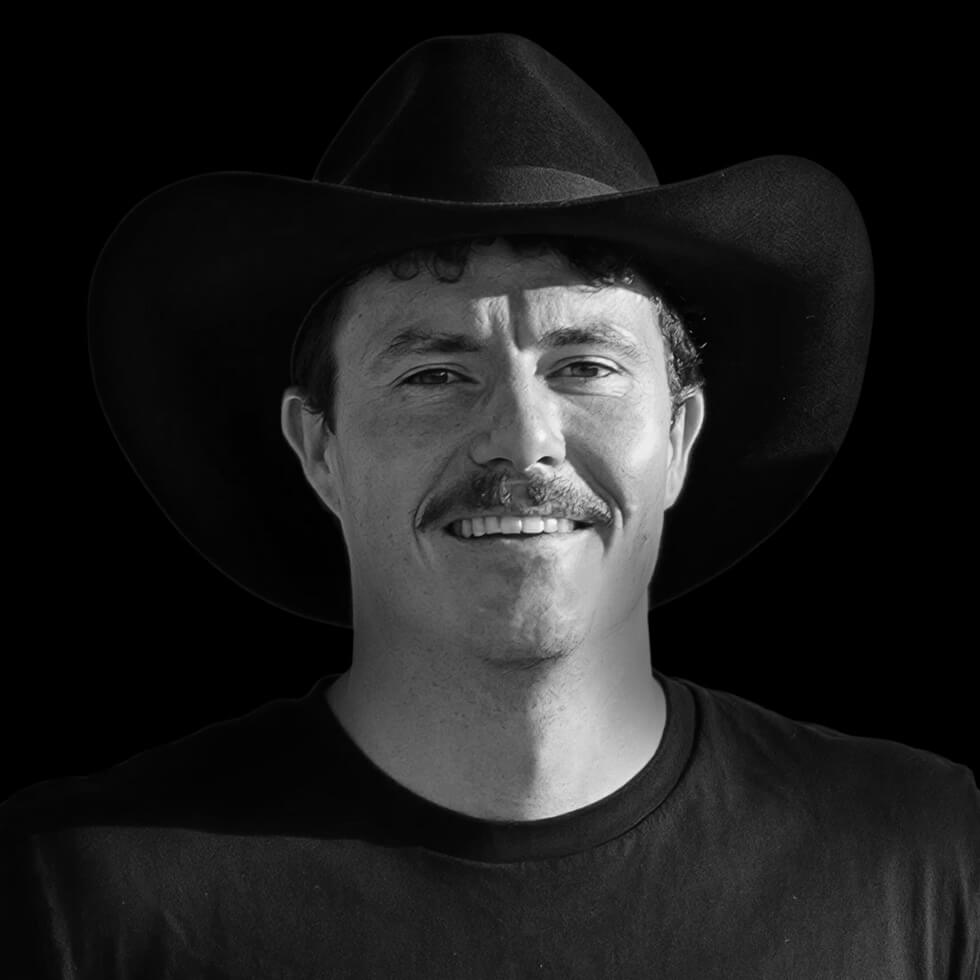
Today the business sells technology and services to organizations building and maintaining networks. Its crews operate systems independently or alongside contractor teams. Powerlink’s agreement combines equipment and services, while PG&E has developed internal capability. The company’s stated values put safety and partnerships prominently; its August 2026 announcement describes veterans across engineering, avionics, operations and project management.
What the next crew can borrow
A US$23 million Series A in 2023 was followed by a US$91 million Series B in November 2025, led by GIC. The announced priorities included North American expansion and manufacturing. In March 2026, Infravision reported more than 2,000 miles installed and said its first-quarter U.S. stringing mileage already exceeded the whole of 2025. Those are company-reported measures of activity, rather than independently audited savings.
In August, it appointed veteran construction leader Paul Gillespie to lead its U.S. 765 kV program and help customers adopt the systems. The lesson for another builder is specific: recruit the people who understand the work, integrate with their tools, and document what goes wrong. Weather, communications and safe operating limits still matter. Faster stringing cannot settle a disputed route or finance a project. But on an approved job, moving a rope differently can change a surprisingly substantial amount of work.