01 / WHO THEY ARE NOWA fire lookout that does not blink
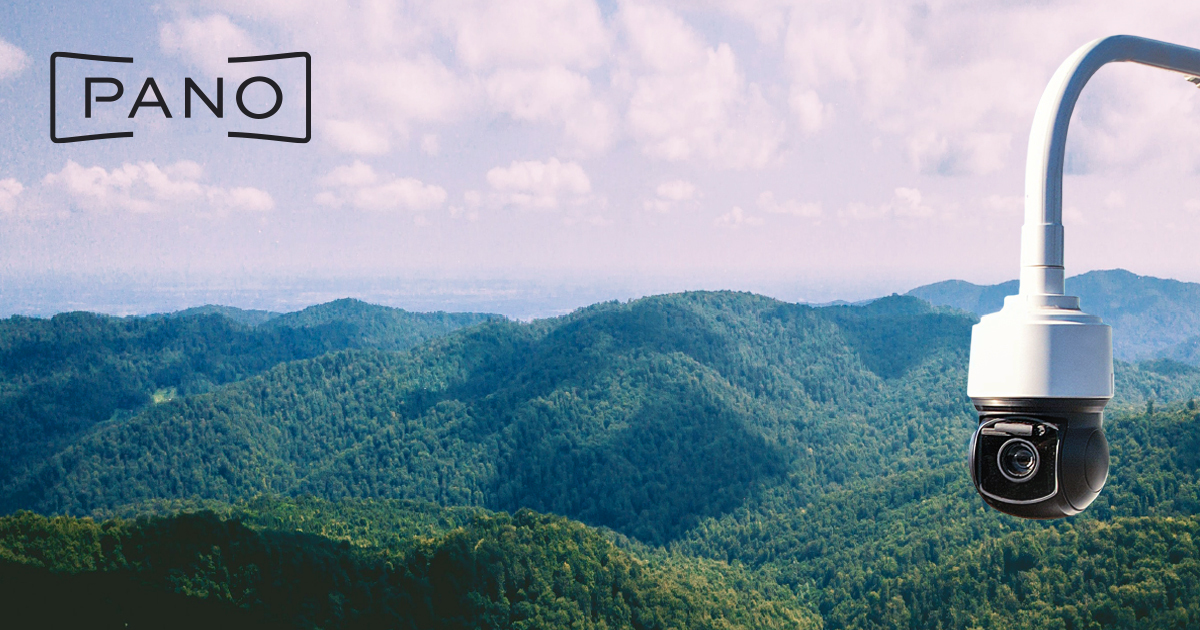
On a hot afternoon in the Sierra foothills, a camera on a ridgeline turns slowly. It has been turning all morning. It will keep turning all night. Somewhere in San Francisco, on Treat Avenue, an alert pings a screen in Pano AI's 24/7 Intelligence Center. A detection specialist looks at three frames, agrees with the algorithm, and forwards a confirmed fire to a dispatcher who has not yet noticed the column of smoke that is, technically, his job.
This is Pano AI in its ordinary working state. Nearly 30 million acres watched across ten U.S. states, five Australian states, and one Canadian province. Two hundred and fifty first-responder agencies on the platform. Fifteen U.S. electric utilities - Portland General, Arizona Public Service, Xcel - paying annual subscriptions to know where their wires are about to ignite something. Founded in 2020 by Sonia Kastner and Arvind Satyam. Series B closed last June at $44 million. Total raised: $97 million and counting. Treated by Fast Company, in 2026, as one of the world's most innovative companies.
The pitch, stripped of marketing varnish: detection is the cheapest part of firefighting and historically nobody invested in it.
Wildfires do not announce themselves. They smolder for twelve minutes, then they own the county.
— Working assumption inside Pano's Intelligence Center
02 / THE PROBLEMThe cheapest hour is the first hour
Wildland fire follows a brutal economic curve. In its first hour, a small fire can be handled by a single engine and a hose. By hour six, the same fire requires aircraft, mutual aid, and a press conference. By day three, it requires FEMA. The cost line is not linear. It is the kind of curve that politicians draw on whiteboards when they need to look serious.
For most of the twentieth century, the West relied on humans in fire towers to bend that curve. Then budgets came for the towers. Satellites stepped in, but satellites refresh on orbits, not on emergencies. By the 2010s, wildfires in California, Oregon, Colorado and New South Wales were burning at scales that strained the entire response system. The federal Forest Service was spending more than half its budget on fire suppression. Insurers started leaving zip codes. And the most expensive hour - the one nobody was watching - kept arriving anyway.
CAPTION · The historic fire-lookout tower is one of the most romanticized jobs in American conservation. Pano did not abolish it. They subscribed to it.
The window between ignition and uncontrollable is shorter than any insurance policy admits in writing.
— Industry truism, repeated quietly by underwriters
03 / THE FOUNDERS' BETTwo people who had never fought a fire
Sonia Kastner came to wildfires sideways. Harvard physics. Stanford MBA. Years running global supply chain for Nest, the thermostat company. The pattern she had spent a decade inside was a familiar one: take a sensor, put it in the right place, give it intelligence, and watch a sleepy category get rebuilt. She and Arvind Satyam, formerly of Cisco, started Pano in 2020 with one observation that, in retrospect, sounds slightly obvious. The cameras were available. The bandwidth was available. The AI was finally good enough. The fire-detection software market had simply never asked.
Their bet was unglamorous. Buy ultra-high-definition pan-tilt-zoom cameras. Mount them on mountaintops, telecom towers and ski resort summits. Stream the imagery over LTE. Train computer vision models to distinguish smoke columns from clouds, dust, factory plumes and the occasional reflection off a passing windshield. Add satellite feeds and field sensors as additional inputs. Wrap the whole thing in incident-management software a fire chief could open on a phone. Then - and this is the part venture capital tends to underrate - hire human detection specialists to verify every alert before it left the building.
CAPTION · A founder with a thermostat background looking at a problem with a smoke column. The lesson, apparently, is that supply chain is supply chain.
The hardest part of building wildfire AI is not the AI. It is convincing a forty-year fire captain that the alert is real.
— Sonia Kastner, paraphrased across many press interviews
- 2020Founded in San Francisco by Sonia Kastner and Arvind Satyam.
- 2021Seed round closed with Initialized Capital; first commercial deployments with Pacific Northwest utilities.
- 2022$20M Series A led by Initialized, Congruent, Salesforce Ventures, Valor and T-Mobile Ventures.
- 2023Sonia Kastner named to BBC 100 Women. Coverage expands into Australia.
- 2024Utility customer base grows past a dozen; entry into Canadian market via British Columbia.
- 2025$44M Series B led by Giant Ventures, with Liberty Mutual and Tokio Marine as strategic insurance investors.
- 2026Technosylva partnership announced; Fast Company names Pano a Most Innovative Company.
04 / THE PRODUCTOne platform, three sets of eyes
The product is called Pano Rapid Detect, and it does what its name implies in the unironic way that engineers occasionally still name things. Three sensing layers feed it. The first is the company's own hardware: paired 360-degree cameras, mounted at high vantage points, scanning the surrounding landscape continuously and shipping imagery back to the cloud. The second is satellite. The third is field sensor data, integrated from partners and customers. Pano's AI models triangulate across the three inputs to confirm, locate, and visualize a fire incident - usually within minutes of ignition.
Pano Rapid Detect
The flagship SaaS layer. Detections, verifications, incident maps, alerts. Used by agencies in dispatch workflows.
Pano Stations
The hardware. Ruggedized 360-degree camera units bolted to the kinds of places that get cell signal and a view.
Pano Enterprise
For utilities, insurers and large landowners who need to monitor portfolios, not single ridges.
CAPTION · The Intelligence Center in San Francisco is, by design, the least exciting room in the company. Calm rooms catch fires faster than loud ones.
Why insurers, agencies and utilities all bought in
// PANO BY THE NUMBERS · 2026
SOURCES · Pano AI, GlobeNewswire (Jun 2025), Built In SF, Latitude Media · figures approximate
05 / THE PROOFThe people writing the checks are not romantics
It is easy to fund climate companies if you only have to convince other climate people. Pano's investor list is more telling. Initialized Capital came in early. Salesforce Ventures stayed in. The 2025 Series B was led by Giant Ventures - and joined, crucially, by Liberty Mutual Strategic Ventures and Tokio Marine Future Fund. Insurance balance sheets are not in the business of investing for narrative reasons. They are in the business of paying claims, and finding ways to pay fewer of them.
The customer list rhymes with the investor list. Portland General Electric. Arizona Public Service. Xcel Energy. Austin Energy. Puget Sound Energy. The U.S. Forest Service. The Bureau of Land Management. State fire agencies across the American West. A growing roster in Australia and British Columbia. Ski resorts. Forestry operators. Community associations whose homeowners pay dues that are now, partly, paying Pano.
CUSTOMERS250+
Federal, state and local first-responder agencies on the platform.
UTILITIES15+
U.S. electric utilities - the ones whose lines often start the fire.
COVERAGE3 countries
United States, Canada, Australia. Three fire seasons, one platform.
PIPELINE$100M+
Contracted revenue reported as of the Series B announcement.
When Liberty Mutual writes a check into a wildfire detection company, that is a market signal even the National Weather Service can read.
— A reasonable read of the 2025 Series B
06 / THE MISSIONShrinking a window measured in minutes
Talk to Pano people for any length of time and the language returns to one stubborn variable: time. Time from ignition to detection. Time from detection to confirmation. Time from confirmation to the dispatcher's headset. Every other number in this story - acres, dollars, valuations - is downstream of those minutes. The company exists to make them smaller.
This is also, conveniently, the part of the business that scales. Hardware is hard. So is selling into government. So is recruiting fire-veteran talent into a tech company. But the marginal cost of adding a new camera to an existing model, and adding a new acre to existing coverage, drops over time. Pano is in the rare position of being a climate company whose unit economics get more attractive the larger the disaster.
CAPTION · The growth story is, in a sense, an arbitrage on bureaucracy: pay for software now, or pay for evacuation later.
07 / WHY IT MATTERS TOMORROWDetection is no longer optional
Fire seasons in the U.S. West are now roughly two-and-a-half months longer than they were in the 1970s. Insurance markets are pulling back from California and parts of the Mountain West. Utilities are facing legal liability for ignitions tied to their equipment. Governments are under pressure to show ratepayers and voters that they are doing something measurable. All of these constituencies arrive, eventually, at the same question: how fast can we know?
Pano AI's answer is engineered, subscription-priced and, increasingly, the default. There will be competitors - some are already mounting cameras of their own. There will be regulatory complications. There will be a Series C. There will be a quiet day, sometime in the next five years, when a fire starts somewhere in the West and never makes the news, because a Pano station saw it at minute three and an engine reached it at minute thirty. That day will count as a success no one outside the company will measure.
The best wildfires are the ones you never hear about. Pano is building a business model on top of that sentence.
— The closing argument, more or less
Back on the ridge in the Sierra foothills, the camera is still turning. It will turn through the dry afternoon and into the cool of night and through next week's red flag warning. It will not call in sick. It will not look away during the interesting part. Somewhere in San Francisco, a screen will ping, and a detection specialist will look at three frames, and the smoke column that started this story will get a phone call, fast, from people whose job it is to put it out.
That, in the end, is what Pano AI does. The rest is bar charts.
Where to find Pano AI
Watch + read