The check was for $60,000. Yash Shah and his friend Santhana Krishnan had been discussing leaving Hewlett-Packard to start a company. Both were new fathers. Both had salaries to surrender. A cousin arrived from Detroit and asked them to put a price on everything they feared.
Rent. The costs of babies. The less easily itemized expense of uncertainty. They arrived at $30,000 apiece. The cousin offered to cover it. Shah and Krishnan resigned together. Years later, Shah would supply the detail that makes the episode worth keeping: they never cashed the check. Its usefulness had already been established.
There are more conventional ways to introduce the co-founder and CEO of Jeavio. He has built software businesses, invested in startups and become chair of TiE Global. But the unused check gets closer to a question running through his working life: what does another person need before they can take the next step?
Two fathers, one resignation day
Shah grew up in India and came to the United States to study mechanical engineering at Clarkson University in upstate New York. After graduation, he moved to the Boston area. His first job was at TRW in Cambridge; Hewlett-Packard followed. The route into software entrepreneurship began with an engineering degree in a different discipline.
Krishnan was already part of that history. They had been roommates at Clarkson before becoming colleagues at HP. Their decision to found InteQ in 1995 therefore rested on a relationship that predated the business. Before there was a company to divide responsibilities in, there was someone whose judgment each had lived alongside.
The family support matters here. The cousin’s exercise gave their anxieties edges and numbers. Their spouses supported the decision. A resignation can look wonderfully decisive in a biography; at home, it has to coexist with ordinary bills. In this case, the leap had several people standing behind it.
Two founders put a number on the downside. The $60,000 check remained uncashed.
An engineer learns what ownership costs
InteQ began in IT services and developed software for managing technology operations. Shah served as president and chief technology officer, with Krishnan as chairman and CEO. It was work concerned with keeping other companies’ systems running, the kind of software whose absence tends to attract more attention than its presence.
The company’s milestones included remote IT monitoring through InfraWatch and a software-as-a-service service-management product called InfraDesk. Its history tracks a shift toward delivering enterprise technology over a network. For customers, the questions were concrete: what was happening in the infrastructure, and how could someone manage it?
The financing introduced a different set of questions. InteQ moved from bootstrapping to venture backing. After the technology downturn, Shah and his co-founder lost control of the business to investors. They subsequently bought it back and rebuilt. The familiar instruction to learn from failure becomes considerably less abstract when the company being restarted is your own.
That episode gives weight to his later advice about understanding the downside. He had encountered a downside more substantial than an uncomfortable investor meeting. There was a business to recover, with the original founders returning to work on what they had already spent years creating.
The year with two endings
In 2010, InteQ reached two separate sales. CSS Corp acquired its remote infrastructure management services business in May. The SaaS business went to CA Technologies in December, through Nimsoft. Putting both transactions on the page preserves something a single exit headline tends to flatten: the company contained different kinds of work, and they found different homes.
Fifteen years separated founding from those sales. The interval included self-funding, outside capital, lost control and a return. In 2011, TiE Boston recognized Shah and Krishnan with an entrepreneurial achievement award. By then, their achievement included staying with the work through a sequence that would resist a tidy diagram.
Shah’s technical career continued beyond InteQ. He worked at CA Technologies and later served as SevOne’s CTO. SevOne became part of Turbonomic in 2019; IBM completed its acquisition of Turbonomic in 2021. That path kept him involved in enterprise software while his work with younger companies developed alongside it.
A brother, a business, another beginning
Jeavio, founded in 2015, brought Shah into business with his brother Uday. It began with four people and one client. Its early proposition was practical: give entrepreneurs access to product management, design and systems architecture, capabilities an early company might struggle to afford on its own.
There is a recognizable connection to the check. A person with an idea needs enough room to act on it. Sometimes that room is financial. Sometimes it consists of people who can turn an intention into a product. Jeavio made that second kind of help into a business.
Uday’s background adds the operating detail. His work has included finance, infrastructure operations, business integration and establishing an Indian development center at InteQ. Helping a founder can involve a business model or a pricing decision as readily as a software design. The brothers arrived with experience on both sides of that conversation.
Jeavio’s leadership now describes Yash’s responsibility as vision and Uday’s as execution. Around them are leaders in engineering, product, AI and commercial work. The firm has expanded into serving private-equity-backed businesses as well as startups. In September 2025, Shah said it employed more than 300 people and remained owned by the two brothers.
One lesson he brings to those conversations concerns selling. An engineering team can spend its energy adding features before answering who will buy the product and why. Shah has warned against that mistake, including the temptation to over-engineer. He also draws a distinction between a founder making a sale and building a business in which somebody else can sell repeatedly. For someone trained to make things work, learning how customers choose them is another substantial piece of the job.
“I consider myself an entrepreneurial support person.”
Yash Shah
The room he kept returning to
TiE Boston enters Shah’s story early, when he was looking for connections and guidance himself. Over time, he participated as a board member, angel investor, mentor and sponsor. Jeavio supported TiE Angels and ScaleUp. The organization became part of his working relationships, with friendships extending into family trips to its retreats.
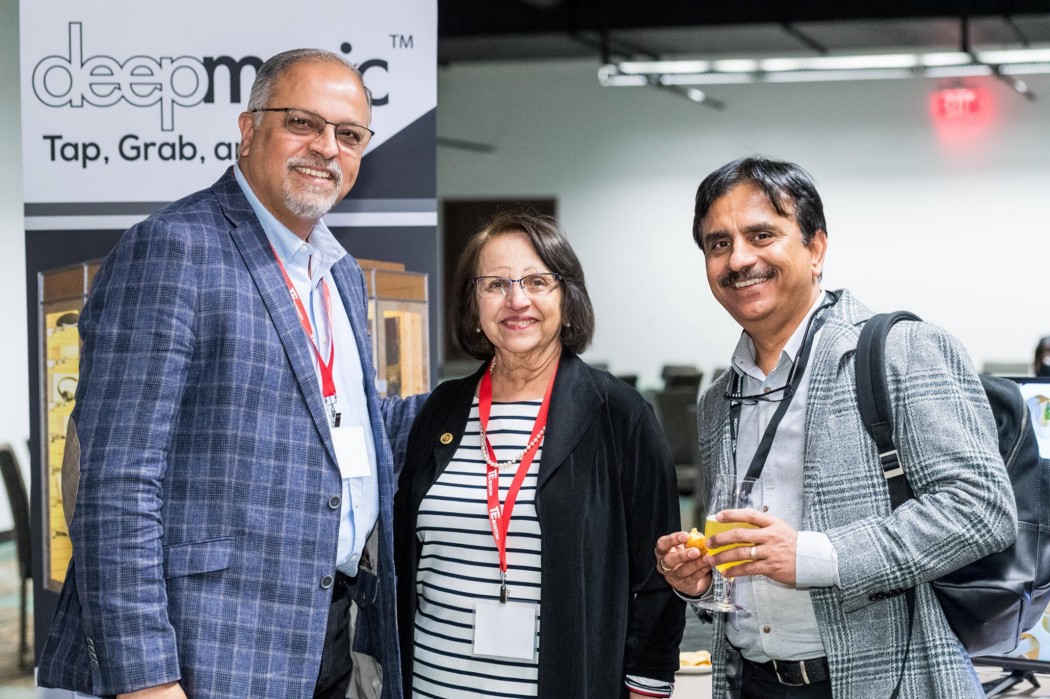
In 2022, TiE Boston elected him its thirteenth president, succeeding Anu Chitrapu. His term began on July 1 and ran through 2024. He set out to increase engagement and connect support for entrepreneurs at different stages, from people making their first attempt to those already running established companies.
That sequence continued with a seat on TiE Global’s board of trustees in 2025 and the global chairmanship in 2026. When he announced the latter, he traced his involvement back 28 years to arriving as an entrepreneur who needed help. His account began with finding mentors and building relationships, before it reached the titles.
Shah has described himself as introverted beside the more outgoing Krishnan. That makes the long involvement in networking more interesting. He had to learn the value of being in those conversations. A complementary co-founder helped; so did returning to a community where an introduction could become a working relationship rather than a one-off exchange.
The continuity is useful. A professional network can become an elaborate collection of people who have agreed to be in each other’s address books. Shah’s participation has involved programs, time and sponsorship. There are actual occasions on which someone has to turn up and be useful.
Software still has to survive Tuesday
Jeavio’s present work brings that practical emphasis to artificial intelligence. Its services include modernizing older systems, developing products and organizing knowledge that is scattered across documents and conversations. The company’s ADAPT platform supports its work with AI and institutional knowledge. The client still has a business to run while the technology changes.
Its current approach emphasizes systems that can move beyond a demonstration into everyday use. That requires attention to data, evaluation, operating costs and ownership. An impressive prototype has the advantage of a sympathetic audience. A working system has to deal with the people who simply need to finish the job.
The interest predates the latest wave. In 2020, Shah was already discussing AI, natural language processing and data analytics as opportunities for the companies Jeavio supported. The technologies have moved quickly since then. The continuing question for his business is which capabilities will help a customer do something useful.
Shah has also publicly supported the Vadodara generative AI community and acknowledged CTO Rushi Luhar’s leadership in it. The discussions reach beyond models to engineering decisions and careers. For a company that supplies technical capability, learning what that capability now requires is part of the work.
The freedom to do it again
After the sales, the rebuilding and the later company, Shah’s personal measure of success has become fairly domestic in its scale: enjoyable work, people he likes working with, and command over his time. It is a definition that can be tested on a working morning, without waiting for a transaction announcement.
That does not mean the ambition has disappeared. Jeavio has grown beyond its first small team, and the TiE role puts Shah in contact with founders across countries. The question has widened from whether he and a friend could leave HP to how other people get the resources and confidence to build.
He has a short phrase for the part that requires being there: “Luck happens when we show up.” The cousin’s check, the college friendship, the brother’s operating experience and the years inside TiE give that thought some company. His career has repeatedly involved someone making another person’s next move possible. The check remains a good place to begin.