Sanjay Sehgal has a small amendment to the familiar story about the monk and the Ferrari. He would prefer to keep the car. The entrepreneur, who also teaches meditation, likes the idea of enjoying material success without becoming its prisoner. It is a pleasingly practical position for someone whose working life has involved motherboards, storage networks, investors and acquisitions. Renunciation can wait. There are customers to call.
The joke travels well because it makes room for both sides of him. Sehgal runs the technology business long known as MSys Technologies, renamed Aziro in 2025. He also spends time helping people think about their lives beyond their jobs. He has built companies in Atlanta and across borders, while resisting the suggestion that a founder ought to surrender every available hour to the enterprise.
His story contains plenty of the usual entrepreneurial furniture: engineering credentials, a move to America, venture financing and an expanding company. The more revealing details are smaller. A suitcase packed for a temporary assignment. A grandfather with stories about a brick kiln. A businessman who believes people should leave room in the week for their families, and who can make a joke about his own spiritual credentials.
A suitcase with a short itinerary
Sehgal grew up in a joint family in Old Delhi. His grandparents and parents shared a modest apartment. He remembers the domestic pleasures precisely: ginger in the tea, soft rotis, and the chance to sleep in his grandfather’s room and hear about the business his grandfather had left behind after Partition. Enterprise arrived in his imagination as family history, with loss and persistence attached.
He studied at Delhi College of Engineering, graduating in 1988, and began his working life at DCM Data Products. In 1990, his work took him to San Jose. He had helped design a 486 motherboard, a detail that places the story in an earlier technological age, when the components inside the box could feel as exciting as anything appearing on the screen.
He expected the American assignment to last three months. He took a small suitcase and promised a quick return. An opportunity in Atlanta became a full-time career; nearly two years passed before he went back to India for a visit. Atlanta eventually became home. Temporary arrangements sometimes have an extraordinary talent for acquiring permanence.
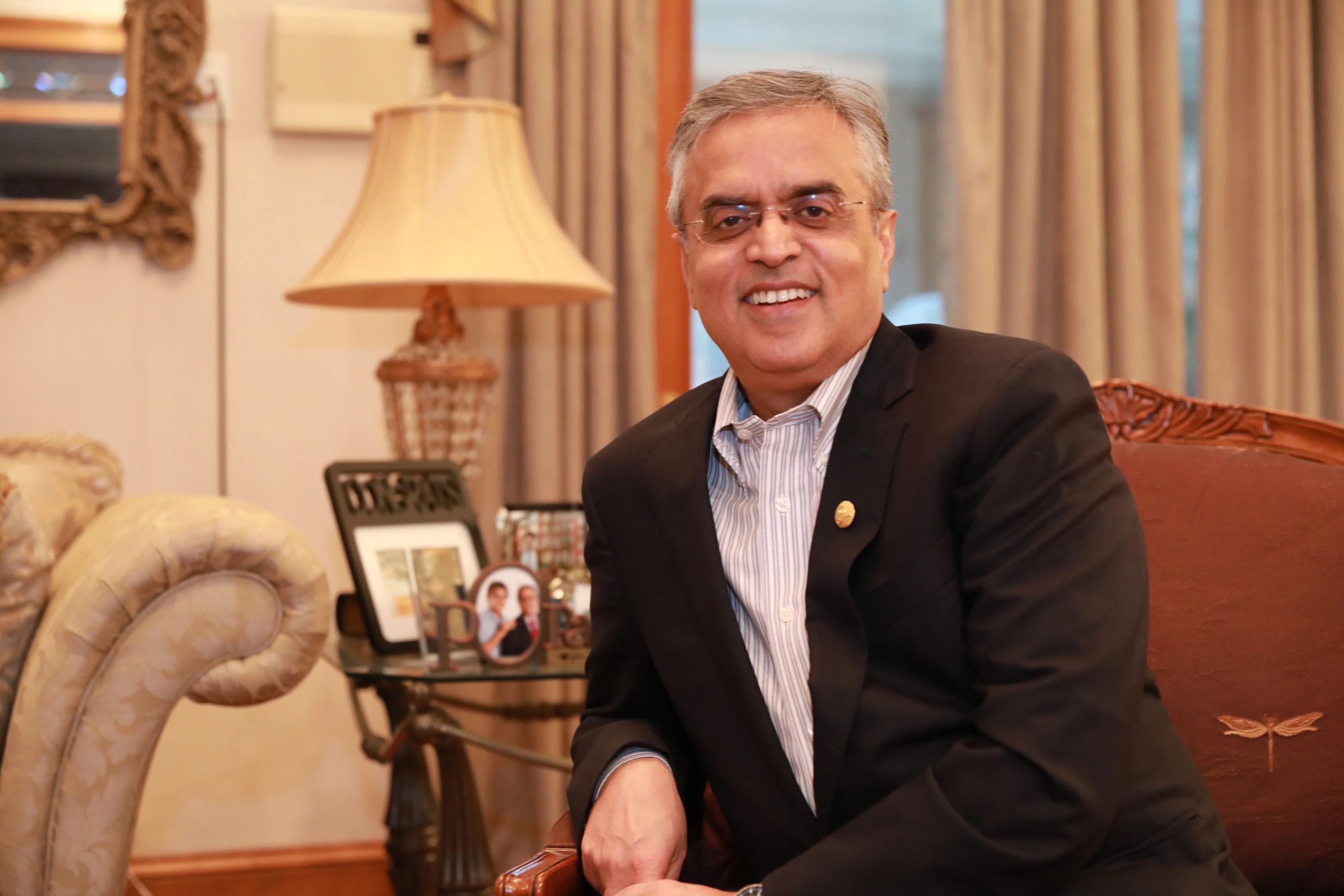
The engineer crosses the room
At American Megatrends, Sehgal worked in a business making the hardware and software that helped computers function. The company moved into storage technology, including RAID products. Building the product presented one set of difficulties. Getting people to buy it presented another. The existing sales team knew motherboards and BIOS; the storage offering required a different conversation.
Sehgal moved toward that conversation. The engineer took on marketing and sales, eventually holding a vice-president role. It is a consequential turn in his career: understanding the machinery became the beginning of the job, followed by understanding the customer. The experience gave him a view of a technology business from both sides of the transaction.
He left American Megatrends with hardware executive Sukha Ghosh to start iVivity, working on storage networking. Later ventures included Scentric, focused on classifying data, and Pramana, concerned with validating human users. Across the changes, the subject matter remained recognisable: how information moves, how it is organised, and how a business can make useful products around it.
The portfolio also reveals an appetite for starting again. Each new venture brought a different technical problem and a different company to organise. A successful engineering career might have offered a more settled route. Sehgal repeatedly chose the uncertainties of assembling a business, then carried those experiences into advising other founders.
Different businesses. A recurring interest in the systems underneath the screen.
A customer becomes the chief executive
The origins of his involvement with MSys are more interesting than a tidy founding legend. He has described recognising a need for product engineering while already running another venture. A friend from the services industry started the business; Sehgal became a customer and helped bring in other customers. He eventually joined it full-time. He had encountered the need from the buying side first.
The company traces its beginnings to a small Chennai team in 2007, followed by a US office in 2008. Its work centred on building and modernising products for other technology businesses. That is a particular kind of relationship. The customer is trusting an outside team with something it intends to put its own name on.
Expansion came through offices and acquisitions. Clogeny joined in 2014, DigiFutura in 2017, and Mobinius in 2019, adding capabilities across cloud engineering, mobility and AI. The pattern was to buy complementary expertise. In 2022, the company expanded into Australia and Malaysia; a Singapore office followed in 2024. The small team’s geography had become considerably more complicated.
For Sehgal, the appeal of the business also rests on remaining accessible to customers. His argument for a medium-sized engineering partner is personal: the chief executive is within reach. Behind that sales pitch lies a demanding promise. As a company spreads across countries, familiarity becomes something management has to preserve deliberately.
Trust, without the business-card blizzard
Sehgal’s writing about networking begins with an Atlanta lawyer. At an event, he met a managing partner who gave people useful legal perspectives without continually pitching for work. The lawyer earned his confidence. Eventually, Sehgal sought his advice and referred associates. Help came first; business followed. The anecdote is a modest rebuke to the sort of networking that feels like being politely hunted.
He recommends active listening, regular communication and a network that includes people from different cultures, industries and generations. He credits younger contacts with teaching him, too. A senior title, in this telling, does not confer a permanent exemption from being the student in the conversation.
On his own blog, the advice becomes practical: follow up thoughtfully, offer something useful and keep in touch when there is no immediate request to make. Reserve time for relationships. These are ordinary actions, but they require a longer attention span than collecting a roomful of names. They also fit a career built around repeat encounters with customers, colleagues and fellow founders.
“Stay away from the superficial.”
Sanjay Sehgal
The part of the calendar that stays human
Alongside the company-building, Sehgal became a Heartfulness teacher. He first encountered the practice after moving to the United States, a geographical irony he has acknowledged: he left India and found an Indian tradition abroad. Teaching it without charging became part of his life in Atlanta. In a family account, he described hosting a weekly group at home with his wife, also a trained facilitator.
He identifies Kamlesh D. Patel, known as Daaji, as a mentor. The relationship belongs in a portrait of Sehgal because he places it there himself, alongside his work and family. He speaks about service as a duty and wants time for it. His professional ambition has had to coexist with that commitment over many years.
His public advice repeatedly returns to how time is spent. He has described family coffee as a source of inspiration and argued that enjoyment of the journey can motivate a person more reliably than a distant target. There is something appealingly ungrand about that. A founder can have a view about global technology and still regard a good morning with his family as an achievement.
Sehgal Notes gives those interests a public outlet through writing, videos and a time-management course. His mentorship programme invites aspiring entrepreneurs to apply and offers the first session free. The subjects extend his career into a conversation with people who are still deciding what sort of working lives they want.
A new name, an old question
In February 2025, the company announced its acquisition of Gophers Lab, bringing expertise in Golang, cloud services and financial technology. In May, MSys became Aziro. The new identity placed AI at the centre of the company’s product-engineering proposition. For a founder whose career began around computer components, it marked another change in what customers expected engineers to deliver.
His own public writing has continued to move between business and the person doing it. In January 2026, he wrote about building companies across the United States and India. By September, he was using the language of a mental operating system to discuss familiar habits of thought. The engineer’s vocabulary has found another application.
A mentor once advised him to think of entrepreneurial achievement as a string of pearls. Several worthwhile successes could add up to a satisfying career; every company did not have to become a diamond. Sehgal has kept that image. It offers a useful way to read his sequence of ventures, acquisitions, teaching and mentorship, without pretending every turn was inevitable.
The Ferrari joke makes the same argument with better upholstery. Sehgal wants the freedom to build, enjoy what he builds, and keep some distance from the possessions and titles that accumulate. Whether discussing a customer, a younger entrepreneur or an hour with his family, he returns to the question of attention. There are many ways to spend a successful life. He intends to have a say in his.
Keep the conversation going
His writing, conversations and the business he leads.