The application crashed. Then the evidence went missing. In a case published by MSys Technologies, a storage company’s cloud-security application could not retain the logs its engineers needed to investigate a failure. Beyond 10 MB, the account says, the trail disappeared. Picture a detective arriving at a crime scene where the notebook has already been recycled.
- MSys Technologies became Aziro in May 2025.
- It engineers software, cloud infrastructure, storage and automated tests for enterprises and software vendors.
- Its newer AI products tackle connected information and governed execution.
That small logging problem makes a useful introduction to a company whose work often lives below the visible product. The screen is where customers notice trouble. The cause may sit several layers underneath it. MSys built a business working through those layers. Its recent AI ambitions become more interesting when you start down there.
The crash lost its witness
The immediate failure was diagnostic: engineers lacked the history needed to explain the crash. A related MSys case describes separating application services, packaging them in Docker containers and coordinating them with Kubernetes on Azure. The work also included automated tests and a continuous-integration pipeline. Changing the architecture meant changing how the team checked and shipped it.
One detail deserves attention. Engineers used the block-device identification tool blkid to help prevent storage devices from being formatted each time they were mounted. An apparently modest implementation choice protected the thing the customer wanted to preserve. Here was the practical task: make the software easier to operate without losing its memory.
The lesson extends beyond containers. Before changing a system, decide what evidence must survive a failure. Kubernetes documentation itself recommends giving cluster logs storage and a lifecycle independent of individual containers. The technology can move quickly; the investigation needs something that stays put.
The business beneath the interface
MSys Technologies sells engineering to organizations that already have products, customers and technical obligations. Buyers include independent software vendors and large enterprises. They can bring it a storage platform, a cloud migration, an application that needs modernization or a testing backlog. The service spans building software and keeping complicated systems useful.
This places the company in the product-engineering services market, alongside outside development partners and the customer’s own engineering team. A buyer is purchasing capability and delivery capacity. Historical MSys material describes outcome-based pricing. For a prospective client, the useful commercial question is which outcome the contract will measure: a completed integration, a release target or a service requirement.
Its concentration in storage, virtualization and infrastructure gives the pitch some specificity. These are environments where moving data, preserving state and coordinating components are everyday work. That experience matters when an attractive new feature meets the less attractive requirements of an installed enterprise system.
Buying the missing skills
The company began with a small Chennai team in 2007 under founder Sanjay Sehgal. Its expansion included acquisitions: Clogeny in 2014, DigiFutura in 2017 and Mobinius in 2019. The sequence reads like a capability map, extending cloud, mobility and AI-related work around an engineering base.
In February 2025 it announced the acquisition of Gophers Lab, adding fintech engineering, Go expertise and Google Cloud capabilities. That is a concrete way to broaden a services company: bring in people who already know a particular class of problem. The stated opportunities included payment systems, APIs and the difficulty of connecting legacy financial infrastructure.
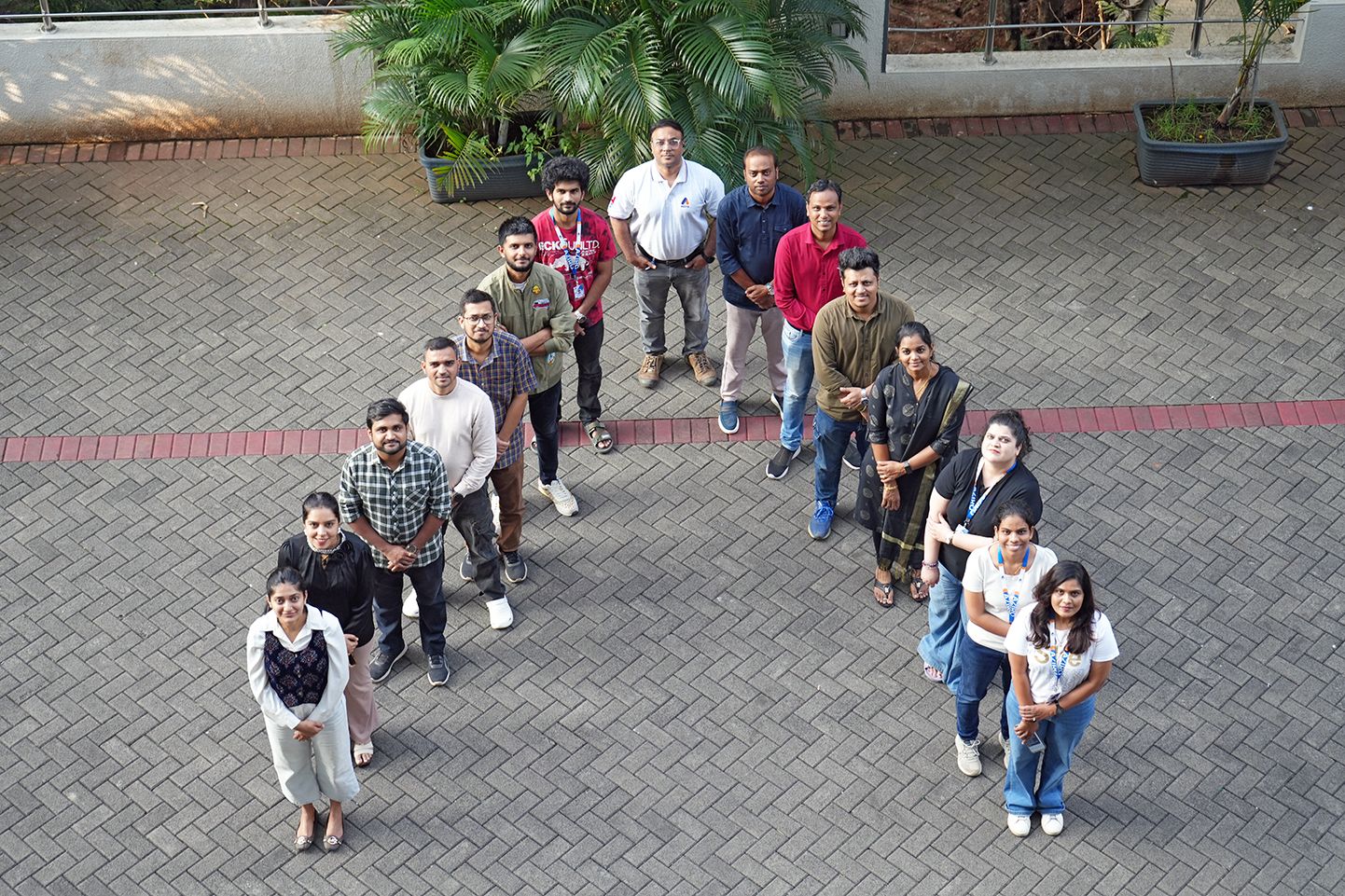
By August 2026, Aziro was reporting more than 1,800 engineers across six countries and announcing offices in Reading and San Jose. The company also describes employee learning and Heartfulness practices. Together these details sketch a business that must coordinate people as carefully as software. Clients need continuity; specialist knowledge has to travel between teams.
A different kind of test
There is also a product history behind the services. Mobitaz addresses mobile test automation. MTAS handles enterprise test automation, including record-and-playback workflows. PurpleStrike RT targets load testing with browser traffic running on Amazon EC2. Each addresses a different uncertainty: whether an interaction works, whether it remains repeatable and whether it survives demand.
The distinction is useful for buyers. A passing functional test says little about behavior under heavy load. A fast application may still fail on a particular device. A testing program needs to ask several questions, with tools chosen for each one. A longer tool list is only useful when the coverage adds up.
Aziro’s October 2025 BrowserStack partnership follows that logic, combining its quality-engineering work with cloud testing, device coverage and accessibility capabilities. In 2026, the company also announced AWS Advanced Tier Partner status. These relationships place it within existing enterprise technology ecosystems, where customers often need integration expertise as much as another platform.
When answers have to become actions
The May 2025 rebrand made the new direction explicit. “Aziro represents our present and future,” Sehgal said. The more revealing evidence is in the software introduced afterward. CAWi connects existing internal systems through permission-scoped access, aiming to help employees retrieve information without duplicating sensitive data into another central repository.
Aziron extends the ambition to execution. Its platform brings together agents, documents, models, workflows and enterprise tools. The public product page labels it beta. Modules cover engineering workflows, code intelligence, incident reasoning, dashboards and model routing. The premise is that an enterprise agent should complete a controlled task and leave a trace.
“Respect approvals, and verify the result.”
Anand JK Jain, Deputy CTO, describing Aziron
Start with something that can fail
For a buyer, the sensible starting point is one workflow with a visible bottleneck and a measurable finish. Include integration effort, cloud consumption, model usage and continuing maintenance in the cost comparison. Give the team a failure scenario as well as a successful demo. Then check the evidence.
This approach needs access to the relevant systems, clear permissions and someone accountable for the result. Without those conditions, automation can simply move confusion faster. The missing-log story offers a durable buying test for Aziro’s next chapter: when the task goes wrong, can the people responsible explain what happened and recover?