The problem at the staffing company was familiar enough to sound uninteresting. Hiring took too long. Information sat in disconnected tools. Recruiters did things by hand that software ought to have handled. Applicants encountered a cumbersome process. In Gritstone Technologies’ account of this Latin American client, the trouble accumulated between activities: sourcing, screening, interviewing, deciding. Each activity could function. The journey through them was another matter.
- Two ways to buy: custom product engineering or a named business platform.
- The recurring target: administrative work spread across disconnected systems.
- The useful lesson: pick one workflow and measure what improves.
That is a useful way into Gritstone. Its catalog crosses accounting, restaurants, recruitment, and healthcare. At first glance, these look like separate businesses. Look closer, and the same small drama recurs: somebody has useful information, somebody else needs it, and an awkward process stands between them.
A hiring bottleneck with a number attached
For the staffing client, Gritstone supplied Repetor, its applicant-tracking platform. The company describes a system bringing candidate sourcing, screening, and management together, with reporting and an AI candidate filter. Assessments and interviews could be accommodated as recruitment needs changed. The intervention addressed several connected tasks rather than one isolated feature.
Gritstone reports a 43 percent reduction in hiring cycles and a 40 percent increase in recruiter efficiency. Those are company-reported results for this particular client. Read them as an example of the outcome the vendor seeks, rather than a forecast for the next buyer. The mechanism is more portable than the percentage: fewer disconnected tools, fewer manual steps, and a clearer recruitment pipeline.
reduction in hiring cycles
Relative index, before = 100. One vendor-reported case.Repetor also reaches beyond the employer’s desk. Gritstone describes employability evaluation, career guidance, and personalized coaching for candidates. Its current company profile adds background verification and recruiter management. That gives the product an unusually broad brief: help an organization hire while also helping a person become easier to assess.
One problem, several product names
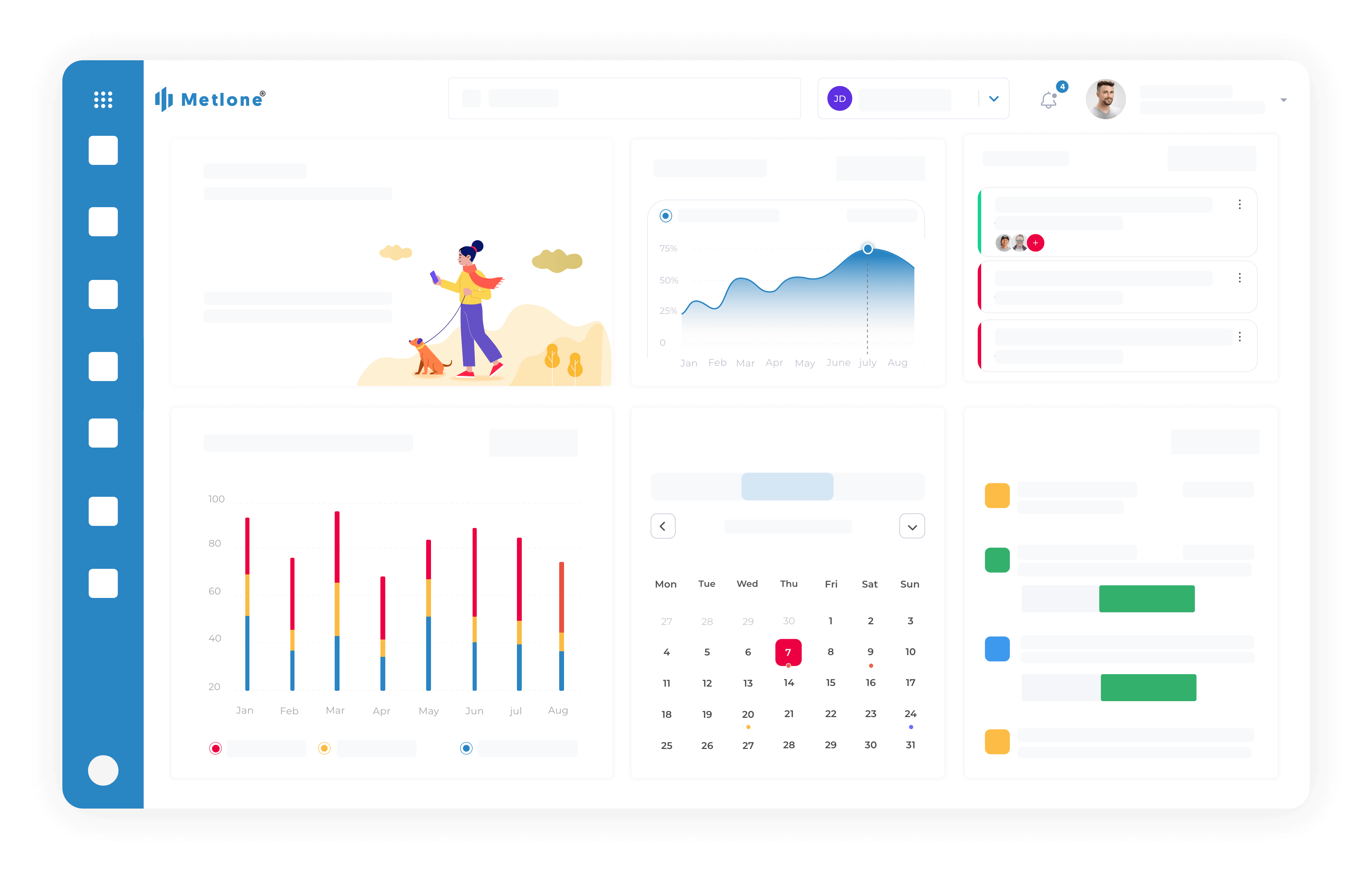
Consider Metlone. Its finance-and-accounts proposition connects sales, purchases, stock, receivables, and payables. GST-ready reporting gives it a concrete tax-related use case. A business owner can follow transactions into financial reporting instead of treating inventory and accounting as unrelated islands. The product’s own setup sequence includes importing data and configuring modules before going live.
Oven applies a similar idea to restaurants. The advertised package includes inventory, billing, employee management, and connections to food aggregators, payment gateways, accounting tools, and logistics partners. The attraction is operational visibility. A restaurant deciding whether to adopt it should trace an actual order through those connections, including the stock and payment consequences.
Healthcare makes the handoffs more personal. Exome covers appointments, electronic medical records, prescriptions, and billing. Twigo is marketed around capturing and transcribing doctor-patient conversations, with multilingual support and EMR integration. These are workflow propositions. Their practical appeal rests on helping clinicians handle documentation and information alongside the clinical encounter.
Then there is Talos, an AI platform advertised for image processing, PDF data processing, and medical coding. The breadth is striking. Gritstone’s product family moves from the cash register to the consulting room to the document queue. Its common interest, as the catalog suggests, is work that becomes easier when information can travel.
The prototype is the starting line
The other way to engage Gritstone is to bring it something unfinished. The company offers product strategy, user research, design, development, and optimization. Its engineering menu includes cloud and mobile development, DevOps and Kubernetes, AI and analytics, plus automated testing. A client can commission a product rather than choose an existing one.
Its published MVP method starts with enough features for initial users, then develops the product using their suggestions. User-persona research and ethnographic studies sit alongside architecture and engineering. The proposition is a connection between understanding a person’s work and deciding what software should do next.
- 01ObserveUsers and their work
- 02Build smallAn initial useful version
- 03ListenFeedback into the next version
This places Gritstone across two markets: commissioned software engineering and packaged business applications. Buyers can compare its services with another engineering consultancy or an internal team; they can compare an individual platform with a specialist vendor. The combination gives Gritstone several entry points, though each product still has to earn its place on its own merits.
A company with a color chart
Founded in 2016 and led by founder and CEO Sivakumar Thekkenaduvath, Gritstone has a US base in Exton and engineering offices in Kerala. In 2024, it added an office in the Kabani building at Technopark Phase IV in Thiruvananthapuram. The expansion put another physical address behind its international software business.

Its cultural vocabulary is less conventional than its office map. “Valuing Life” is the organizing phrase. On its Colors of Gritstone page, maroon represents branding and UI/UX; orange, customer obsession; gold, emerging technology; green, growth; purple, quality; pink, community service; and blue, engineering practices. Seven colors give otherwise abstract priorities something visual to attach to.
“We believe in ‘infinite beta’”
Gritstone’s stated approach to constant learning
The phrase suits a company whose development method makes room for revision. Its culture pages emphasize learning from feedback, listening to customers, and taking responsibility for mistakes. These are stated values. The practical test comes when a team must change a feature, revisit an assumption, or tell a client that an attractive idea needs more work.
Buy the workflow, measure the result
A prospective customer can borrow a modest habit from this story. Follow one task across the business before requesting features. Count the handoffs, establish a baseline, and choose a result worth measuring. For recruitment, that might mean elapsed hiring time. For accounting, it might mean the effort required to reconcile an order with its payment.
That approach needs a problem large enough to justify implementation, data migration, and changed habits. If existing systems already connect well, another platform may add work. For Gritstone, the persuasive demonstration is a particular task becoming easier for a particular user. The staffing case points toward that standard. Every new deployment gets to prove it again.
Take a closer look
Gritstone website · Product catalog · Company blog · Customer stories
LinkedIn · X · Instagram · Facebook
YouTube channel · Watch the video featured on Gritstone’s website ↗