At a technology conference in Shanghai in 2015, a small blue payment machine had an unusually agreeable assignment. Visitors could scan a code, spend one yuan, and try cake or take a rose. Yan Li’s company, Wiseasy, was demonstrating its terminal. The refreshments made a complicated proposition rather easy to understand. Technology is helped enormously by cake.
Behind the cheerful transaction lay two years of development and five generations of hardware. Li was starting again in a business where a good presentation could take a founder only so far. A device had to work in somebody else’s shop, in somebody else’s hands. His interest was in what happened when that device connected the shop to the internet.
That question has followed him from the early excitement around online-to-offline commerce to banking services, cloud infrastructure, and artificial intelligence. The terminology has acquired a larger wardrobe. The setting remains recognizable: a customer, a merchant, and some unfinished business at the counter.
The law graduate at the counter
Li’s route into payments began a considerable distance from a circuit board. He graduated from the law school at the University of International Business and Economics and worked in the treaty and law department of China’s commerce ministry, then known as the Ministry of Foreign Trade and Economic Cooperation. His public biographies also record postgraduate study at Peking University and Renmin University.
It is an interesting background for a founder whose products sit where commercial relationships become transactions. Law concerns itself with the terms under which people deal with one another. Payment technology has to make an agreed exchange happen. The two occupations share a respect for details that become conspicuous when they go wrong.
In the early 2000s, Li co-founded Beijing Emay Softcom, a mobile messaging business, with Feng Jun. Before Wiseasy, then, there was already a career in connecting companies with people through a mobile device. The phone was becoming a commercial channel. Li’s next venture would approach commerce from the other side of the exchange.
A second company, a different problem
He founded Wiseasy in 2012, as mobile internet use and online transactions were becoming part of daily consumption in China. A purchase might begin online and finish inside a physical business. Somewhere between the two, a merchant needed to recognize the order, accept the payment, or redeem the offer.
The ambition was to give that merchant a connected terminal with applications beyond collecting money. Android provided room for additional services. The device could become part of the shop’s working day, rather than an object summoned only when a customer reached for a card.
By May 2015, Wiseasy had announced a RMB 100 million Series B from Shining Capital and IDG. Li described plans for deployment and a service network across 38 Chinese cities. Those were plans with a physical burden: machines to distribute, people to train, and customers to support. The internet had arrived at the counter, where it would have to learn the opening hours.
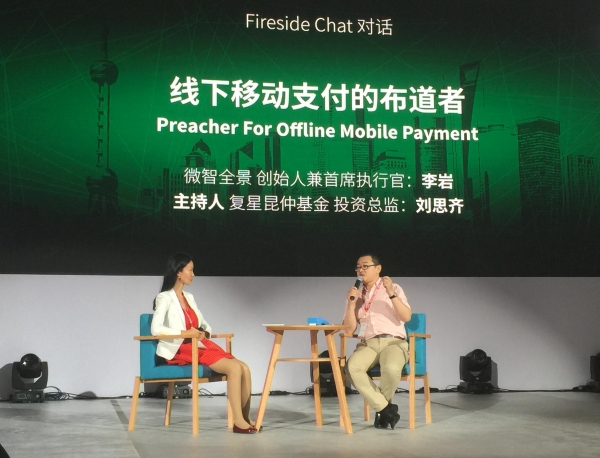
The uncles in the startup
Li could sound amused by the human arrangement required to build the new business. In a June 2015 interview, he described the experienced senior team working alongside colleagues born largely in the late 1980s and 1990s. The managers, he joked, were the uncles. He said he enjoyed working with the young team.
The remark places him inside a company rather than above it. He was an experienced entrepreneur surrounded by people bringing different ages and skills to a new task. He discussed co-CEO Lin Chen as a complementary partner, with experience in ecommerce and operations. The business needed that practical knowledge alongside the original idea.
His explanation of the product was similarly expansive. Collecting money was an essential function, but he wanted the terminal to handle online orders, electronic membership, and other commerce applications. The comparison was with a phone that had grown beyond calls. Once a device could run useful software, its job description became negotiable.
A bank within reach
By 2020, the language around Wiseasy included digital banking. Li’s company described terminals that could help institutions provide services beyond a conventional branch. The underlying idea had widened: a connected device could give people access to financial activities where they already lived and traded.
In his discussion of QR payments that year, Li linked mobile wallets with remote banking terminals. He described possibilities including utility payments, mobile top-ups, and cash services. The attraction was practical proximity. A banking service becomes more useful when reaching it does not require an elaborate expedition.
His introduction to Wiseasy’s digital banking report put the responsibility on banks to rethink existing systems. Customers would expect services that were faster, cheaper, secure, and available where needed. For Li, the question of access sat alongside the technology. A terminal’s significance depended partly on whom it could bring into the network.
This helps explain the persistence of the merchant in his thinking. A shop is a working place within a community. Giving that place more capabilities can change what customers accomplish during an ordinary visit. The ambitious part is the network; the everyday part is the errand.
A face is harder to replace than a card
Li’s enthusiasm for new hardware did not mean accepting every new payment idea at face value. In July 2019, he wrote about trying facial recognition payments himself. Registration was straightforward and the experience convenient. He nevertheless questioned whether the improvement over QR payment was substantial enough to overturn established habits.
He also considered the consequences of compromised identity data. A customer could cancel a card. Replacing the means of recognition attached to a face was a different matter. His argument joined user experience with cost, risk, and the competitive interests of the platforms promoting the technology.
Wiseasy would keep QR capabilities in its products, he wrote, even as it developed newer terminals. Here was a founder interested in innovation and prepared to question a fashionable application of it. The usefulness of the old feature still counted. A new camera did not automatically make the familiar code redundant.
Pi arrives at the till
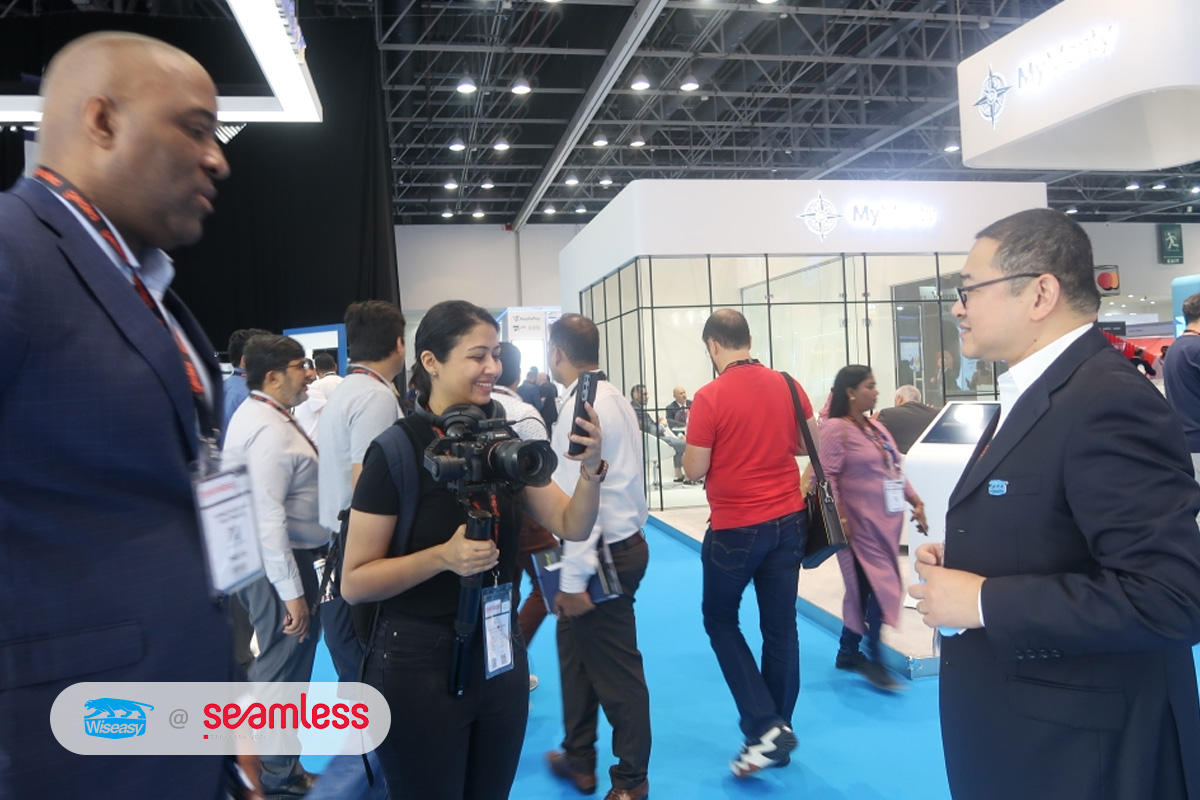
Wiseasy established its international headquarters in Singapore in 2021 and opened a U.S. office that year. Li’s public LinkedIn profile now places him in Singapore. The company’s geography had expanded, and the old question about useful hardware was acquiring new technical possibilities.
In January 2024, Wiseasy introduced its pi terminal at the National Retail Federation show in New York. Built around Qualcomm’s QCS6490 processor, the device brought on-device AI into the checkout proposition. Voice recognition and recommendations were among the advertised applications. The familiar commercial machine was being asked to participate more actively in the interaction.
In March, Wiseasy announced a Series C involving Qualcomm Ventures. The investment linked its payment ambitions with a company already supplying the processor behind pi. Li’s year-end message subsequently placed the funding and AI launch among Wiseasy’s milestones, while thanking customers, partners, and employees for their contributions.
There was continuity beneath the new vocabulary. His TMTPost archive contains writing about hardware from 2013 and reflections on CES from 2014. His interest in giving physical objects a different commercial purpose had a history before AI became the phrase on the exhibition stand.
The quiet usefulness of a payment confirmation
Some of Wiseasy’s work requires a less elaborate explanation. A QR payment speaker confirms a transaction aloud. For a merchant occupied with customers and goods, an audible confirmation addresses a small, immediate need. It gives a digital event a presence in the room.
Wiseasy’s 2025 Payments win at the SBR National Business Awards recognized a project combining its QS5E Soundbox, mobile POS terminals, and Wisecloud infrastructure. The award belonged to the company’s work. In his accompanying comments, Li emphasized secure, intelligent, accessible payment services and their role in the wider digital economy.
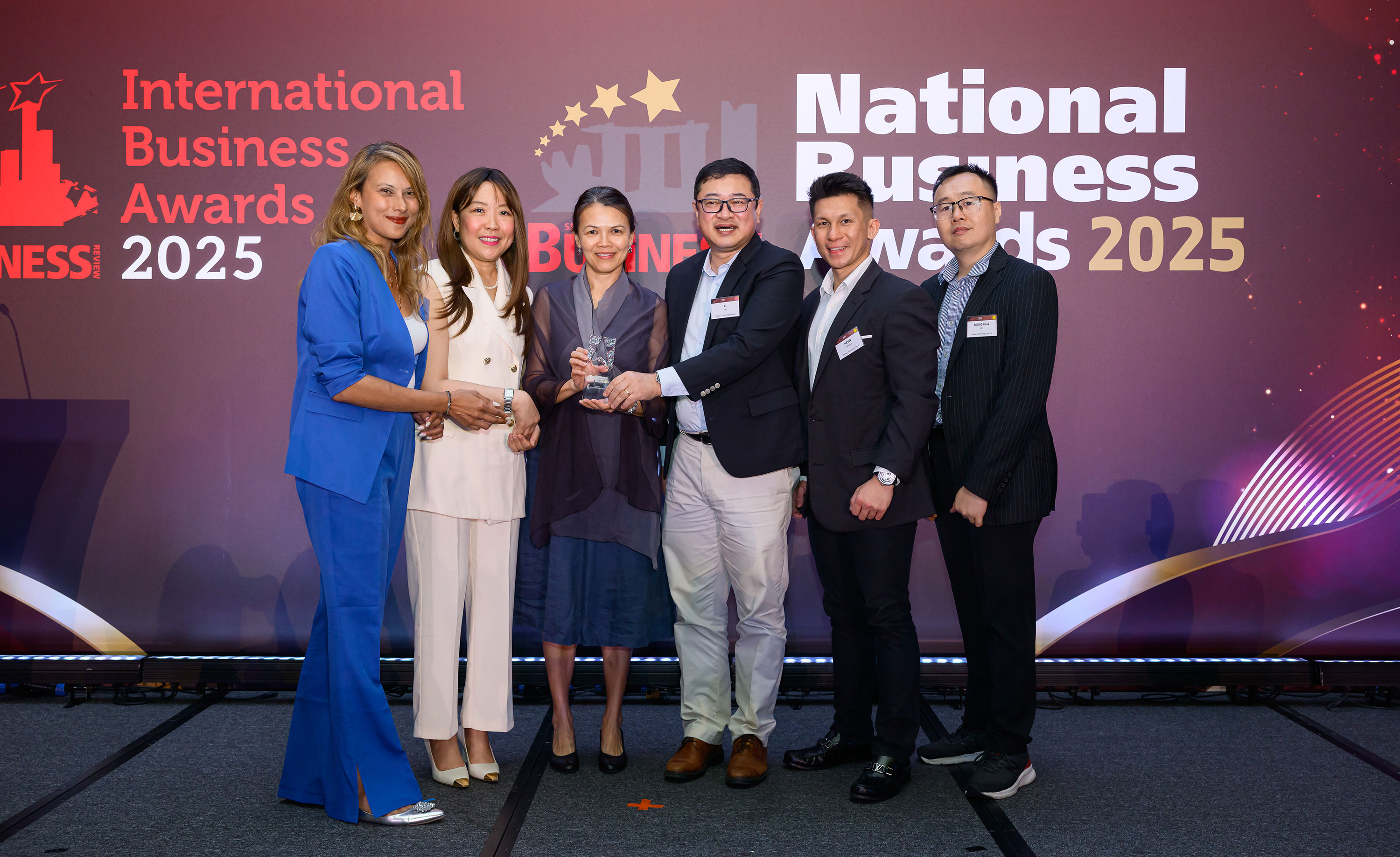
In his video interview around the award, the emphasis was on inclusive, affordable mobile QR access. Later that year, the RX smart reader launch returned to ease of use: standalone connectivity intended to help mobile merchants begin accepting payments without pairing another device.
“RX represents our vision for payments without barriers.”
Yan Li, November 2025 launch announcement
Across those examples, the aspiration has a concrete test. Can the person running the business get on with the business? A feature earns its place when it makes that answer easier. A spoken confirmation and an AI-equipped terminal approach the question from very different ends of the counter.
Still a student, still building
There is another strand to Li’s public record: an interest in learning that continues alongside company building. His LinkedIn profile lists Thunderbird School of Global Management from 2022 to 2025. In 2025, Wiseasy and Thunderbird jointly released a white paper about the future of global payments and fourth-generation payment networks.
Years earlier, in a 2019 learning-community profile, he offered a compact thought: “Wisdom needs honing, and truth is not static; it requires a lifelong pursuit.” Translated from Chinese, the sentence gives a quieter counterpoint to the business announcements. It also sits comfortably beside the questions in his writing about payment technology.
In May 2026, Wiseasy announced its selection for Mastercard Start Path and plans to advance AuroraX Cloud internationally. That same month it joined the Singapore FinTech Association. By September, its Middle East exhibition included a self-service payment kit and a dual-screen terminal. The product family continued to grow around the transaction.
Li’s career has carried him through legal work, mobile messaging, merchant hardware, and payment infrastructure. Each chapter changes the scale of the work. The shop counter keeps the story grounded. Somebody is waiting to pay. Somebody else has a business to run. There is still plenty for a small machine to do.
Read, watch, follow
- Yan Li on LinkedIn
- Li’s essays on hardware and commerce
- The 2015 Shanghai conversation
- Li on the early team and merchant terminals
- The digital banking interview
- Banking’s Digital Future
- Watch: Yan Li’s 2025 interview
- The pi launch
- The 2025 Payments award
- The 2026 Mastercard Start Path announcement
- Singapore FinTech Association membership
- September 2026 product update
- Wiseasy’s website
- Li’s 2019 essay on facial payments ↗
- Wiseasy on YouTube ↗