Profile · Founder · Fintech
Ximena Aleman
She left the newsroom to build the plumbing of Latin American finance. Today her company, Prometeo, is the region's largest open banking platform.
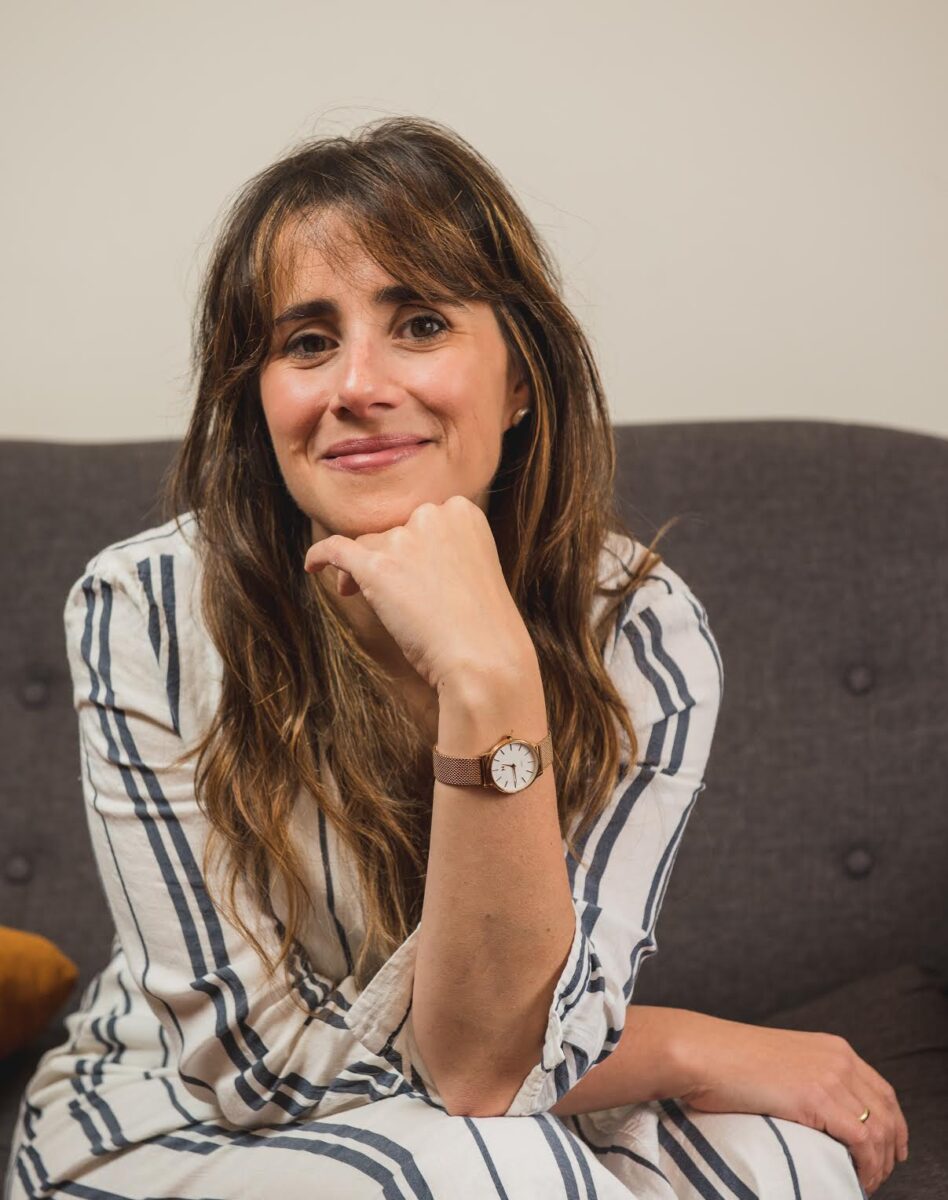
Ximena Aleman, Co-CEO & Co-Founder, Prometeo
She left the newsroom to build the plumbing of Latin American finance. Today her company, Prometeo, is the region's largest open banking platform.
Ximena Aleman spent the early part of her career on the other side of the notebook. As a journalist in Uruguay, she interviewed the people building things, the founders with a glint in their eye who were convinced they could change how a whole country worked. One day, somewhere around her mid-twenties, the questions turned inward.
The realization was simple and stubborn: she did not want to keep writing down other people's ambitions. She wanted one of her own. That instinct pulled her out of the newsroom and, over the next decade, into the machinery of Latin American finance, where she now runs Prometeo, the largest open banking API platform in the region. It is a long way from covering business for a Montevideo outlet. But the throughline is clear if you look for it. Aleman still spends her days trying to explain complicated systems to people who need them to work.
Aleman did not set out to work in technology. She enrolled in economics at the Universidad de Montevideo, and in her third year she changed course, switching her major to communications and marketing. It was the kind of pivot that looks reckless in the moment and obvious in hindsight. The economics gave her a vocabulary for how money moves. The communications training gave her a way to talk about it that ordinary people could follow.
After graduating she worked at leading Uruguayan media outlets, then took on roles that stretched beyond straight reporting. She served as Digital Publishing Director at EME, a content hub serving newspapers across Latin America, and led marketing at the law firm Dentons in Uruguay. Along the way she advised companies on communications and strategy. She was, by her own telling, drawn to the entrepreneurs she met, the people who could not stop tinkering with a problem.
The turning point came while she was finishing an MBA with a specialization in business technology, which she completed in 2015. It was there she met the group of friends who would become her co-founders, the same two people she has now worked alongside for roughly ten years. That continuity matters more than it sounds. Building a company is a long argument with reality, and having partners who already trust you shortens every hard conversation.
Her first startup, launched in 2015, was a payment wallet. It did not become the company she is known for. What it did was teach the team the shape of the problem. Payments in Latin America were tangled. Every country had its own banks, its own rules, its own way of moving a peso or a real from one account to another. A wallet sat on top of that mess without fixing it.
Then they heard what was happening in Europe. Open banking, the idea that banks should expose their data and payment rails through standardized interfaces, was gathering momentum across the Atlantic. Aleman and her co-founders saw the parallel immediately. If the hard part of Latin American finance was the fragmentation, then the valuable thing to build was not another app but the connective tissue underneath it. In 2018 they pivoted and founded Prometeo.
The name is not an accident. Prometheus, in the Greek telling, stole fire from the gods and handed it to humanity. A company that wants to hand banking infrastructure to anyone who can call an API is making a similar kind of claim about access.
Aleman is precise about what motivates the work, and it is not the macroeconomic view that dominates most conversations about the region. She has argued that entrepreneurs in Latin America are focused on something smaller and more human: improving the everyday experience people have with their own money. A remittance that arrives faster. A payment that costs less. A small business that can finally accept digital transactions without handing over a painful cut. Those are the wins she counts.
The pitch is deceptively plain. Instead of a fintech company integrating with dozens of banks one painful connection at a time, it integrates once with Prometeo and reaches all of them. Today that single access point reaches more than 1,200 financial institutions across 11 countries, covering information, account validation, and account-to-account payments. The company has since extended into the United States with account verification services.
The economics are part of the argument. In much of Latin America, card fees hover near 6 percent, a level that quietly taxes every digital transaction and keeps some people out of the system entirely. Account-to-account payments, routed directly through open banking rails, can undercut that. For a merchant working on thin margins, or a worker sending money home, the difference is not abstract.
The client roster is where the story stops sounding like a pitch. Prometeo counts JP Morgan, Santander, Citi, and BBVA among the institutions that rely on it, the kind of names that do not sign with a startup unless the technology holds up under scrutiny. Investors followed the same logic. The company has drawn backing from PayPal Ventures, Samsung Next, Antler Elevate, Cometa, and DN Capital, with a reported Series A of around 13 million dollars.
Security is the quiet part of that trust. Handling connections into more than a thousand banks means the platform sits on top of enormous quantities of sensitive financial data, and Aleman has been explicit that Prometeo built its cybersecurity posture to standards drawn from the payments industry's own compliance regimes. For clients weighing whether to route real money through a third party, that discipline is not a footnote. It is the whole reason the conversation can happen at all.
She has also learned that a cross-border product cannot be built from a single vantage point. Each country in the region carries its own regulatory texture, its own banking habits, its own quirks in how a transaction actually settles. Understanding those nuances, rather than flattening them, is what has let Prometeo operate across so many markets without breaking. It is a lesson that rewards patience over speed, and it shows up in the way she talks about the company as infrastructure rather than a quick consumer win.
Aleman is candid about the double bind of being a woman founder in an industry that is still overwhelmingly male, and a founder from Uruguay in an industry that still assumes the good ideas come from a handful of coastal cities. She has talked openly about the mental work required to shed both assumptions.
Her advice to other women starts somewhere unexpected. Before tactics, before fundraising decks, she points to self-worth. Women, she has said, are culturally conditioned to take care of others and to measure their value the way the world measures it. An entrepreneur cannot afford that. The person setting the price for a company, or walking into a room full of skeptical investors, has to carry their own scale.
She frames the emotional groundwork as concretely as the technical kind: self-esteem, self-care, and self-awareness first, then the ability to communicate a goal clearly enough that people want to follow it, and behind both a supportive home that understands the demands of the work. It is a practical list from someone who has tested each item under load.
Aleman's ambition reaches past Prometeo's balance sheet. She wants open banking to become the default way financial products move across Latin America, a single interoperable layer that treats the region as one connected market rather than eleven walled gardens. Over the last several years, financial inclusion across Latin America has climbed sharply, and Prometeo's rails are part of the infrastructure making that possible.
She is also deliberate about who gets to build next. She has spoken about mentoring founders from the countries investors tend to skip, places like Uruguay, Ecuador, Paraguay, and Bolivia, and about fostering financial wellbeing among women. It is the same impulse that started her career, turned outward: notice the people the system overlooks, then hand them the tools.
The recognition has followed. She has been named to FinTech Magazine's Top 100 Women in Fintech in 2024, honored by NYC FinTech Women in the founders category, named Entrepreneur of the Year by AMBA in 2022, and recognized in Nacha's 15 Under 40 award for the payments industry. She admires Meghan Markle, she has said, for overcoming stereotypes and building communities that support others, which is a telling choice for someone whose whole project is about widening access.
Ten years in, with three startups behind her and the same two partners still at her side, Aleman has become the kind of person she used to interview. The difference is that now the notebook belongs to someone else, and the story is hers to build.
In Her WordsBeing a founder means not knowing exactly what you're doing, but still having to make decisions.
Entrepreneurs are quite curious people; they are always thinking about how they can improve something.
When you become an entrepreneur it's important to understand your own value.
She is the co-founder and Co-CEO of Prometeo, the largest open banking API platform in Latin America. She is from Uruguay and started her career as a journalist.
Prometeo is a fintech infrastructure company offering a single API that connects more than 1,200 financial institutions across 11 countries for open banking, payments, and account verification.
She studied economics, then communications and marketing, and worked as a journalist covering technology and business before moving into entrepreneurship.
Its clients include major financial institutions such as JP Morgan, Santander, Citi, and BBVA.
She has been named to Top 100 Women in Fintech (2024), recognized in Nacha's 15 Under 40 Award (2026), honored by NYC FinTech Women, and named AMBA Entrepreneur of the Year (2022).