At 11 p.m., the electricity went off in Xiao Hong’s university dormitory. The balance on the meter had reached zero. Paying it back was an expedition of its own: under the university’s rules, he would have to wait until the following afternoon to pay at another building. A perfectly ordinary administrative inconvenience had acquired the power to end everyone’s evening.
Xiao was a third-year software engineering student at Huazhong University of Science and Technology in Wuhan. He built a website that let students check their electricity balance by entering a short code for their building and room. The existing system made them select location details across several screens. His version shortened the journey.
Then he noticed the weakness in his own solution. Students still had to remember to check. He added an email reminder when the remaining balance fell below 30 units. By September 2013, his little service had moved from answering a question to watching for a problem.
Thirteen years later, Xiao runs Manus, a company selling AI agents that carry out computer tasks. The scale has changed considerably. The dormitory episode is still a useful introduction: he starts with the person trying to finish something, and pays attention to the steps getting in the way.
A company, almost abandoned
Xiao, also known as Red, came to university from Jiangxi and graduated in software engineering in 2015. He was deputy leader of the student technology group Unique Studio. His campus projects included an admissions assistant and a secondhand marketplace. These were opportunities to learn what people would actually use, with classmates close enough to supply an immediate verdict.
He founded Nightingale Technology in 2015. A company registration did not settle the question of whether there was a business. By the autumn of 2016, he and his teammates were preparing to give up entrepreneurship and take jobs. They entered a PingWest hackathon in Beijing anyway. Their WeChat editing tool, Yiban Assistant, won first prize.
Backing from ZhenFund followed. Xiao later recalled celebrating the arrival of investment in a small Beijing restaurant, clinking disposable paper cups. There is something pleasingly practical about that detail. Before the board seats and international offices, there was a dinner at which the cups were sufficient.
Yiban made the work of publishing to WeChat easier. Weiban Assistant, developed later, addressed companies managing customer relationships through enterprise WeChat. Xiao had found customers inside an existing platform, where an awkward process could become a business for somebody willing to improve it.
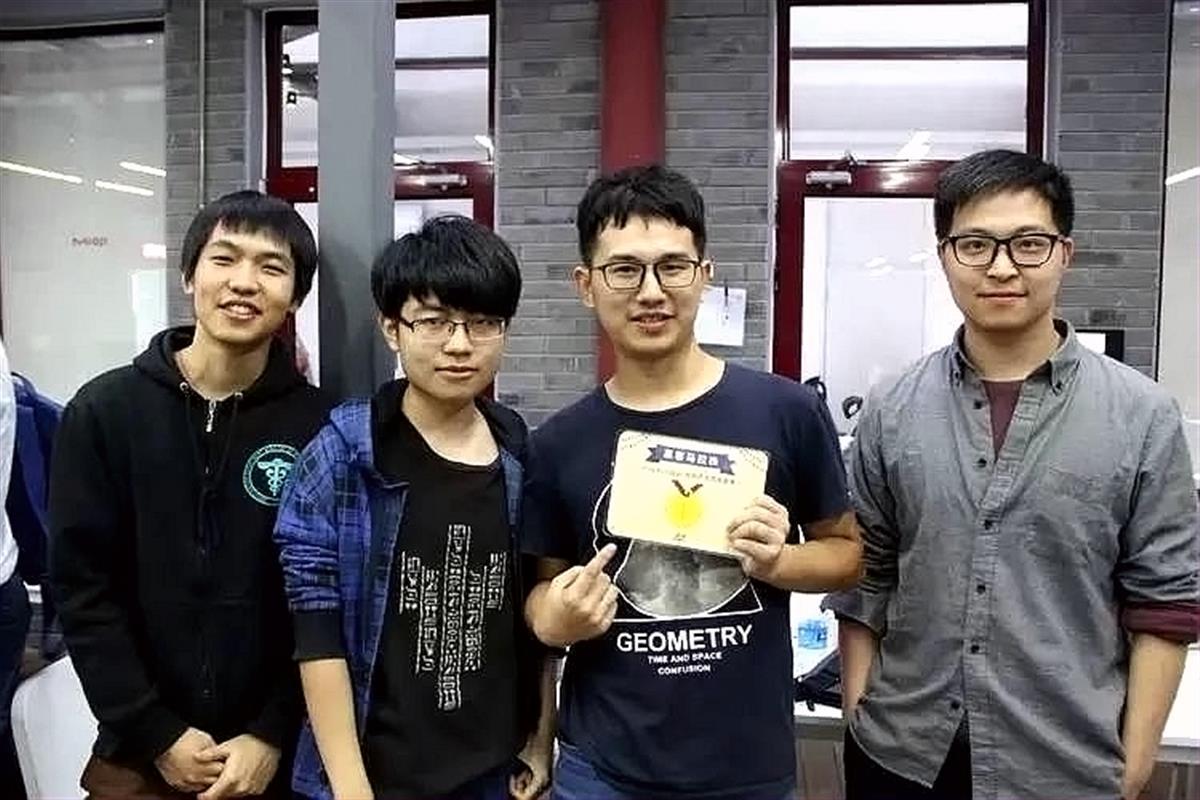
Recruit them before dinner gets expensive
His advice to would-be founders was delivered with a restaurant budget in mind: invite the talented people at university to dinner now, he joked, because recruiting them later might require Michelin meals. The joke has a serious premise. He had started alongside friends, and his first products depended on people bringing different abilities to the same table.
A trainer who knew Xiao during a 2016-2017 entrepreneurship programme described him as quiet, modest and attentive, taking careful notes. A colleague offered a livelier view. Yang Huijie, Weiban’s co-founder and chief operating officer, said Xiao could become so excited by an idea that he would keep talking about it for days. Colleagues supplied the cooling water.
Both portraits can coexist. The note-taker listens; the enthusiast keeps the next possibility in circulation. His earlier career also included writing about useful software for the Chinese technology blog iPlaySoft. Long before Manus, he spent time explaining what tools could do for the people using them.
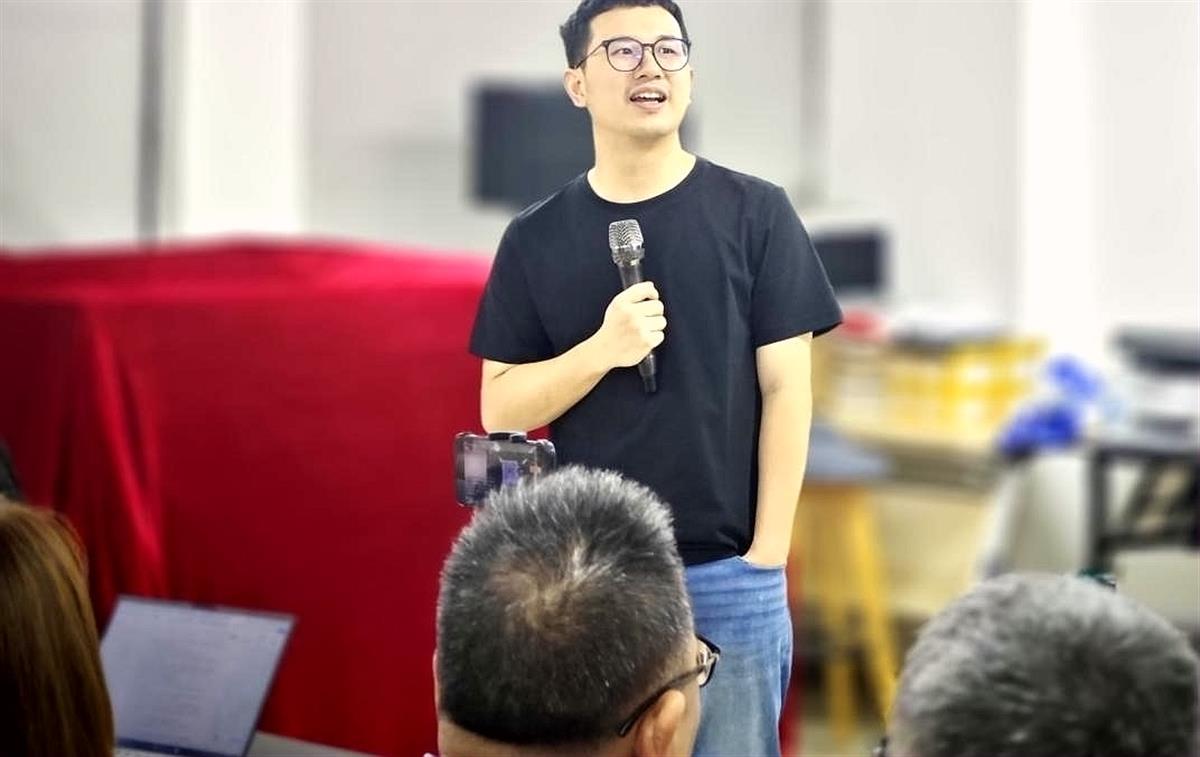
Building upstairs
In 2022, Xiao founded Butterfly Effect and began another round of application building. Monica, its AI assistant, put language-model capabilities into a browser product. It brought assistance closer to the material a user was already reading or working on. The software did some of the carrying that a person would otherwise do through copying, pasting and switching windows.
His position in the AI industry was deliberate. He wanted to build applications using the progress made by model developers. That required respect for the underlying research and a separate judgment about how to present its capabilities. A better model did not automatically tell a customer where to click or how to finish a task.
In conversations with interviewer Zhang Xiaojun, Xiao argued that application founders should anticipate the next model capability and prepare a product before it arrived. Waiting until the improvement was obvious could leave a builder late. He also resisted treating the industry as a fixed arrangement: a platform’s next move could depend on what other companies had already built.
The approach put him in the company of technical partners including Yichao “Peak” Ji and product co-founder Tao Zhang. Xiao’s public explanations tend to return to the customer’s experience. Around him, the question became increasingly concrete: how much of the work could the software carry through by itself?
- 2013Campus utilityCheck the dorm meter
- 2015NightingaleTools for WeChat work
- 2022Butterfly EffectAI applications, then Monica
- 2025ManusDelegate computer tasks
The computer behind the conversation
Manus reached the public in March 2025. It offered a way to delegate work involving research, code, files and browsers. A user supplied a goal; the system used tools and a computing environment to work toward an output. The ambition was easy to describe. Making the sequence reliable demanded rather more than a persuasive chat window.
Ji’s account of the engineering described repeated rebuilding. By July 2025, the team had rebuilt its agent framework four times. It concentrated on organising the information available to the model, preserving useful records and making it possible to recover material from files. The product depended on decisions about what the agent could see at each stage.
One especially recognisable device was a to-do list. Manus wrote and updated a file recording its tasks so that its objectives stayed close to its attention as work continued. Its engineers also kept failed actions in the record, allowing the system to see what had gone wrong before trying again.
For anyone who has ever misplaced the point of a meeting halfway through it, these details have an agreeable familiarity. A machine carrying out work still needs a way to remember the assignment. Xiao’s promise to the customer rested on this kind of painstaking construction behind the scenes.
A blank prompt can be a surprisingly large obstacle
The first months exposed another problem. Customers sometimes did not know what to ask an agent capable of attempting many different tasks. An open-ended invitation could produce hesitation. Early execution could also be slow and expensive, giving people reasons to abandon an experiment before it became a habit.
The team introduced a conversational mode and playbooks containing examples and templates. These were responses to the distance between a product demonstration and an ordinary working day. A user needed a sensible first assignment and an affordable reason to return.
By December 17, 2025, Manus said it had passed $100 million in annual recurring revenue, eight months after launch. Its total revenue run rate, including usage-based and other revenue, exceeded $125 million. These were company-reported annualised measures, rather than a statement that an entire year’s revenue had already arrived.
The company also reported 105 people across Singapore, Tokyo and San Francisco. Benchmark partner Chetan Puttagunta had joined the board. The business that began by finding useful gaps in someone else’s platform now had an international organisation to manage.
The ending that changed
On December 29, 2025, Manus announced that it was joining Meta. For Xiao, the appeal included a more durable base for the work and access to a much larger distribution network. His own statement stressed continuity in how Manus operated and made decisions. Customers would still be able to buy subscriptions through its app and website.
Joining Meta allows us to build on a stronger, more sustainable foundation,” he said.
Xiao Hong · December 2025
The arrangement did not hold. The acquisition was subsequently unwound following Chinese regulatory intervention. In August 2026, Manus told affected customers that the separation required a data backup and restoration process. Ownership changes had reached the files people relied on. A corporate transaction had become a task on the customer’s calendar.
On September 1, Manus formally announced its return to independent operations, with the founding team continuing to lead. The ambition was again phrased in terms of daily work: deeper involvement in people’s routines, more direct interaction with their surroundings and more proactive assistance. The interruption was acknowledged, and customers were thanked for navigating it.
Back to the unfinished work
The product continued moving. On September 28, 2026, Manus introduced version 2.0, including its Cascade agent system, a Studio workspace and a personal-agent app called Cue. Dedicated cloud computers gave longer-running projects somewhere to operate. Automations could begin when something happened in a connected service, extending the idea beyond a task started at a particular time.
The creative tools also made room for revision. A video could have its music or footage changed on a timeline; a game could be adjusted after the first playable result. The emphasis had moved toward the work remaining after an initial generation. Finishing, it turns out, contains an inconvenient number of smaller jobs.
In October, the company raised more than $500 million in a round led by Boyu Capital and IDG Capital. On October 13, it announced a collaboration with OPPO to put Manus capabilities into the phone maker’s AI Mind Pilot. An application founder who began inside WeChat was again bringing his work into a platform people already used.
The team’s first annual letter had set out an aspiration for agents that could keep working around the clock, alongside the need to make the infrastructure and costs support that ambition. It also described people building things without programming backgrounds, including a Singapore florist creating a bouquet visualiser.
Those examples bring Xiao’s story back down to a human scale. An international funding round is difficult to picture. A customer trying to show somebody what a bouquet will look like is easier. So is a student hoping the lights will stay on. Between them lies a career spent looking for the part of a task that software might take off someone’s hands.
Follow the work
Xiao’s own pages, a long conversation, and the company’s next chapter.