A hard hat is a small object with a large social life. It suggests building sites, practical competence, somebody who knows where the pipes go. WomEng made its campaign hat pink. The joke is deliberate: borrow a familiar gender stereotype to unsettle another one. Now a girl can picture herself beneath the hat. The difficult question is what happens when she takes it off.
- School programmes make engineering tangible through mentors, games and practical challenges.
- Student fellowships address the passage from technical study into working life.
- Employers and engineering bodies help fund and deliver the work; WomHub carries the entrepreneurship programmes.
That question explains WomEng better than the colour does. Founded in South Africa in 2006 by engineers Naadiya Moosajee and Hema Vallabh, the organisation works across stages that are often handled separately. A school pupil needs information. A graduate needs a professional network. An experienced engineer may need leadership opportunities. A founder needs support for a business. Each transition presents a different obstacle.
The first invitation is to solve something
Consider the career question in LaunchPad, part of WomEng’s school outreach: “What problems do you want to solve?” It gives a young person something more inviting than an unfamiliar job title. You can care about a problem before you understand the qualifications needed to tackle it. Engineering then becomes a possible route toward something you already find interesting.
The advertised 2026 GirlEng Technovation Camp puts that idea to work over four days. Girls encounter coding and robotics, ask female engineers questions, explore career mapping and prepare an innovation challenge addressing problems in their communities. Presenting an idea on the final day makes the activity concrete. Someone must explain what the solution does.
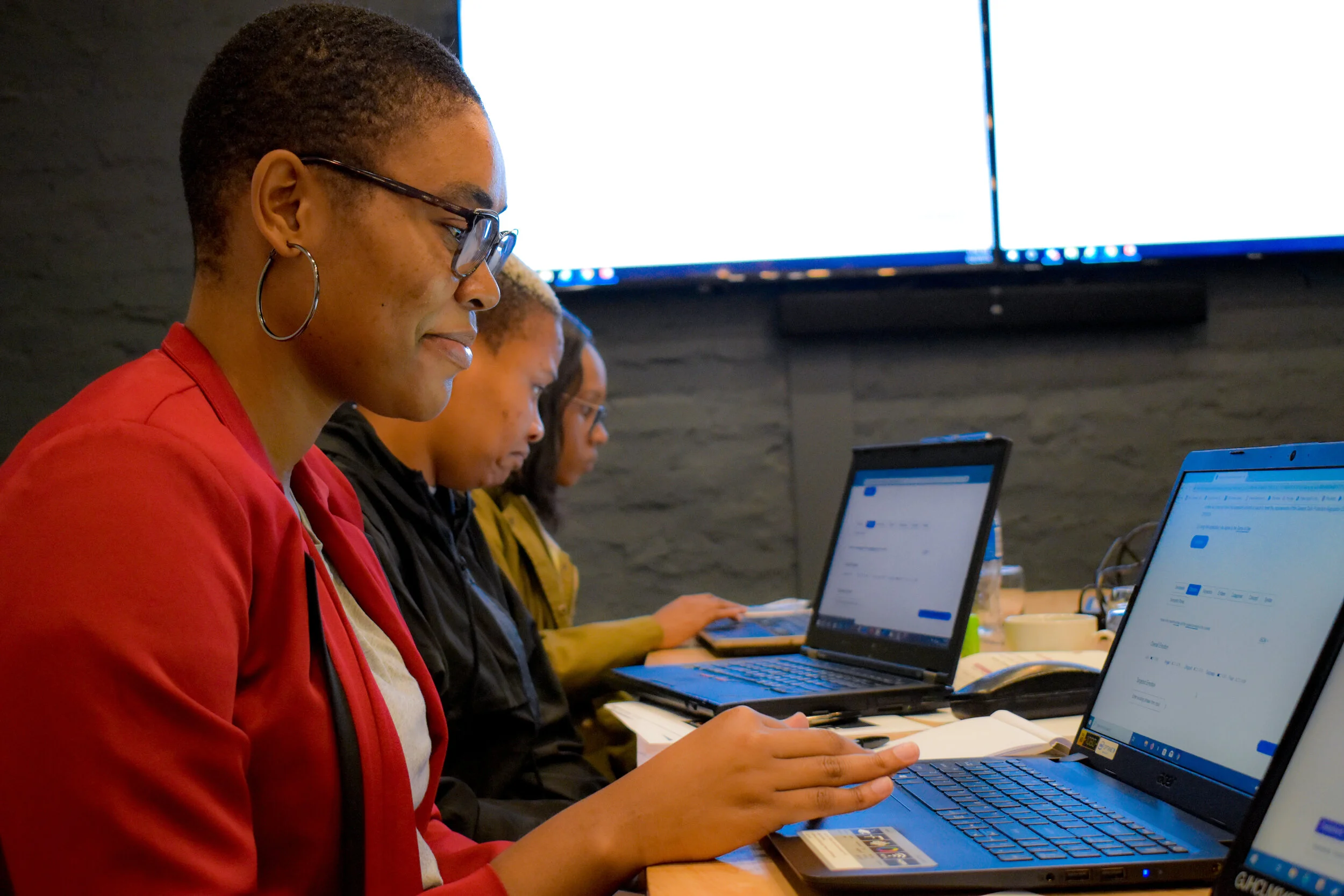
This is a useful distinction within education. Awareness can introduce a possibility; a practical task lets someone try on the behaviour associated with it. WomEng’s GirlEng programme also supplies role models and mentorship. The engineer answering questions is evidence that the proposed future has an inhabitant.
An invitation needs a next appointment
WomEng reports that its first GirlEng cohort graduated as engineers in 2014. Graduation is an appealing milestone, but the organisation’s programme design continues beyond it. Its Southern Africa Fellowship addresses leadership, innovation, employability and well-being for women approaching working life. The 2025 edition added an introduction to renewable energy.
There is a pleasingly ordinary piece of technology in this arrangement: WhatsApp. Alongside live virtual master classes, fellows participate in online chats, complete assignments and receive feedback. The published monthly commitment was seven to nine hours. Eligible students studied in South Africa, Botswana or Namibia, with mentorship and professional networking among the benefits.
- 01ImagineGirlEng + LaunchPad
- 02PrepareStudent fellowships
- 03ProgressIndustry leadership
- 04BuildFounders via WomHub
Programme stages, not a measured conversion funnel.
The underlying proposition is that technical education and career preparation deserve separate attention. A university can teach engineering while a student still needs help explaining her strengths, meeting employers or navigating an unfamiliar workplace. WomEng occupies that space between formal education and professional participation.
The cheque has a job description
Who pays? Institutional partners are central to the model. In July 2019, De Beers committed US$315,000 over three years to programmes encouraging engineering careers in South Africa, Namibia and Botswana. Its report describes a fellowship gathering of 60 women engineering students, including an innovation challenge and exposure to roles within the company.
Over three years for the De Beers partnership. Programme funding, rather than a venture investment.
WomEng also offers bespoke consulting, training and advisory work to organisations seeking to attract, develop and retain women. Its users and institutional customers therefore overlap without being identical. The girl receives a learning opportunity; the employer gains a relationship with future talent and help addressing its own workforce practices.
The nonprofit identity does not remove the need for commercial judgement. In a 2023 Oxford interview, Vallabh described financial strain after leaving her job in 2013, selling property and repackaging her proposition to gain investors’ attention. Seeing a participant graduate helped validate the idea; a US leadership programme helped her commit to it. Conviction still needed a funding proposition.
A network needs somewhere to belong
WomEng’s work with the Royal Academy of Engineering shows why employers are only part of the picture. The 2018-2020 Africa Catalyst project worked with women-in-engineering bodies in eSwatini, Malawi, Tanzania and Zimbabwe. It combined institutional development with outreach to 365 secondary-school pupils and training for 200 tertiary students.
The Academy reports that a new women-in-engineering body was established in eSwatini. That is a different kind of outcome from workshop attendance: an institution through which later participants can find colleagues. The project’s reported interest in STEM careers measures an immediate response, however, rather than proving subsequent employment.
“It takes an ecosystem approach to support diversity, equity and inclusion within the engineering industry”Naadiya Moosajee / De Beers partnership announcement, 2022
Entrepreneurship extends the logic further. WomEng’s approach page places incubators and accelerators with WomHub, its spin-out; the current site identifies WomEng as WomHub’s nonprofit subsidiary. Keeping those names straight matters. Related organisations can support the same career journey while delivering different programmes.
The curriculum is allowed to change
In its 2023 reporting, De Beers said participant feedback prompted more emphasis on robotics and technology. It also cancelled a Canadian workshop because of wildfires. These are practical reminders that outreach depends on what participants want and what local circumstances permit. A programme must leave room for revision.
The 2026 Training for Green offering, delivered by WomHub with IYBA-Seed, applies the same career-development approach to South Africa’s energy transition. Its published six-month schedule combined virtual learning with an employer networking session. Green hydrogen, just transitions and emerging energy technologies appear beside career readiness.
Readers can borrow the sequence: start with a problem, supply a practical task, introduce someone who does the work, then create a next step. It requires available mentors, suitable learning resources and employers willing to engage. Online delivery also asks for connectivity and time. An enjoyable workshop alone cannot carry a participant through every later decision. WomEng’s interesting wager is that the next appointment can be designed.