Before Will Tong became a founding engineer at AfterQuery, he studied molecular and cellular biology. The change of direction is the sort of line a résumé treats as housekeeping: one field out, another field in. But it is also a revealing fact in his public record. Biology trains the eye on systems whose intelligence is dispersed. A cell behaves through signals, feedback and countless small mechanisms that make sense only in relation to one another. Software has fewer mitochondria, but it shares the same taste for consequence. Touch one component and another, three layers away, complains.
Tong's eventual subject would be artificial intelligence, where the system is complicated and the complaints are often delivered with perfect grammar. He now works at a San Francisco company built around a deceptively plain idea: a capable model needs to learn not only what experts produce, but how they decide. The useful material is hidden in revisions, tradeoffs, rejected options and the standards people apply without announcing them. It is knowledge that tends to disappear precisely because the person using it has become good.
This makes Tong's path feel less like a sequence of logos than a sequence of increasingly difficult lessons. At Johns Hopkins, he moved into computer science and earned a 3.97 GPA. He helped teach data structures and object-oriented software engineering. He tutored mathematics and programming. He completed software engineering internships at ABB and Amazon Web Services. Later, his name appeared among the contributors to an agent-guided model-customization service for Amazon SageMaker AI. Then came AfterQuery, where the student is a machine and the syllabus is professional judgment.
The useful detour
A change of major can be described too neatly after the fact. The honest version usually contains doubt, inconvenient prerequisites and at least one afternoon spent wondering whether everyone else received a manual. Tong's record does not supply a conversion scene, and it would be silly to invent one. What it does show is that the move was thorough. He did not merely acquire enough code to add a technical flourish to a biology degree. He became the person helping other students understand the machinery.
Data structures is a course about consequences dressed as a course about containers. Choose the wrong representation and an easy operation becomes expensive. Object-oriented software engineering adds another lesson: the organization of a system determines which future changes will be tolerable. Both subjects reward the ability to see past the immediate answer. They ask what happens later, at scale, under pressure, when another person must read what you made.
Those questions suit an engineer headed toward AI infrastructure. Models attract attention at the moment of performance, when they answer, write or act. Tong works closer to the rehearsal room. Training data has to be selected, structured and checked. Evaluations must distinguish an answer that merely resembles expertise from one that survives the details of a real task. A useful system needs more than eloquence. It needs scaffolding strong enough to expose failure.
The job changed. The fascination with hidden systems did not.On the route from biology to software
Teaching is an engineering instrument
Tong's tutoring profile offers a small, unusually concrete window onto his working style. He taught SAT and ACT mathematics, then worked independently with students from algebra through calculus. In computer science, the range ran from introductory programming to data structures and algorithms. Two recommendations use words engineers do not always receive together: patient, clear, responsive and on time.
Patience is not decoration in technical work. It is a method. A rushed explanation skips the exact hinge on which understanding turns. A good teacher watches for the point where the learner's mental model diverges from the material, then rebuilds from there. This can be humbling. The code compiles; the student remains unconvinced. Suddenly the explanation, not the listener, is the bug.
Modern AI training has acquired a surprisingly pedagogical vocabulary. There are demonstrations, graders, rubrics, rewards and feedback. There are tasks pitched at the edge of current ability. The names sound new because the pupil is new. The underlying problem would be familiar to anyone who has sat beside a student and tried a second explanation after the first one failed.
The bars show the progression of Tong's public career, not a numerical score. Each stage adds a larger audience for the same explanatory habit.
The connection should not be overstated. Tutoring algebra is not the same thing as designing a reinforcement-learning environment. But the habits rhyme. Break a task into meaningful steps. Decide what counts as progress. Give feedback at the moment it can still change the outcome. Notice when a correct result was reached for the wrong reason. Above all, refuse to confuse confidence with comprehension.
From cloud machinery to model behavior
Internships at ABB and AWS put Tong inside two forms of industrial engineering culture. ABB makes technology for physical operations and automation. AWS operates the cloud layer on which much of modern software lives. The environments differ, but both punish vagueness. A service is judged by whether it works, keeps working and can be operated by people who did not build its first version.
By 2025, Tong was part of the group credited on Amazon SageMaker AI's agentic serverless model-customization preview. The service was designed to guide builders through techniques including supervised fine-tuning, direct preference optimization and reinforcement learning with verifiable rewards. Its promise was practical: move customization work that once demanded a specialist-heavy process into a managed workflow using an interface, an SDK or an agent.
Tong's own announcement was almost comic in its restraint: “check out our new service!” No manifesto, no cinematic account of the build, no heroic portrait beside a rack of servers. The sentence has the compact cheerfulness of someone pushing a complicated object across the finish line and seeing no need to narrate the sweating.
The work matters to his next chapter because model customization sits between general capability and specific usefulness. A general model may know a great deal yet fail inside the rules of a particular workplace. It may lose context across several turns, mishandle a tool or arrive at a plausible answer through a process no careful reviewer would accept. Closing that gap requires engineering around the model, not merely admiration for it.
The scarce ingredient is judgment
AfterQuery describes itself as an applied research lab for frontier-model development. Its products include supervised fine-tuning data, expert-designed prompts and rubrics, agent environments built around APIs and tools, and recordings of people completing work in browsers and desktop software. The list is technical. The animating problem is human.
Professional expertise is heavily compressed. Ask an experienced analyst why one spreadsheet feels wrong and the first answer may be a gesture toward a cell. Ask an engineer why one architecture will fail and the reply may begin with, “It depends.” This is not evasiveness. It is the result of thousands of prior cases collapsing into an instinct. The expert sees a pattern before a novice has finished naming the pieces.
The open internet captures conclusions much better than it captures that compression. Reports show the final recommendation. Code repositories show the committed change. Legal documents show the argument that survived. Missing are the discarded versions, the checks that prevented an error and the moment someone noticed that the apparently reasonable path was wrong.
AfterQuery's wager is that these invisible moves can be turned into training material. A finance problem can be graded not only on its final ratio, but on whether the correct period, inputs and formula were used. An agent can be evaluated across a workflow rather than on a single reply. A tool-using model can practice inside an environment where its actions have consequences. The aim is to teach process while preserving a way to judge it.
This is where Tong's combination of classroom and cloud experience becomes useful. The classroom asks whether another mind can follow the structure. The cloud asks whether the structure holds when used by strangers at scale. AI training infrastructure asks both questions at once.
A final answer is a receipt. The real product is the sequence of decisions that made it trustworthy.The engineering problem at AfterQuery
A founding engineer after the founding
The title “founding engineer” is frequently mistaken for “founder with a keyboard.” It is a different bargain. The company already has a thesis and a cap table. What it needs is translation under uncertainty: turn a founder's claim into a system, turn customer needs into interfaces, and turn a prototype into something other people can depend on.
At AfterQuery, that bargain unfolded during a period of abrupt growth. The company went from three co-founders to more than thirty employees in roughly a year. In April 2026, it announced a $30 million Series A at a $300 million valuation. Five months later, a new round was reported at a $3.2 billion valuation. The figures describe investor demand, not engineering quality, but they change the conditions of the work. More customers, more hires and more scrutiny arrive before the architecture has had time to acquire dignified gray hair.
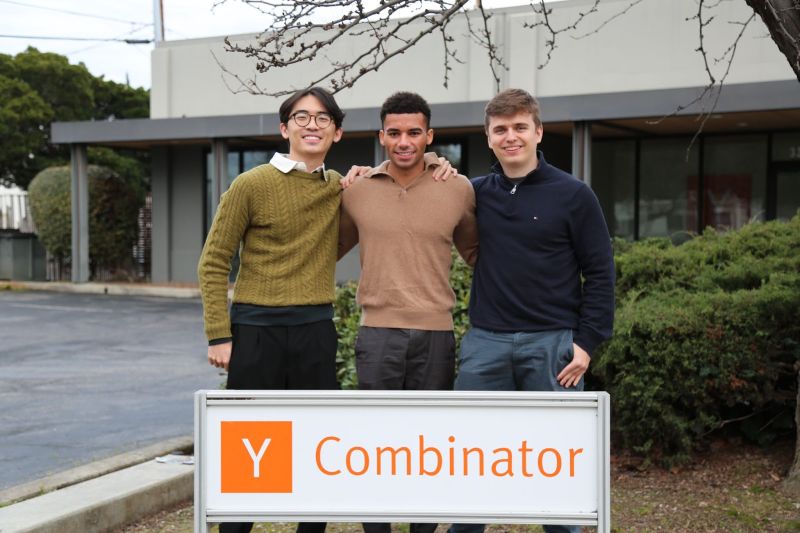
Tong is not one of AfterQuery's co-founders. The distinction matters, especially in an industry fond of upgrading everyone in the first office photo. His role is more specific and, in its way, more revealing: he joined early enough for “how we build” to remain an open question. A founding engineer does not merely inherit conventions. He helps create the conventions that later employees will complain about in meetings.
His public persona remains spare. There is no visible personal site, no public catalogue of essays and no trail of podcast appearances. The available glimpses are workmanlike: a course taught, an internship completed, a service shipped, a colleague's launch amplified. Restraint is not a personality diagnosis. It is simply the texture of the record so far.
The question after the answer
The appealing version of AI says that intelligence can be summoned through an empty box and a blinking cursor. Tong's work sits behind that illusion, among the people deciding what the system should practice, what tools it may use and how anyone will know when it has done well. It is a less theatrical place. It may be the more consequential one.
His career has already crossed several boundaries: life science and software, student and teacher, industrial systems and cloud services, model customization and model training data. None of that proves a fixed ambition. His stated aspirations are not public. What can be seen is a repeated attraction to systems whose important behavior hides below the surface.
Cells do not explain themselves. Neither do codebases, students or frontier models. Each requires a patient observer to find the structure, test an explanation and revise it when reality objects. Tong took the long route to that work. Long routes have one advantage: they give a person more than one way to recognize the same question.