There is a small absurdity hiding at the end of the modern data stack. A company may spend a fortune collecting clean information, moving it through warehouses and dashboards, and hiring people clever enough to interpret it. Then, ten minutes before the meeting, someone takes a screenshot. The number leaves the living system, becomes a rectangle of pixels, and enters a slide deck where nobody can quite remember whether Tuesday or Thursday supplied the truth.
Ellen Hui built Thorntale for that moment. The choice was revealing. Hui is an infrastructure engineer by training and temperament, someone whose career has involved enormous queries, systems that need to stay upright, and video that has to arrive in real time. She brought that same suspicion of brittle handoffs to presentations, one of the office's most familiar and least interrogated objects.
On her public profile, Hui calls herself a restless software engineer. Mux, her former employer, supplied the more mischievous version: she is passionate about turning hard problems into easy ones and “regularly commits crimes against language, but only human ones.” It is a compact character sketch - technical seriousness with a dry escape hatch.
Microsoft · Cruise · Mux · Thorntale
batch
Thorntale Presentations
The engineer before the argument
Hui studied computer science at Harvey Mudd College from 2011 to 2015. The course list she makes public ranges across compilers, operating systems, computational biology, computer networks, and digital electronics. In a Harvey Mudd clinic project, she joined an undergraduate team re-engineering tensor math library kernels with Kokkos. It was an early encounter with the sort of work that would define her career: hidden machinery, awkward constraints, and performance that matters even when the user never sees why.
At Microsoft, Hui worked on the Cosmos Resource Management team, helping run petabyte-scale queries. At Cruise, she supported the rideshare team as a site reliability engineer. At Mux, she built distributed systems and real-time WebRTC video. The nouns changed, but the professional grammar stayed stable. Information had to move. Systems had to hold. A delay or mismatch was not an aesthetic flaw. It was the product failing in public.
Computer science at Harvey Mudd College.
Petabyte-scale query infrastructure at Microsoft.
Site reliability for Cruise's rideshare team.
Distributed systems and real-time video at Mux.
Co-founder and backend builder at Thorntale.
There was a human systems chapter, too. In 2021, while Mux was establishing employee resource groups, Hui joined recruiter Lindsay Letham and product analyst Dori Wilson to organize the company's first. What began as a proposed women's group became Organized Marginalized Genders, or OMG, after prospective members helped broaden the charter. The co-founders wrote about the unglamorous ingredients: long sessions in a shared document, questions about membership and allies, surveys, a private Slack channel, an executive sponsor, and the steady work of creating trust.
That episode belongs in the same portrait as the distributed systems. Hui seems drawn to infrastructure in the broad sense - the arrangements that let people do useful things together. Some of it carries video. Some of it carries belonging. None of it assembles itself.
“Fundamentally, it's the current format for standing in front of someone and making an argument.”Ellen Hui on the stubborn importance of presentations
The expensive journey to a cheap screenshot
Thorntale's origin story reads like a parody written by a data engineer. One of the founders, a data scientist, needed metrics moved from ClickHouse and CockroachDB to Snowflake, then Looker, then Excel. She wanted a chart for a business operations team to screenshot and place in Google Slides. Three people's time disappeared into a relay race whose baton was a copied image.
The route that inspired Thorntale
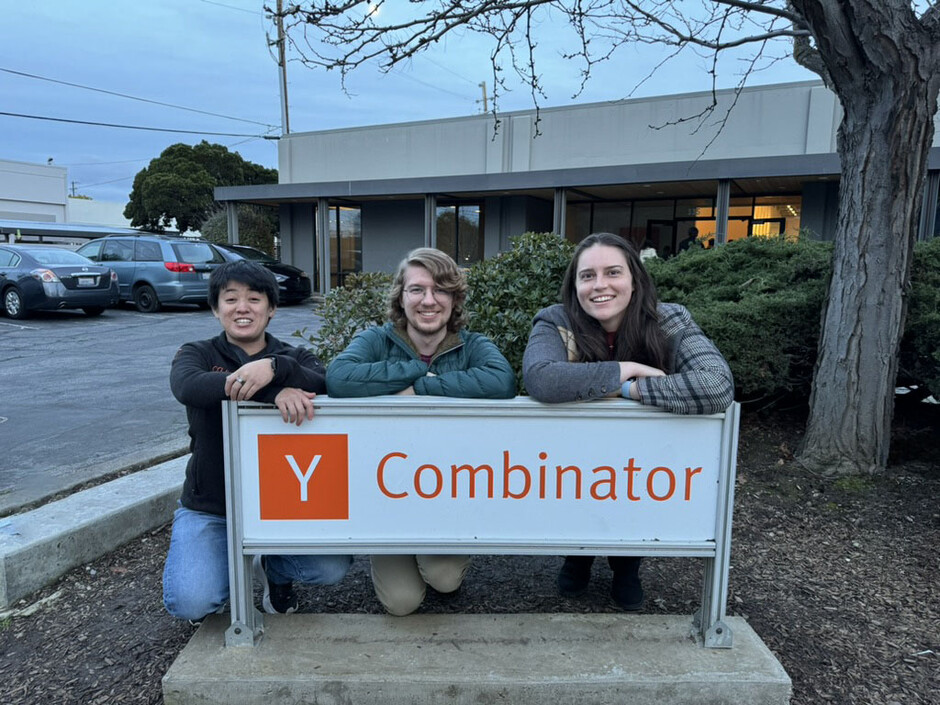
Hui, Wilson, and John Stimac co-founded Thorntale in 2023 and took it through Y Combinator's Winter 2024 batch. The first public pitch was presentation software for data storytelling: direct connections to Google Sheets, Snowflake, and Postgres; native charts; templates for product, engineering, and data teams; and reports that could behave as both a detailed document and a concise presentation. Hui owned the backend, query systems, database connectors, and infrastructure. Stimac worked across the frontend and data visualizations. Wilson brought the experience of the data scientist trapped at the end of the copying chain.
The bet was not merely that charts should look better. It was that the presentation is the final interface for a surprising amount of organizational truth. On launch day, a Hacker News critic suggested the presentation should not occupy such a central role. Hui's answer was unsentimental: everyone says they want dashboards and live data, she wrote, but decisions and alignment at companies larger than a startup still happen through decks. Data tooling often stopped one step before the argument.
Her replies also showed a founder with both conviction and a terminal open. When a user reported a crash and supplied reproduction steps, Hui answered that she had reproduced it on her machine and the team was fixing it. When another requested historical snapshots, she said the feature was partially implemented but had not made the launch. This is what shipping in public looks like without the stage lighting: theory, bug report, repro, roadmap.
Follow information past the database. A system is only reliable when its output survives the last handoff and reaches the person making the decision in a form they can understand.
AI enters, politely
By 2025, Thorntale had expanded from live data plumbing into the broader aggravations of making slides. Hui announced an AI assistant, Google Slides import, advanced layouts, background images, PDF export, and refreshed themes and templates. The AI posture was unusually restrained. Thorntale described the assistant as a collaborator that could edit, suggest, and proofread. Hui wrote that it was there to work with the presenter. The expert still supplied the argument; the machine learned where the formatting controls lived.
The Google Slides importer offered a neat expression of this philosophy. It did not attempt a literal reconstruction. Thorntale AI analyzed each source slide's content and translated it semantically into the system's own styling. The distinction is technical, but also editorial. Preserve meaning, then make the form coherent.
In September 2025, the company released AI Presentation Review, a free beta that let people upload a PDF, rehearse aloud, and receive feedback from selected reviewer personas. The product had moved from the accuracy of the chart to the nerves of the person presenting it. Hui explained on Hacker News that practicing with friends or co-founders could feel embarrassing by the tenth run-through. The software offered a patient room before the real room.
A clean ending to an untidy problem
On December 11, 2025, Thorntale announced that its presentations product was shutting down. The note was brief. It thanked users and offered help exporting important work. Y Combinator now marks the company inactive. There is no honest version of this profile that turns those facts into a triumph, and no useful version that treats them as erasure.
Thorntale pursued a genuine defect in office life. It built a thoughtful answer, shipped features, accepted public criticism, and encountered the gravitational field of familiar tools. In software, a bad workflow can persist precisely because everybody already knows how to suffer through it. Replacing the awkward ritual means replacing habits, file formats, trust, collaboration norms, and the quiet comfort of knowing where the button is.
Hui's career before Thorntale makes the attempt easier to understand. The slide deck looked like another reliability problem, and in many ways it was. But the unreliable component was not only code. It was custom, power, persuasion, and human preference. A database can be migrated by plan. A meeting culture has opinions.
The public details that round out Hui's portrait are pleasingly specific. She invites conversation about big and small data, cursed RFCs, and genre fiction. Away from the keyboard, she lists hiking and biking around the San Francisco Bay Area. The line has the rhythm of someone comfortable moving between scale and texture: petabytes and small data, distributed video and a trail, infrastructure and an argument in a room.
Thorntale's presentation chapter ended, but its founding observation remains in circulation every time a current number is pasted into a static box. The gap between knowing and explaining is still there. Hui's work made it visible, gave it connectors and charts, and tested how much of that gap software could close. Sometimes the durable product is the question an engineer teaches everyone else to notice.