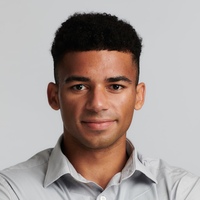
Spencer Mateega / AfterQuery
Teaching machines how experts think - one reasoning trace at a time.
When Silver Lake picked a single global summer analyst from a field of thousands, they chose Spencer Mateega. He spent the summer learning how the world's largest technology buyout firm dissects companies worth billions. Then he walked away from it.
Not because finance was bad. Because he had spotted something more interesting: the frontier AI labs training the most powerful models on earth were hitting a ceiling. They had consumed the internet. Wikipedia. Every book ever digitized. And still, the models couldn't reliably do what a senior litigator or a hedge fund analyst does - not because the data was scarce, but because the reasoning was missing.
In January 2025, Mateega founded AfterQuery with his co-founders Carlos Georgescu and Danny Tang - two people he had been building with since high school. AfterQuery's pitch is deceptively simple: connect the world's best domain professionals to AI labs that need their thought process, not just their answers.
Models trained on outputs plateau. Models trained on reasoning improve.- Spencer Mateega, CEO, AfterQuery
What Mateega identified was a structural gap. AI training data had been treated as a volume problem - scrape more, label more, ship more. AfterQuery treats it as a quality problem. A securities lawyer working through a contract dispute doesn't just produce a final memo; she produces a chain of inference, exceptions considered and discarded, case law weighted and applied. That chain is what AfterQuery captures, and it's what makes a model's output genuinely useful rather than plausibly fluent.
By April 2026, that thesis had translated into a $100 million annualized revenue run rate, a 120-person team, and a $30 million Series A led by Altos Ventures at a $300 million valuation - all within fifteen months of founding.
"We teach machines how experts think." - The entire mission, uncompressed.
AfterQuery operates as an applied research lab sitting between two groups who desperately need each other: frontier AI companies with capital and compute but insufficient reasoning data, and domain experts - lawyers, financial analysts, software engineers, researchers - whose daily problem-solving is the exact signal those models need.
The company doesn't recruit random annotators. It sources professionals with real stakes in their fields and structured methodologies behind their judgment. A private equity analyst at AfterQuery isn't tagging images - she's walking a model through how she stress-tests a leverage ratio, writing the steps as she goes.
The output is training data that teaches not just what the right answer is, but why - the chain of reasoning that separates a model which knows facts from one that can actually think through problems.
The AfterQuery founding team is not a serendipitous Slack introduction. Spencer met Carlos Georgescu at a Google summer program while both were in high school. They later interned together at Meta. Danny Tang, Mateega's third co-founder, is the person he first built a company with - also in high school, before either of them had attended a university.
The original startup, built and sold while Mateega was still at Wayzata High School in the Minneapolis suburbs, established a working pattern: Mateega and Tang build together, test together, ship together. They then became roommates at Wharton. By the time AfterQuery was conceived, this was a team that had already survived the worst parts of early-stage company building - the disagreements, the pivots, the slow weeks before things take off.
That institutional memory matters. Fifteen months in, AfterQuery was not scrambling to find product-market fit. It was managing hypergrowth: from 59 employees and $6.5 million in annual revenue to 120+ employees and $100 million-plus ARR in a single year. That doesn't happen at companies with first-time collaborators still learning how each other makes decisions.
The leading frontier labs - OpenAI, Anthropic, Google DeepMind - have largely exhausted what the public internet can teach a model. The next capability jumps require structured, domain-specific, reasoning-annotated data. That data doesn't exist at scale. AfterQuery is building the infrastructure to create it.
"Human data is an enormous market and critical bottleneck for frontier models, and for advancing the quality of AI."
- Zac Mohring, Altos Ventures
Finance - Legal - Software Development - Research - Technology - And expanding. AfterQuery's expert network spans roughly 100,000 domain professionals across industries where precision reasoning has real stakes.
This influx of capital will allow us to further support our customers by encoding the reasoning of the world's best professionals into models to carry that knowledge further than any individual ever could.
Models trained on outputs plateau. Models trained on reasoning improve.
We teach machines how experts think.
Mateega's academic path looks like it was engineered in reverse - designed to produce exactly the person who could build AfterQuery.
Professional profiles, the company, and social presence.