In 1997, two companies had opposite problems. One, in Taiwan, wanted a way into the American market. Another, in Silicon Valley, could use supplier relationships in China and was considering selling there. The technology was only part of the puzzle. Each company needed something that existed on the other side of the Pacific. WI Harper’s proposition was to know people on both shores.
- Venture capital for young technology, healthcare and sustainability companies.
- Teams in San Francisco, Taipei and Beijing connect financing with operating relationships.
- The useful question for founders: which specific obstacle can this investor help remove?
Those two businesses appear in the setting of Thomas Hellmann’s WI Harper case. They offer a surprisingly durable explanation of the firm. An invention can travel in a suitcase. A supplier relationship cannot. Neither can the local knowledge that tells you whether a prospective partner will answer the phone, understand the problem or deliver what was promised.
An address book with an investment thesis
Peter Liu founded WI Harper in 1993. His biography almost draws the route: born in Beijing, raised in Taiwan, educated in the United States. Before WI Harper, he co-founded Walden International. The subsequent firm made a business out of a recurring mismatch: technological capability, manufacturing capacity and potential customers rarely arrive in the same place at the same moment.
WI Harper supplies venture financing, then offers help with fundraising, executive management, strategic partnerships and expansion. Its sectors now include healthcare, biotechnology, semiconductors, enterprise technology, AI and sustainability. That breadth makes more sense when viewed through the operating problem. A medical device and an industrial robot may both need specialist engineering, manufacturing partners and buyers who require patient persuasion.
Two customers. One long wait.
A venture firm serves two constituencies. Founders need money and help building companies. Limited partners supply the money and expect investment returns. WI Harper’s 2016 announcement of its eighth fund names institutional investors, family offices and corporate strategic investors among its backers. The firm stands between those pools of capital and companies whose outcomes take years to discover.
That fund closed at a reported $175 million. This was money for an investment vehicle, rather than sales booked by WI Harper. Its current homepage reports more than $1 billion in committed capital across nine funds. Neither number tells you the price of a particular startup investment, the manager’s annual income or how much cash investors have received back.
Capital committed to a venture fund. A pool for investments, with outcomes still to be earned.
The familiar venture business model combines management fees with a share of investment profits, although individual fund terms vary. For founders, the immediate cost of equity financing is ownership given up under negotiated terms. For fund investors, the wager is that the manager’s selection and assistance will eventually produce valuable exits. An impressive address book has to earn its keep.
The biosensor meets the chipmaker
Consider Xsensio. In March 2026, the Swiss company announced a $7 million Series A led by WI Harper, with Privilège Ventures, the European Innovation Council and private investors participating. The funding was intended to advance development and clinical validation of Lab-on-Skin, a wearable platform for continuous biochemical monitoring. The round total represents the whole syndicate, rather than WI Harper’s individual check.
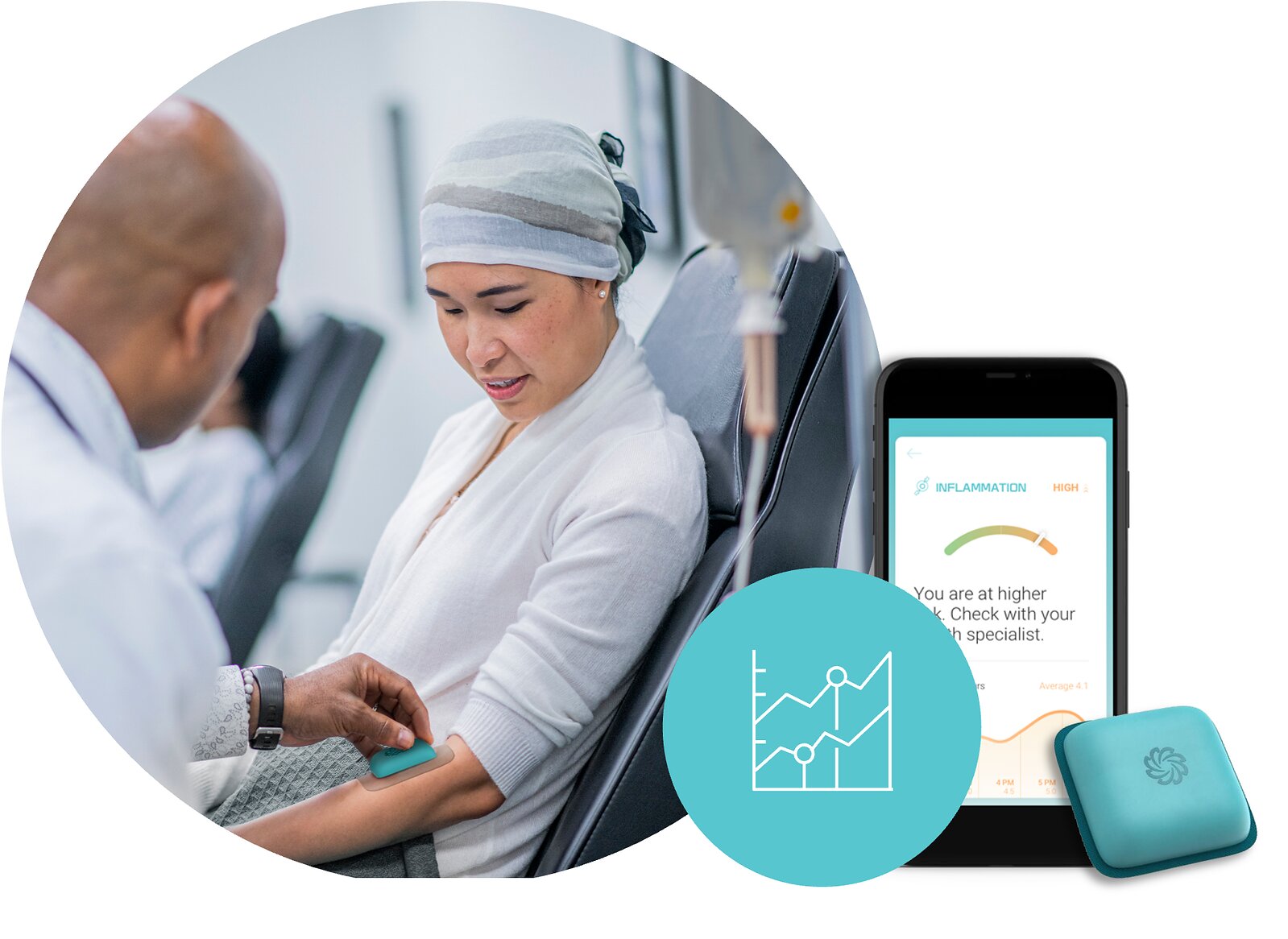
Alongside the financing, Xsensio announced a long-term collaboration with Texas Instruments on semiconductor integration, miniaturization and manufacturability. These are separate relationships in the announcement; their coexistence does not establish that WI Harper arranged the partnership. But they make the company’s needs tangible. Money funds the work. Specialist industrial knowledge helps determine whether the device can be made reliably.
Another portfolio company, Alpha Ring, offers a different illustration. In May 2026, WI Harper reported installations of its Alpha-E educational fusion devices at Purdue University and Sofia University. Teaching equipment has an identifiable use and an identifiable institution willing to install it. Commercial electricity production presents another set of engineering and financial demands.
When everybody discovers your secret
Being early creates an awkward problem: eventually other people arrive. Stanford’s 2007 case, WI Harper - Strategic Crossroads, examined the firm as capital poured into China. It described questions about its investment approach and the growing pains of moving from an informally managed regional fund toward an institution-backed global organization. Success had made the surroundings more competitive.
The case is useful because it punctures a comfortable assumption. Familiarity with a market has value, but that value changes when more investors acquire it. The questions become organizational: can relationships survive beyond one person? Can the firm preserve investment discipline while raising larger pools? Can local understanding remain precise as the institution becomes more international?
“Localization is one of the key success factors in China.”
Peter Liu · Ernst & Young interview, 2006
Liu’s remark puts a condition on the bridge metaphor. A foreign investor’s connections need people who understand local demand and business practice. An introduction without that understanding can become an expensive detour. For a founder whose customers, suppliers and hiring needs are concentrated in one country, a focused local investor may be the more useful partner.
Ask what happens after the introduction
WI Harper’s recent investment writing puts commercial questions beside technical ones. Its October 2026 robotics essay examines the economics of deploying machines. Its September fusion discussion emphasizes construction budgets, reliable operation and investor ownership. Scientific progress must pass through costs, customers and execution before it becomes an investable business.
A founder can copy that habit immediately. Identify the next bottleneck, name the market where it sits, and ask an investor which person can help resolve it. Request examples of comparable work. Then agree on what should happen after the meeting. Cross-border reach is useful when it changes an operating decision. The map is the beginning of the conversation.