Before there was a venture firm, there was a sale Naren Gupta thought should have waited. Two young founders in India had built a promising product company. After several years, they sold it. Gupta, an investor, wanted them to continue. They wanted financial security. Both positions were perfectly reasonable. That was the problem.
Recalling the episode in a 2020 interview, Gupta described the missing piece: a venture fund could have arranged a partial exit, giving the founders some money without ending the company’s independent journey. He could not offer that option. The experience helped draw him toward venture investing in India.
- The work: finance young product companies in the US and India.
- The evidence: early Postman backing, followed by a $7 million Series A.
- The trade-off: longer ambition needs capital, ownership discipline and a tolerance for losses.
A fund built around an unfinished job
In 2006, Gupta joined Sandeep Singhal and Suvir Sujan to start Nexus. Each had operated a business. Gupta founded Integrated Systems; Singhal co-founded healthcare services company Medusind; Sujan co-founded Baazee, the marketplace eBay acquired in 2004. They knew the distance between a promising product and a functioning company.
The first fund closed at $100 million in July 2007. Its early explanation of value was practical: help recruit managers and reach customers. Money could pay salaries. Experienced partners might help a founder avoid spending those salaries on the wrong organization.
Gupta later described another founding exercise: agreeing on what they would avoid. The aim was to develop a product culture, alongside technology-driven Indian consumer businesses. That distinction mattered. A company selling repeatable software faces different economics from one selling another team’s working hours.
The small tool with a very large address book
Postman makes the idea concrete. Abhinav Asthana had encountered the aggravation of testing application programming interfaces, the connections through which software systems exchange information. The problem was technical, frequent and thoroughly unglamorous. A developer did not need a procurement committee to appreciate a better tool.
Nexus supplied $1 million in seed funding in 2015. Contemporary reporting said the money would help establish a San Francisco office and recruit staff. Here was the US-India proposition in miniature: a product originating in Bengaluru, with users already spread internationally, needed a business organization around its adoption.
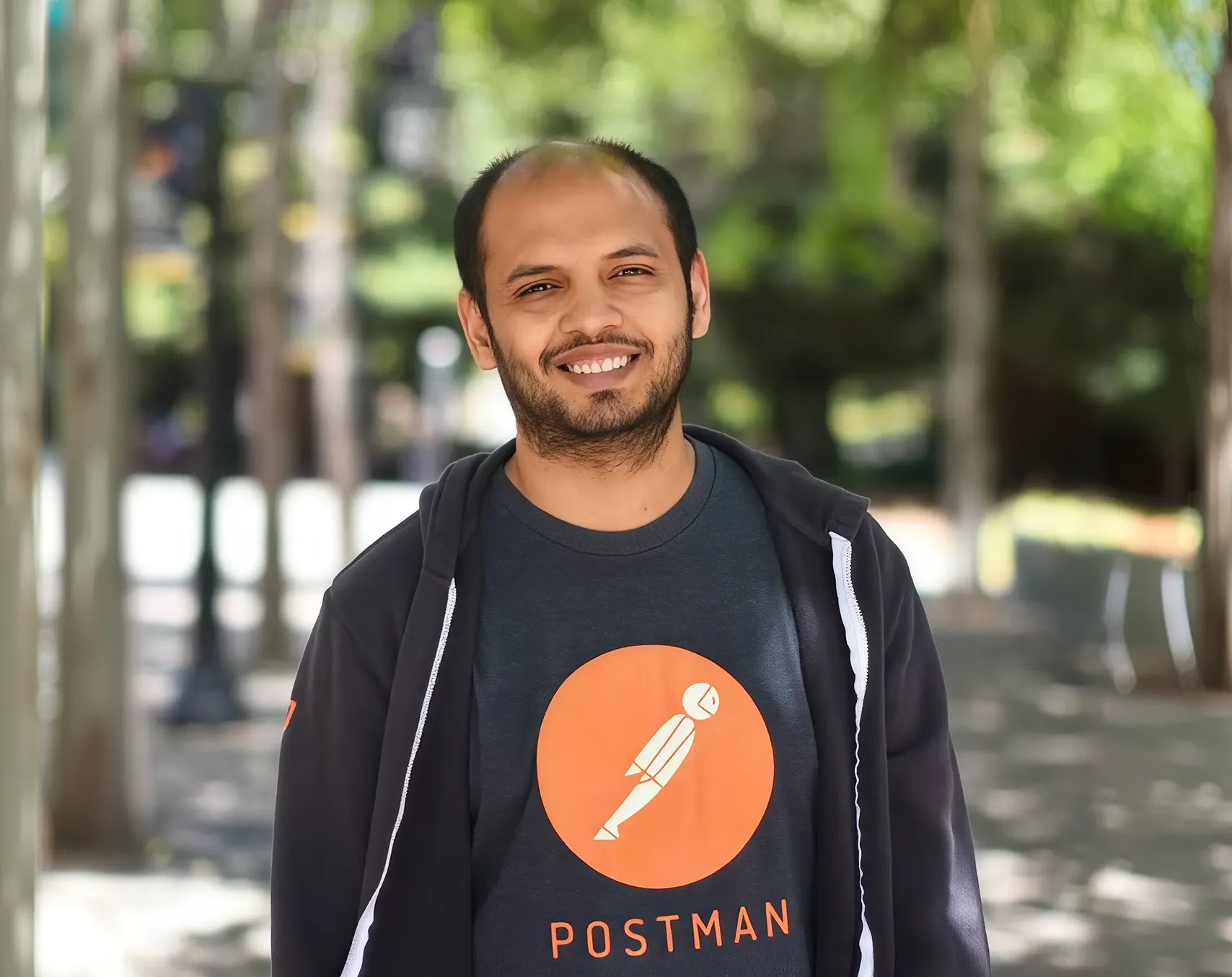
In October 2016, Postman announced a $7 million Series A from Nexus. Its announcement reported three million installations, 1.5 million monthly active users and usage at 30,000 companies. Free applications brought developers in; a paid subscription offered collaboration, testing and documentation features for teams.
The sequence offers something readers can copy. Find a task people repeat reluctantly. Make the first useful result easy to reach. Watch whether individuals bring colleagues along. Only then ask what the team needs enough to pay for. This is an interpretation of Postman’s trajectory, rather than a universal recipe.
Patience has a bill attached
Nexus operates between two constituencies. Limited partners supply money to investment funds. Founders receive capital and support in exchange for an ownership interest. The intended payoff comes when portfolio stakes can be sold. A financing valuation, however flattering, does not put cash back into a limited partner’s account.
Venture managers generally charge management fees and receive a share of investment profits. For founders, the immediate cost is dilution, alongside negotiated governance rights and expectations about growth. The sensible question is what the investor’s involvement makes possible that the company could not efficiently achieve alone.
“One of my biggest concerns in the venture business right now is that ownership stakes are going down too quickly.”Naren Gupta · 1M/1M interview
Gupta’s own enthusiasm had limits. In an interview with Sramana Mitra, he praised bootstrapping and described how Dimdim’s founders retained meaningful ownership by building before raising. An investor arguing for less immediate investment is a useful complication in a business usually narrated through larger checks.
The consumer lesson was expensive
The portfolio also supplied harsher instruction. In January 2018, The Economic Times reported write-offs or substantial value erosion at Housing, Stayzilla and TinyOwl. It described a stronger US software emphasis as consumer investments disappointed. That is a reported strategic adjustment, rather than access to the partners’ private deliberations.
Snapdeal exposed the difficulty of deciding when patience becomes overstay. The same report put Nexus’s cumulative investment at $45 million and described missed opportunities for partial exits. Holding longer can preserve upside. It can also leave an investor watching a paper gain shrink.
Consumer investing nevertheless remained part of Nexus’s mandate. Its December 2025 eighth-fund announcement included consumer and fintech alongside enterprise software and AI. The response to disappointment appears to have involved changing emphasis while retaining a broader investment practice.

Give the experiment enough runway
Today Nexus competes for founders who can also approach firms such as Accel and Lightspeed. Its particular proposition combines product experience with a team spanning the Bay Area and India. A founder should evaluate the actual partner: relevant customers, recruiting judgment and behavior when the plan slips.
The firm announced $700 million for its eighth fund in December 2025. More recently, its October 2026 account of Iambic’s Nasdaq listing traced that relationship to a first investment in 2020. AI drug discovery stretches the product argument into an arena where scientific progress and commercial proof take different forms.
There are limits to copying the software example. Regulated development, expensive physical operations and products requiring centralized purchasing may never spread like a developer download. A profitable business with modest expansion needs may gain little from venture expectations. The useful Nexus lesson is to match financing to the work ahead, including how long that work might take.