When Wes Simmons helped buy Sage Construction in April 2013, the proposition was unusually specific. The business already had customers, products and a management team. What it wanted was more room to concentrate on the industry it served. Sage sold software across many sectors. Construction had its own demands, and Simmons was prepared to lead a company devoted to them.
The £2.5 million management buyout created Eque2, with Simmons moving from general manager to chief executive. It is a business origin story with very little garage in it. There was an established operation to run, a portfolio to develop and customers who still needed their accounting software to work on Monday. Independence arrived with obligations attached.
That practical combination runs through his career. Simmons began as a quantity surveyor, then worked in construction technology for companies including SAP, Unisys and Misys. He went on to lead Eque2 and GroupBC, and now serves as executive chairman at Amodal. Across those changes, he has stayed close to a persistent construction problem: getting useful information to the people who need to make a decision.
A surveyor’s view of software
Quantity surveying is a useful starting point for someone who will spend years selling construction systems. Costs, quantities and commercial decisions sit close together. A software demonstration may be immaculate; the project it serves will still have labour to account for, suppliers to pay and a budget that needs watching. Simmons’s early profession gives his later work a concrete point of reference.
In a 2012 article, while still at Sage Construction, he set out five ways software could improve productivity. His subjects were everyday management tasks: tracking performance, comparing estimated labour with actual costs, reducing manual data entry, sharing project knowledge and bringing information together. The interest lay in what a contractor could do with the figures once they were available.
The distinction between collecting numbers and using them surfaced again at an Eque2 round table in 2013. Simmons hosted contractors and Glenigan economist Allan Wilén for a discussion about performance indicators. Participants disagreed. Some saw better customer communication; another worried about extra administration and managers chasing measurements at the expense of the work.
Simmons’s response was to focus on implementation. He supported mobile access to site information while insisting that ease of use mattered. It is a revealing emphasis for a software executive. A system has to survive contact with the people using it. An impressive set of features offers limited comfort if entering the information becomes everybody’s least favourite task.
Independence, with the old partners still in the room
Simmons’s case for independence was also a case for investment. The buyout gave the team scope to develop its product portfolio and support services, with investors backing the next stage. It put the familiar challenges of a software company into sharper focus: decide where development effort should go, retain customer confidence and make the resources available to deliver.
The Eque2 buyout was backed by ISIS Equity Partners. Richard Beaton became chairman, and Clearwater advised on the transaction. Simmons was leading a management team through a change of ownership, with outside investment behind it. The company’s beginnings were collective, involving managers, advisers and investors, as well as the customers whose work gave the products their purpose.
He explained the commercial logic plainly at the time. A business focused on construction could give that market more attention. Sage and Microsoft would remain strategic partners, and product development would continue. Leaving the larger group therefore came with a deliberate effort to preserve useful relationships. Customers had good reasons to care about continuity as much as ambition.
“I have great confidence in the business and its people,” Simmons said when the deal was announced. It was a short expression of trust at a moment when ownership, branding and responsibility were changing together. The operating offices then included Manchester, Farnham and Glasgow. There was a real organisation behind the new name, spread across more than one room or city.
Over his four years running Eque2 from 2013, annual revenue grew from £5 million to £15 million. That threefold increase gives the first chapter a measurable result. It also helps explain his next appointment: by early 2018, Simmons had experience of taking a specialist construction software business through a substantial period of growth.
Revenue figures reported when Simmons joined GroupBC in January 2018. Bar lengths share the same scale.
The paperwork has consequences
Simmons’s public writing at Eque2 repeatedly returned to the commercial details of building. In an article about subcontractor payments, he discussed the importance of notices and the expensive consequences of getting procedures wrong. The subject was hardly decorative. A construction system has to accommodate the way money actually moves through a project, including the formal steps surrounding a disputed payment.
Eque2 also contributed to Building Tomorrow, an ITN Productions programme made with the Chartered Institute of Building. Simmons described working with customers to understand what they needed from the software. The emphasis was on seeing costs across a project, responding to unexpected expenditure and giving contractors tools that helped them deliver within their budgets.
Taken together, those contributions describe a particular kind of software career. The interesting part often lives beneath the polished interface, where records must agree and commercial responsibilities must be clear. A missing connection between an estimate and an actual cost can matter more to a contractor than a dazzling screen. Simmons kept addressing that less glamorous territory.
“But ease of use remains vital”
Wes Simmons, discussing construction software, 2013
A founder changes seats
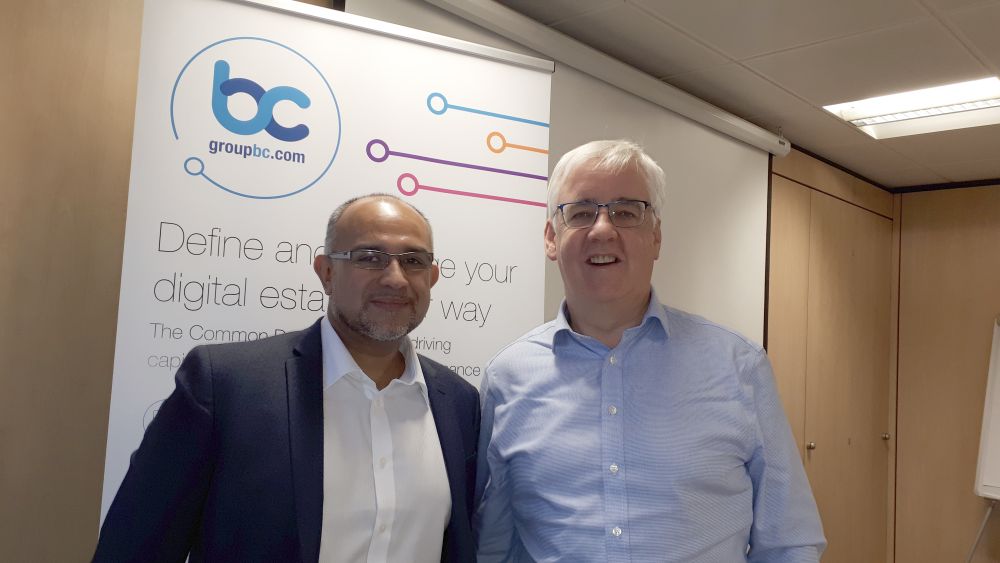
In January 2018, Simmons became chief executive of GroupBC, the Reading business that supplied construction collaboration software. Founder Sanjeev Shah remained a board director and took on the development of strategic industry partnerships. Simmons assumed day-to-day operational management. The arrangement gave the founder a distinct assignment while bringing an experienced operator into the chief executive’s seat.
The two companies shared some investors, so the move had a practical connection. GroupBC wanted to extend relationships with partners including PCSG, Wienerberger and IBM. Simmons saw room to expand through a partner channel rather than relying entirely on a larger direct sales force. Shah could work on those relationships while Simmons concentrated on running the business.
There was a shift in the product landscape, too. Eque2 dealt with construction’s financial and management systems. GroupBC’s common data environment helped teams manage and share documents, data and spatial information. The setting changed from the commercial record to the wider project record. The recurring challenge was familiar: information scattered across organisations becomes more useful when people can bring it together.
Six months to connect the files
One GroupBC development project makes Simmons’s operating role tangible. The company wanted an ETL platform to synchronise files across common data environments. That technical abbreviation covers extracting, transforming and loading data. In ordinary terms, the job was to help information travel between systems without making every project team do the connecting by hand.
The brief to recruitment and engineering partner Techifide had three parts: leave the core team focused on its main product, assemble developers for the additional platform and get the new offering to market within six months. A team in Brazil delivered the first version of BC Sync ahead of that target. It is a specific example of solving a capacity problem without diverting the existing developers from their work.
The episode fits the broader pattern of his career: use a partner to add a capability, give that relationship a defined task and keep the operating business moving. The useful detail is the division of responsibility. Growth required more development capacity, while the product already serving customers still needed attention. Both demands had to fit inside the same company.
- Protect the coreKeep the existing developers on the main product.
- Add a teamBring in engineering capacity through a partner.
- Set a deadlineFirst version delivered in under six months.
The next owner, and the next boardroom
Bentley Systems announced its acquisition of GroupBC on 11 March 2020. The combination connected GroupBC’s construction information management products with a larger infrastructure software business. Simmons welcomed the opportunity for international expansion and work around digital twins. YFM, GroupBC’s equity backer, recorded a return of more than three times its investment.
The acquisition marked another change in the scale around him. GroupBC’s customers included organisations managing construction projects and substantial asset portfolios. Joining Bentley offered a broader setting for those products and their development. Simmons’s remarks at the time credited the equity partner’s support and looked ahead to continued growth for the team, customers and partners.
His next documented chapter brings an old colleague back into view. In May 2025, Amodal appointed Stuart Bell as chief executive and Simmons as executive chair. Bell had previously worked at GroupBC. Amodal, co-founded by Tom Whiting and Michael Barber, combined information management consultancy with technology and project delivery support. Simmons’s remit covered strategic oversight, governance and support for the executive team.
The personal descriptions are pleasingly less formal than the job titles. Whiting praised his calm strategic perspective. Bell welcomed working with him again and singled out his “wry wit and all seeing eye”. There is a suggestion of the experienced colleague who will notice the awkward detail, then find something dry to say about it. Bell’s phrase supplies the humour without requiring an invented boardroom scene.
Amodal’s current leadership page lists Simmons as executive chairman. The role keeps him in the built environment, supporting another team working on the clarity and usefulness of information. From quantity surveying to software ownership and board oversight, his career has remained close to the records behind the building. The costs, the files and the people responsible for them still need to agree.