A restaurant’s second front door can be smaller than its first. It fits inside a phone, opens onto a menu, and admits customers who never see a table. For Wei Zhang, the founder and COO of Shanghai’s Shiheng Technology, the work behind that door became a business: helping restaurant brands operate online, then building systems to connect the rest of their stores.
There is something usefully unromantic about his territory. Menus need arranging. Products run out. Delivery has a cost. A promotion can produce an impressive sales figure and an unimpressive profit. These are the details that make a technology business interesting once the presentation is over and somebody has to serve lunch.
A retailer walks into online food
Zhang came to entrepreneurship with nearly ten years at Tesco China behind him. In his own account, he left in 2013, started an online-only food brand, and also provided operations services to other brands. He met Wang Taizhou during that period. Their work overlapped; their resources and technical capabilities complemented each other. They went into business together.
Shiheng dates its founding to 2017. Zhang’s role centers on the operations of partner brands; Wang is identified as the co-founder responsible for product and technology development. The pairing puts an operating problem and the machinery for addressing it in the same company. It also helps explain why Shiheng’s story moves between services and software.
A retailer’s experience supplies a useful perspective on that combination. A sale belongs to a system of selection, availability, pricing, and replenishment. Online food adds another setting to those decisions. The customer is still choosing a product, but the business must now explain it on a screen and arrange its journey out of the store.
Zhang’s career change therefore brought him toward a familiar sort of complexity in a different form. The restaurant’s dining room could remain exactly where it was. Its commercial life was acquiring another address, another set of habits, and another collection of numbers to understand.
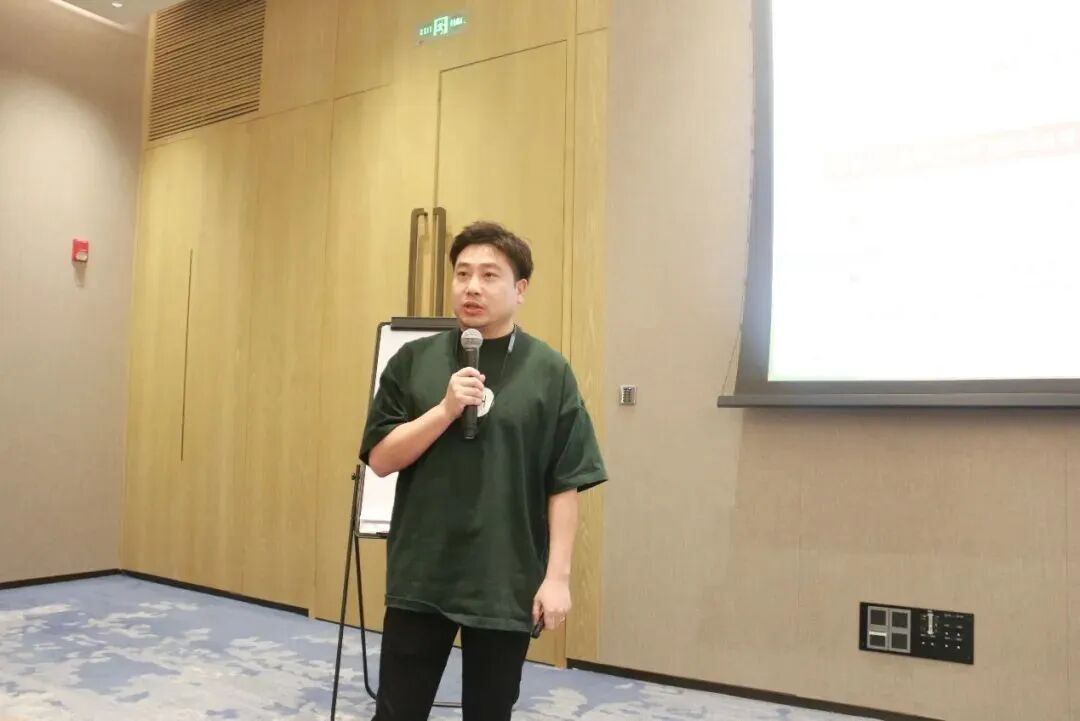
The menu has to travel
In a 2019 discussion of home delivery, Zhang set out three concerns: where the business breaks even, how sales can grow without eating into profit, and how to find an economical way to operate. They are plain questions. Their answers determine whether the extra door is worth keeping open.
His examples were equally practical. Shiheng analyzed shopping areas, watched individual products’ sales, and monitored items disappearing from online menus. A popular item marked unavailable can become a lost order. The system’s task was to make such changes visible so the brand could respond.
That puts a different complexion on data analysis. A chart might represent a missing product, a weak menu, or a delivery arrangement that needs revisiting. Someone then has to act. Zhang described data systems and a professional team as the two foundations of the business. The information and the operating judgment belonged together.
An editorial map of the operating questions in Zhang’s work.
A dining-room menu also enters a different conversation when it moves online. At a table, portions can be shared, questions can be asked, and the surroundings can explain the price. On a phone, the offer has less room to introduce itself. The operator must make choices that work in that setting.
This is why the subject keeps escaping the software vocabulary. Delivery operations involve a real menu and a real bill. The screen offers the promise; the store has to carry it out. A well-designed button has limited powers of persuasion once the customer opens the bag.
A dumpling with a shorter journey
One of Zhang’s more revealing examples concerns Laoshengchang, an established food brand. He described work on its frozen soup dumplings: updated packaging and a product designed for a one-minute microwave preparation. The earlier preparation he described involved about twenty minutes of steaming. Convenience became part of the product itself.
Then came a less photogenic task. According to Zhang’s account, the new format required supply-chain changes, and the partners spent three months adapting the system to support it. The project joined consumer insight, packaging, preparation, and production. A retail product had to earn its place beyond the restaurant.
The example is worth lingering over because it has an object at its center. You can picture a box. You can understand the difference between a short preparation and a longer one. The business question becomes specific enough to examine: what has to change before this food fits the occasion in which someone will buy it?
Zhang discussed the case while talking about reaching younger consumers at the end of 2020. His argument connected the experience of buying with the experience of using. A new package could draw attention; a more convenient preparation could give the customer a reason to choose the product.
The lesson extends beyond the packaging without requiring a grand theory. An online channel can reveal a mismatch between a product and a customer’s routine. Fixing it may take work in a factory, with a supplier, or on a menu. The digital transaction has a thoroughly physical aftermath.
A shared sign is only the beginning
By 2022, Zhang was describing a broader ambition: restaurant headquarters managing their stores through one connected system. Shiheng had developed delivery software alongside revenue-splitting, membership, and central management systems. The business was following the operational relationships that surround an order.
“We found that managing chain stores is a pain point for Chinese restaurant chains.”
Wei Zhang, 2022 · translated from Chinese
A chain’s name makes its locations look related. Managing the relationship takes additional work. Headquarters needs information from stores; stores need instructions and tools they can use. Money, stock, and customer records pass through different parts of the organization. Each handoff creates an opportunity for information to arrive late or stop altogether.
Zhang’s proposal addressed the accumulation of separate systems. A brand could purchase software for different jobs and still face the work of bringing the results together. The attraction of an integrated system is easy to understand: fewer places to reconcile the same business.
It is a meaningful shift in the scope of his work. Improving an online storefront asks how a customer finds and buys an item. Managing a chain asks how many stores can carry out a decision, and how headquarters knows what happened. The second question reaches much further into the organization.
The company now describes its focus in three practical terms: managing money, goods, and operations for franchise restaurant headquarters. Those words suit Zhang’s subject. They leave room for technology while keeping the objects of management in view. A franchise network needs those relationships to hold as it grows.
Gold, and a reason to listen
Zhang won gold in Shanghai’s 2021 industrial youth innovation and entrepreneurship competition. His explanation of entering is more interesting than the metal. He wanted to understand Shiheng’s position in the market, meet other businesses, and learn. He said the competition helped him grow personally as well.
There is a useful change of perspective in that decision. Running a company supplies a daily audience of colleagues and customers. A competition supplies different neighbors. A founder must explain the business again, with other companies nearby making their own claims on the room’s attention.
Zhang’s public appearances also place him in Shanghai’s local business conversations. In April 2024 he shared entrepreneurial experience at a Hongkou talent event. That July he joined a district roundtable on the business environment. These are concrete connections to the place where Shiheng developed, alongside its work for restaurant brands across China.
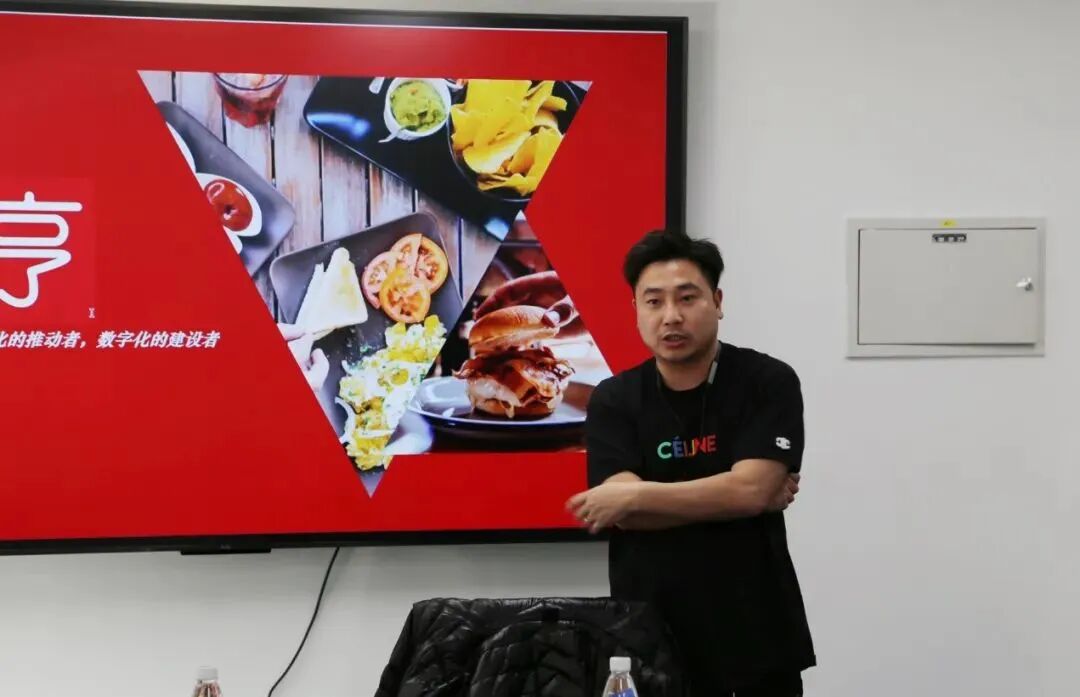
What the next tool has to earn
Shiheng’s published company figures put its service reach at more than 6,000 brands, more than 200,000 stores, and more than 240 cities and regions. These are the company’s reported figures. They describe service reach rather than a portfolio of restaurants it owns.
Company-reported service figures · checked October 2026
Read alongside Zhang’s earlier examples, the numbers bring the smaller problems back into focus. A missing menu item is easy to understand at one store. Repeating the work across a network raises questions about which signals deserve attention, who receives them, and what action can follow.
At a 2021 food innovation conference, Zhang described restaurant sales channels spreading beyond delivery platforms into social media and retail marketplaces. The restaurant could meet its customer in several settings. Each setting gave operators another reason to understand the product, the offer, and the information traveling between them.
His stated ambition in 2025 was to develop AI tools for restaurant and retail operations. It remains an ambition to assess through the work such tools can perform. Demand forecasting, supply-chain decisions, and marketing all have consequences outside the interface. A useful tool must survive contact with those consequences.
The compact principle he offered was “technology should fit the need.” It is a modest sentence for an industry fond of large announcements. It also fits the arc of his career: retail experience, online food, restaurant operations, and the systems needed to manage a chain.
Return to that second door. A customer opens a menu and chooses lunch. Behind the choice sit the questions Zhang has spent his business life pursuing: what is available, how the order works, and what the organization can see. The door may be small. Keeping it working is a substantial occupation.
Continue the conversation
- Shiheng Technology Company website
- Wei Zhang on LinkedIn Profile link
- Shiheng on LinkedIn Company profile
- Zhang’s 2025 career and technology interview Tsinghua PBCSF · Chinese
- The economics of home delivery 2019 summit coverage · Chinese
- The Laoshengchang product example 2021 talk coverage · Chinese
- One system for restaurant chains 2022 profile · Chinese
- Shanghai’s entrepreneurship competition 2021 coverage · Chinese
- Restaurant channels at F·FBIC2021 Conference coverage · Chinese
- Hongkou’s 2024 talent gathering District event · Chinese
- The Hongkou business-environment roundtable July 2024 · Chinese
- Shiheng’s company overview and service figures Company information