A restaurant schedule is a deceptively small document. Names run down one side, hours across the other. Yet every square holds a compact negotiation: availability, demand, labor cost, trust, and the chance that somebody calls out at 4:42 on a Friday. Justin Holmes encountered that problem before it became his software career. He worked as a server. While in school, he managed team schedules for community basketball programs. Years later, he would join 7shifts, a company built to make the same daily puzzle less fragile for restaurants.
The line is almost too neat, except Holmes's route was not. He founded a basketball business, studied at the University of Toronto, worked in banking, helped operate a direct-to-consumer apparel company, and moved through marketing, growth, and revenue jobs. Today he is the Toronto-based chief marketing officer of 7shifts. His LinkedIn summary puts the territory plainly: “I help brands and SaaS companies with all things revenue, culture and team building.”
Those three nouns sound like separate executive functions. Holmes's career suggests they are entangled. Revenue depends on a team keeping its promises. Culture emerges from repeated operating choices. Team building becomes real when people can coordinate under pressure. Restaurants expose those connections every night, which may explain why his background fits the category so well.
The first operating system was a gym schedule
Holmes began volunteering with East York Basketball in 2008. His public profile describes work on planning, budgets, and program execution for more than 225 house-league players and 10 travelling teams. He also created and manages the house-league website. East York Basketball identifies him as a board director, coach, and owner-operator of The Basketball Academy, the training company he started at 18.
A youth sports program is an underrated school for operations. Courts are scarce. Coaches have calendars. Parents need clarity. Players need a place in the system without feeling processed by it. The work is logistical, but the outcome is emotional: a young person either gets a coherent season or inherits the adults' confusion. Holmes stayed with that community work while his professional titles changed around it.
At Rotman, Holmes completed an MBA between 2014 and 2016. A marketing internship at HSBC sat inside that period. Then came Knix, where public profiles place him across operations, ecommerce, and chief operating responsibilities. The job broadened his field of view. A growing online brand has to align ads, inventory, fulfillment, pricing, and cash. One weak handoff can erase the value created everywhere else.
“While a lot has changed, the most successful brands are fixated on contribution margin.”Justin Holmes, reflecting publicly on DTC economics
Growth without the confetti
Holmes has written that Knix moved from six figures online to the mid-eight figures within two years. His explanation was notably free of growth-pageantry. The team watched contribution margin: net revenue after returns and discounts, less product costs and variable marketing expenses. That metric made the business legible. It told them how much they could spend to acquire a customer and where the economics needed work.
The fixes were concrete. Test higher prices on important products. Forecast inventory well enough to avoid air freight that cost far more than ocean freight. Encourage more items per order. Ask the fulfillment partner how to lower picking, packing, and shipping costs. Improve creative and targeting. This is marketing as applied operations, a practice of finding the stubborn variable instead of celebrating the top-line number.
The operator's margin map
Holmes's public Knix retrospective connected a single metric to five levers a team could work on.
That experience matters because 7shifts sells into another industry where margins can disappear through hundreds of small decisions. Holmes joined the company in 2018 as vice president of marketing, moved to vice president of growth, then led revenue as head of revenue and chief revenue officer. He eventually returned to the marketing seat with a much larger map of the company in his head.
When the customer base stopped moving
The sharpest test came in 2020, when restaurant dining rooms across North America closed and 7shifts's customers faced an immediate operating crisis. In an interview that August, Holmes, then VP of Growth, discussed how restaurant teams were adapting and how the company was trying to help. The question was existential for both sides: what does a restaurant workforce platform do when restaurants cannot run normal shifts?
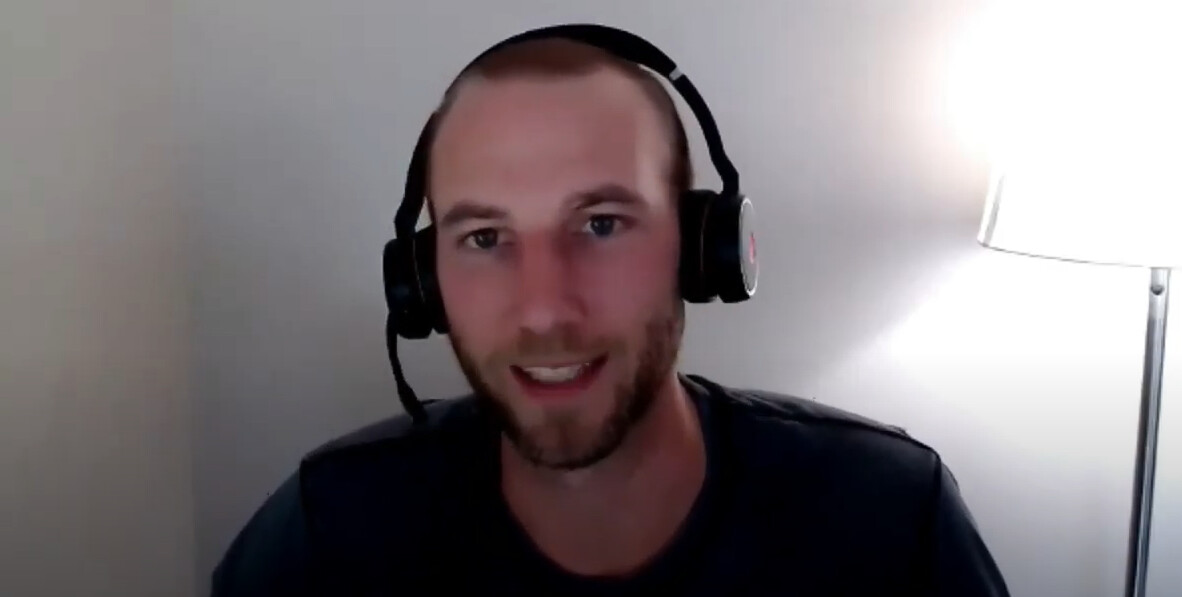
In a post the following year, Holmes supplied the numbers. 7shifts waived fees for restaurants that needed support, which he said reduced company revenue by almost 25 percent. Product and engineering continued shipping. The company added people and worked on its processes. As regions reopened in 2021, he wrote, 7shifts set new sales records each month before announcing a Series B round.
The sequence is worth noticing. Customer relief came before the rebound. Continued building sat between them. Holmes described the team with two words that recur in startup writing so often they can lose their edges: grit and passion. Here they were attached to observable decisions - accepting less revenue, keeping the product moving, and preserving the customer relationship through an ugly period.
“At 7shifts we simplify labor management for restaurants.”Justin Holmes, explaining the product's job in 2020
His description of the product was equally practical. Operators needed to communicate easily, create schedules without friction, and forecast sales so they could manage labor. Every employee could use the app, and point-of-sale data could connect demand to staffing. Holmes said operators integrating their POS data with 7shifts could generate 1 to 3 percent in labor savings. A small percentage in a restaurant is not small. It can be the difference between a busy room and a sustainable one.
The system has to survive Tuesday
By 2022, Holmes was speaking publicly as 7shifts's chief revenue officer. His industry sessions focused on building and retaining restaurant teams, from hiring and training through scheduling and retention. He also joined a New York panel on the future of restaurant marketing. The roles stretched beyond lead generation because the product itself stretches across the employee experience.
In 2026, now listed by 7shifts as CMO, Holmes published a detailed guide to connecting Toast with scheduling, tips, and payroll across franchise locations. The argument fits his established operating instinct: build the staffing model once, let reliable data move between systems, and give managers fewer places to re-enter the same reality.
Live close to the problem
Serving, scheduling teams, and running programs created domain knowledge before the software role arrived.
Choose a revealing metric
Contribution margin exposed which growth levers mattered and which costs were quietly consuming revenue.
Protect the relationship
Waiving fees in 2020 placed customer continuity ahead of short-term revenue collection.
Turn experiments into systems
A tool creates capacity only when a team can put it into a dependable workflow.
From AI experiments to capacity
That last principle now frames Holmes's work with AI. In March 2026, he announced a Toronto event for go-to-market leaders confronting two connected bottlenecks: AI experiments that never become production-grade systems, and teams with too little capacity to build those systems. His formulation caught the loop: “You can't build systems because you don't have capacity, and without systems you never create capacity.”
The session paired a look at production systems with a productivity framework Holmes said was based on how the brain operates. Small-group roundtables gave leaders room to compare what was working. In April, 7shifts described the gathering as a shift from experimenting with AI to building systems that scale, with Holmes and GTM engineer Rory Conroy leading the session. The event treated AI less like a spectacle and more like another coordination problem.
That is the reusable thread in Holmes's story. New technology becomes valuable after the team can depend on it. A schedule works when everyone understands it. A margin metric works when it changes a freight decision. Customer intelligence works when a product or sales team can trace insight back to real conversations. Holmes has endorsed that last idea in his public comments about tools that surface the voice of the customer.
His career contains the familiar startup nouns - growth, revenue, culture, AI - but the verbs are less abstract: plan, forecast, schedule, test, retain, listen. They are verbs learned around tables and courts, then carried into boardrooms and software. The pattern is not a clean ladder. It is a widening circle around one question: how can a group of people do coordinated work with less waste and more trust?
Holmes is still working on the answer. The restaurant shift remains a useful place to look. It is where strategy encounters the clock, where a model meets a manager, and where every elegant system is asked to survive the mess.