The future arrived for Asim Al-Shabibi on a pallet. In a photograph posted to LinkedIn, shrink-wrapped computing equipment sat in a loading area, ordinary and imposing at once. “Pallets loaded,” he wrote. “This delivery is the engine for our future product line.” There are more theatrical ways to announce an artificial-intelligence venture. Few are as revealing.
The post traded prophecy for proof. Rihal, the Omani technology company Al-Shabibi co-founded, could talk about generative AI all it liked; the hardware, he argued, demonstrated commitment. Beneath the familiar launch language was an operator’s instinct. Ambition becomes real when it acquires weight, a delivery date and someone responsible for making it run.
That instinct has followed Al-Shabibi through two industries that appear, at first glance, to have almost nothing in common. Before he became chief operations officer of a business building data platforms, automation and AI systems, he worked in oilfield services. The scenery changed from drilling rigs to server rooms. The underlying questions did not. Is the objective clear? Are the risks understood? Will the system hold when people depend on it?
An operator’s route
An education in consequence
Al-Shabibi studied mechanical engineering at Sultan Qaboos University from 2007 to 2012, serving as president of the Engineering Society. One student project joined solar generation to water desalination, treating fresh water as a useful by-product rather than a separate problem. The team proved its concept and received a silver medal at the second International Invention Fair in Kuwait. It is a tidy early glimpse of his later career: practical engineering, connected systems and usefulness as the measure.
Schlumberger supplied the sterner classroom. Al-Shabibi worked across Oman and Saudi Arabia and rose to product and service delivery management, with responsibility for executing roughly $400 million in well projects and managing 20 drilling rigs. The scale matters, but so does the environment. Field operations make abstractions expensive. A muddled handover does not remain a muddled handover for long. It becomes lost time, wasted money or a risk that must be contained.
A colleague who had known and worked with him since 2012 later praised his professional integrity, appetite for learning and willingness to meet a challenge. Another, writing after nearly three years at Rihal, reduced his leadership style to a compact instruction: keep sight of the objective, get past the obstacle and deliver. It sounds simple because useful principles often do. Practising it across hundreds of people is the difficult part.
Three founders, one unglamorous problem
In 2018, Al-Shabibi founded Rihal with Azzan Al Kindi and Waleed Al Harthi. Their division of labour is legible in the titles: Al Kindi as chief executive, Al-Shabibi as chief operations officer, Al Harthi as chief technology officer. Rihal began close to the stubborn plumbing of digital business - migrating, cleaning, extracting and organizing data. These are not tasks that generally adorn keynote stages. They are, however, the work that determines whether the clever layer above can be trusted.
The company widened its brief into analytics, automation, software engineering and AI. Its products and services now enter government, energy, telecommunications and large enterprises, often in secure environments or on infrastructure that cannot simply be handed to a distant public cloud. Rihal says the aim is to move past pilots and experiments toward systems that are used reliably and at scale. In other words, it sells the difficult middle between an idea and an institution changing how it works.
Rihal now reports more than 300 employees, over 70 clients globally and more than 250 delivered projects. Roughly nine in ten employees are Omani. Those figures describe more than corporate growth. They place Al-Shabibi inside a national project: building technical capability in Oman while persuading established institutions that a home-grown supplier can take responsibility for consequential systems.
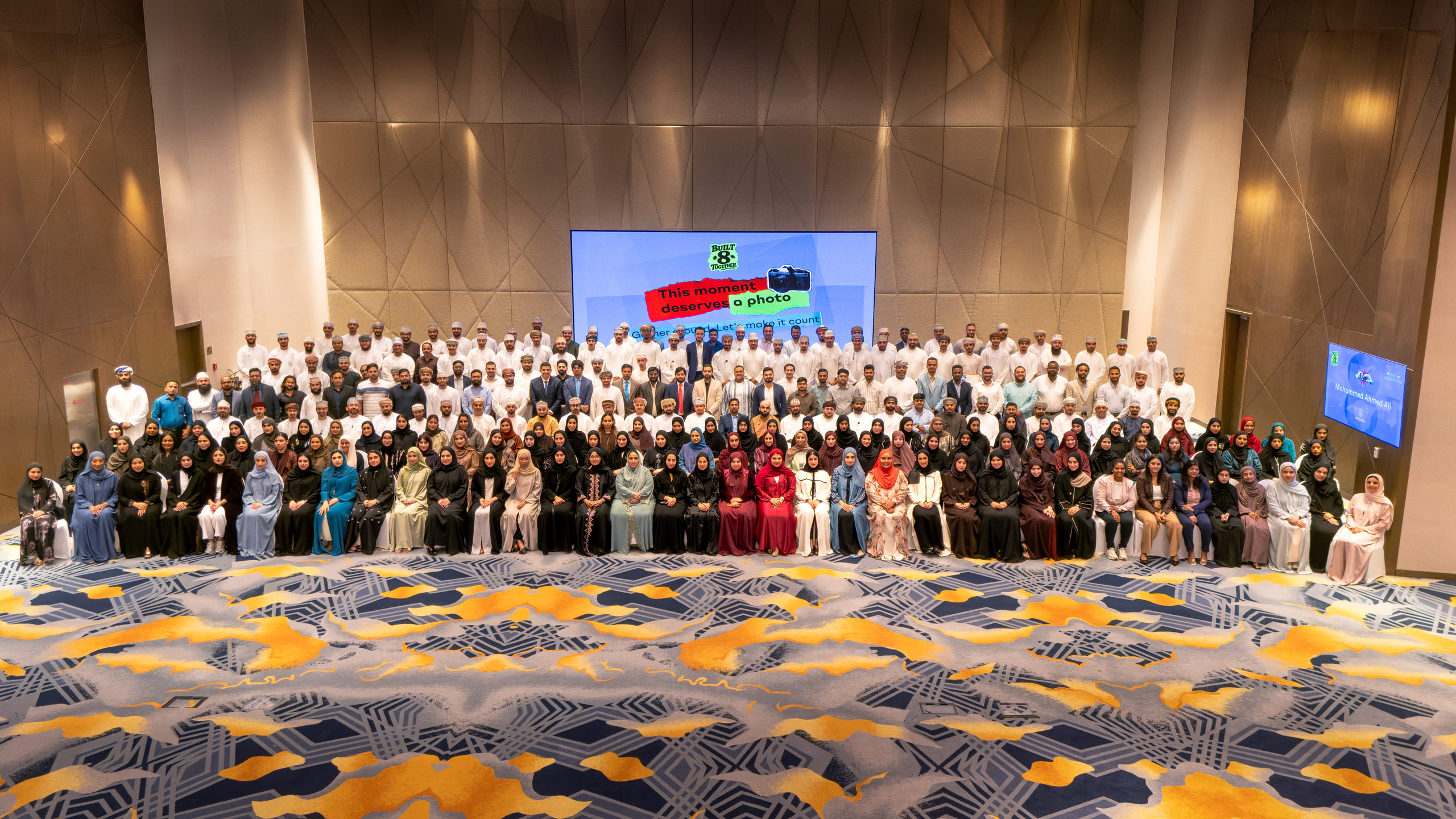
Growth brings its own comedy of logistics. Every new specialist creates more capability and more coordination. Processes that worked when everyone fitted around a table become folklore, then bottlenecks. The COO’s job is to prevent scale from turning motion into muddle. Al-Shabibi’s field background offers no magic answer; it offers habits. Make ownership visible. Treat quality as an operating condition. Assume that complex systems will expose vague thinking with indecent speed.
The price of the next chapter
In September 2025, Rihal announced the first close of a Series A round led by ITHCA Group. The investment was $7.5 million, half of a planned $15 million raise. The company tied the capital to regional and global expansion and to scaling its enterprise software and AI-driven data products. Funding announcements tend to speak in altitude. Operations must bring them back to earth: hiring plans, product reliability, sales coverage, computing capacity and the small domestic matters by which an international strategy succeeds or embarrasses itself.
Al-Shabibi’s work beyond Rihal hints at the ecosystem around that effort. He has held board roles at Codeline, a technology-talent venture, and Transformation Pioneers, a Muscat consultancy concerned with digital change and data governance. In 2025 he was selected for the Startup Leadership Programme at Oman’s Royal Academy of Management, a forum intended to sharpen leadership and contribute to the country’s digital future. These connections place him not as a solitary founder, but as one node in a closely woven Omani technology scene.
Proof has a power cable
The arrival of AI hardware therefore belongs in a longer story. Al-Shabibi did not present the equipment as a trophy. He described it as computing power for an ambitious product, a way to prove rather than merely claim leadership. One commenter joked that GPUs were more valuable than gold by volume. The line is funny because it catches the mood of the industry, where access to compute can feel like prospecting with a purchase order.
Yet hardware alone settles nothing. It can train or run models; it cannot decide which institutional problem deserves attention, clean the necessary data, persuade a cautious client, redesign a workflow or support the system after launch. Those are operating problems. They are also the territory Rihal has occupied since its data-migration days. The fashionable layer rests on a decidedly unfashionable foundation.
This is where Al-Shabibi’s two careers meet most neatly. A drilling operation is a network of equipment, expertise, schedules and consequences. So is an enterprise AI deployment, even when its hazards are less cinematic. Both require people to coordinate around reality. Both expose the cost of optimism without preparation. Both reward the leader who can translate a large objective into work that happens on Tuesday morning.
Rihal’s declared mission is international recognition in digitalization, and its regional footprint already extends beyond Oman. The harder aspiration lies inside that sentence: to grow without losing the delivery culture that made growth possible. Capital can accelerate a company. Headcount can enlarge it. Neither automatically makes it dependable.
The national context adds another layer. Rihal presents itself not only as a vendor from Oman but as a place where Omani technical talent can build careers on demanding local and international work. That proposition needs more than patriotic warmth. It needs difficult projects, exacting clients, patient training and managers willing to let younger specialists own consequential decisions. For an operations chief, workforce development is therefore inseparable from delivery. The product goes to a client; the capability stays in the country.
Al-Shabibi’s public persona is measured, more comfortable with evidence than ornament. Even his boldest AI announcement began with freight. That restraint suits an executive whose work lives after the launch, when the photographers have left and the system meets its users. The next test is considerable: new markets, larger products, more infrastructure and an organization whose complexity now rivals that of its projects.
There is a pleasant symmetry in the path. The engineering student tried to make a power plant produce fresh water alongside electricity. The field manager coordinated people and machinery around a well. The founder now asks data, software and compute to produce decisions that institutions can use. Different machines, same suspicion of waste. Different decade, same demand for a working result.
The pallet in the photograph is not the future. It is heavier, duller and more useful: the beginning of the work.