There is a small puzzle inside every commission-free brokerage. You press a button. A stock changes hands. The commission reads zero. Somewhere, however, a business has to pay its engineers. Webull Financial makes a useful case study because the answer sits beneath an unusually busy collection of charts, alerts, and trading tools. The visible product is access to markets and trading tools. The less visible product is the activity that access makes possible.
- The customer: investors who want to make their own trading decisions.
- The attraction: research, charts, practice, and execution in one workspace.
- The trade-off: a $0 commission leaves other costs, incentives, and risks intact.
01 The research app that learned to trade
The origin helps. The Webull business began in 2016 with a mobile application offering free market information. Its U.S. broker-dealer, Webull Financial LLC, was incorporated in 2017; U.S. trading followed in May 2018. Anquan Wang, the founder of the wider business, had worked at Alibaba and Xiaomi. Before Webull could hold a customer’s securities, it could hold a customer’s attention.
That sequence suggests a practical product lesson: become useful before asking someone to move money. A watchlist gives a person a reason to return. Research supplies another. Brokerage then puts execution beside the activity already happening. This is an interpretation of the sequence, rather than evidence of a secret founding formula. But it explains why Webull feels like an information terminal with a brokerage attached.
02 A cockpit for the self-directed
The customer is the investor who wants the controls. On mobile, in a browser, or on Desktop, users can research securities, inspect charts, monitor positions, and submit orders. Desktop offers movable widgets, hotkeys, price ladders, and trading from charts. Even Ubuntu users get a version. The proposition has a pleasingly nerdy specificity: arrange the instruments around the way you work.
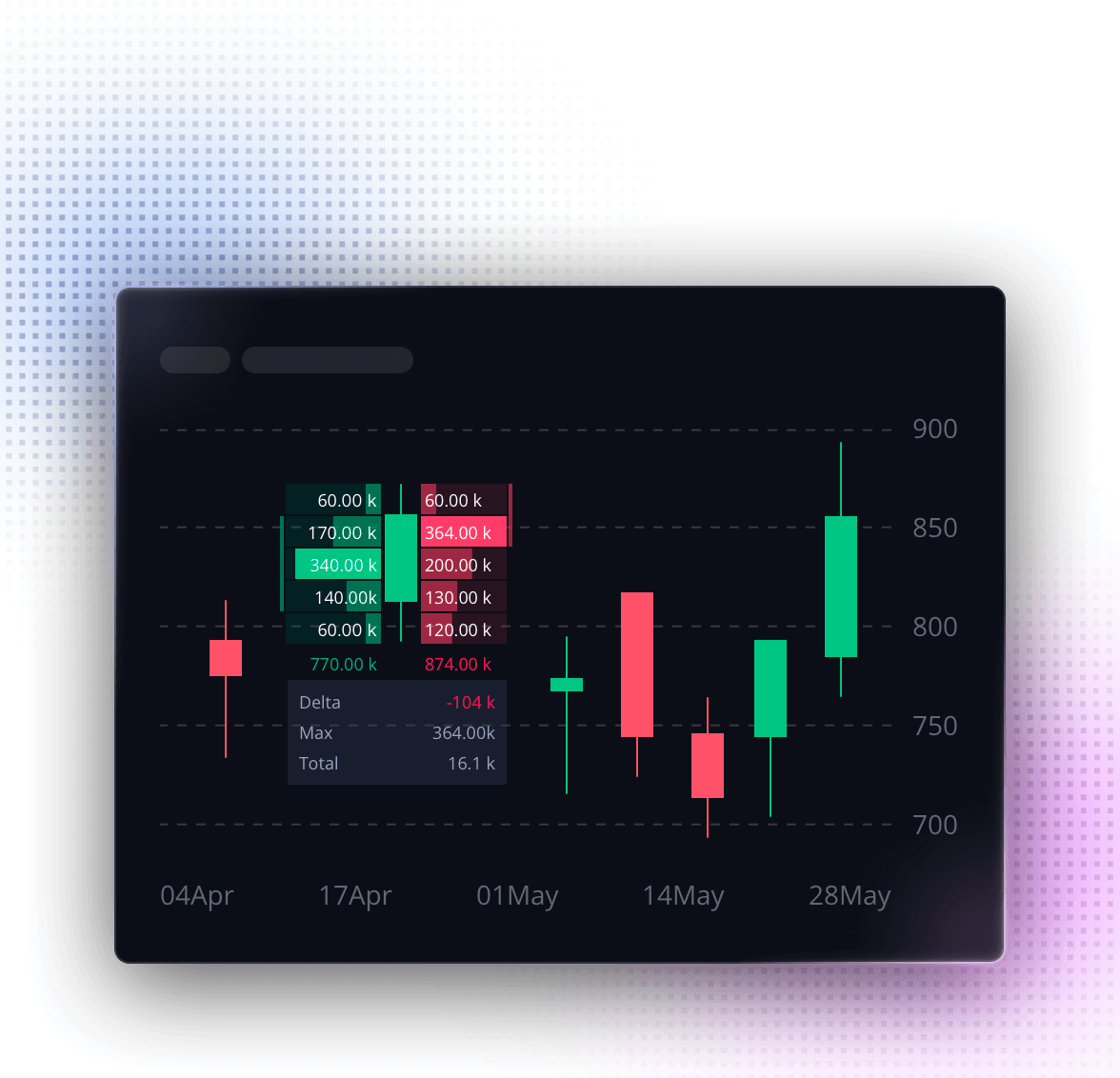
Eligible customers can trade stocks, ETFs, fractional shares, and options. Retirement accounts and recurring investments give the platform uses beyond watching candles wiggle. Selected stocks and ETFs have 24/5 trading, although overnight stock orders require whole shares. The corporate plumbing matters: securities sit with Webull Financial; futures, crypto, and advisory services involve separate providers within the broader offering.
Robinhood, moomoo, Interactive Brokers, Fidelity, and Schwab’s thinkorswim are alternative places to look. Webull’s case rests on the combination of low headline prices and a configurable research-and-execution workspace. Its TradingView integration adds a sensible concession: customers can connect their brokerage to charts they already use. Changing brokers need not mean changing every habit.
“Respecting the investor is respecting the market,” says Webull’s About page. That belief becomes a concrete interface choice: show the user information and give them tools to act. It also leaves a demanding task with the customer, who must distinguish a useful signal from an attractive arrangement of numbers.
03 Someone still pays
Webull’s U.S. pricing page lists $0 commissions for eligible U.S.-listed stock, ETF, and options trades. It also lists exceptions: certain index-option contract fees, oversized options-order fees, and other charges. Margin borrowing costs interest. Futures have a separate fee structure. “Free” is therefore a description of a particular charge on a particular transaction.
The company explains the machinery plainly: payments for order flow, interest on cash and margin loans, and stock lending help support the service. Market centers can pay a broker for routing orders. That creates an incentive customers should understand, even when their commission is zero. The parent’s 2025 accounts make the dependence measurable.
$571m parent revenue / 2025
Order-flow rebates 53.3%
Interest-related 27.0%
Handling charges 15.3%
Other 4.4%
Consolidated Webull Corporation figures, not standalone Webull Financial results.
Those economics make trading activity and interest rates commercially important. They also make it unwise to confuse a cheap transaction with a good decision. A brokerage can reduce the price of entering a position. It cannot supply the reason that position ought to exist.
04 The form that believed too much
One revealing failure concerned the permission to trade options. FINRA found that Webull’s automated approval system did not compare applications with previously supplied information. In one example, a customer rejected on his eighteenth birthday was approved two days later after claiming more than five years of options experience. The form accepted a chronology that a person should have questioned.
In 2023, Webull Financial accepted a $3 million fine covering options due-diligence failures and deficiencies in complaint supervision and reporting. It neither admitted nor denied the findings. FINRA also recorded changes beginning in August 2021: limits on repeated applications, restrictions on sudden increases in claimed experience, and stronger verification for younger customers.
A form can check every box and still miss the story.
An editorial lesson from the options approval record
This is the useful lesson for anyone building automated decisions. Test the customer’s history, not merely the latest form. Repeated attempts and contradictory answers belong inside the decision. The documented change was a change in controls; attributing a private change of heart to executives would require evidence the record does not provide.
05 Practice before the real thing
Webull’s paperTrade offers a more forgiving place to begin. Virtual funds let users rehearse orders and explore strategies without putting the practice balance at risk. The company’s current offering includes multi-leg options simulation and tools resembling its live workspace. The practical thing to copy is the rehearsal: learn where the buttons are before a mistaken click carries a financial consequence.

Simulation has limits. It cannot recreate every execution condition, or the feeling of watching actual savings disappear. Investors seeking someone else to make portfolio decisions also need to distinguish a self-directed brokerage account from the separate managed-portfolio service. Better instruments help you operate the machine. They do not decide whether you should be operating it.
06 A bigger network, the same question
By June 2026, the parent reported 28.2 million registered users, 5.13 million funded accounts, and trading operations in 18 markets. Registration is not a funded relationship. The gap is a useful reminder that audience, customers, and money are different measures. Webull Corporation, listed on Nasdaq as BULL since April 2025, reported second-quarter 2026 revenue of $198.8 million.
The expanding network now includes AI research and institutional services. The October 26 developer changelog added news, community, options data, and sentiment capabilities to its AI-facing resources. For eligible API users, the workspace can extend into software they build themselves. That brings the company closer to infrastructure: a broker can supply data and execution while someone else designs the screen. Yet the original proposition remains recognizable: put information and execution within reach of an individual. Webull has made that reach longer. The question left to the person at the screen is the oldest one in investing: what, exactly, is worth buying?