Imagine being right about a stock and unable to trade it. The price looks stretched. Your analysis says it should fall. But selling short requires something a chart cannot supply: access to shares. Before the bet comes a more prosaic question. Does your broker have anything for you to borrow?
This is the problem around which TradeZero built its identity. In a 2021 SteadyTrade interview, co-founder Daniel Pipitone described the old frustration: “the easy-to-borrow list at their clearing firm was terrible.” A trader could have conviction, a screen full of information, and no usable inventory. TradeZero put the search inside the trading platform.
- A brokerage built around active traders and hard-to-borrow shares.
- Desktop, browser and mobile tools, plus TradingView integration.
- Unused locates may earn partial credit if another trader takes them.
- eToro’s proposed purchase remains subject to approvals.
A small market inside the market
A locate helps a broker establish that shares are available for a short sale. TradeZero lets customers search for that availability, inspect a quoted fee and reserve inventory. Its system gathers supply from more than 14 sources. The product addresses a practical constraint: a bearish opinion has little trading value without access to shares.
Then comes the curious bit. A trader whose planned entry never arrives can mark eligible unused locates for credit. Another TradeZero customer may take that availability, allowing the first trader to recover part of the fee. Recovery depends on demand and eligibility. A reservation can cost money even when no trade follows.
- 01SearchFind available inventory.
- 02PriceReview the locate fee.
- 03ReserveAccept the quoted cost.
- 04Trade / relistUse it, or seek eligible credit.
That is a useful product lesson beyond finance: find the obstacle that stops an otherwise willing customer. Make that obstacle visible, price it, and reduce the number of handoffs required to clear it. Here, the overlooked transaction happens before the transaction everyone watches.
The workstation is the shop window
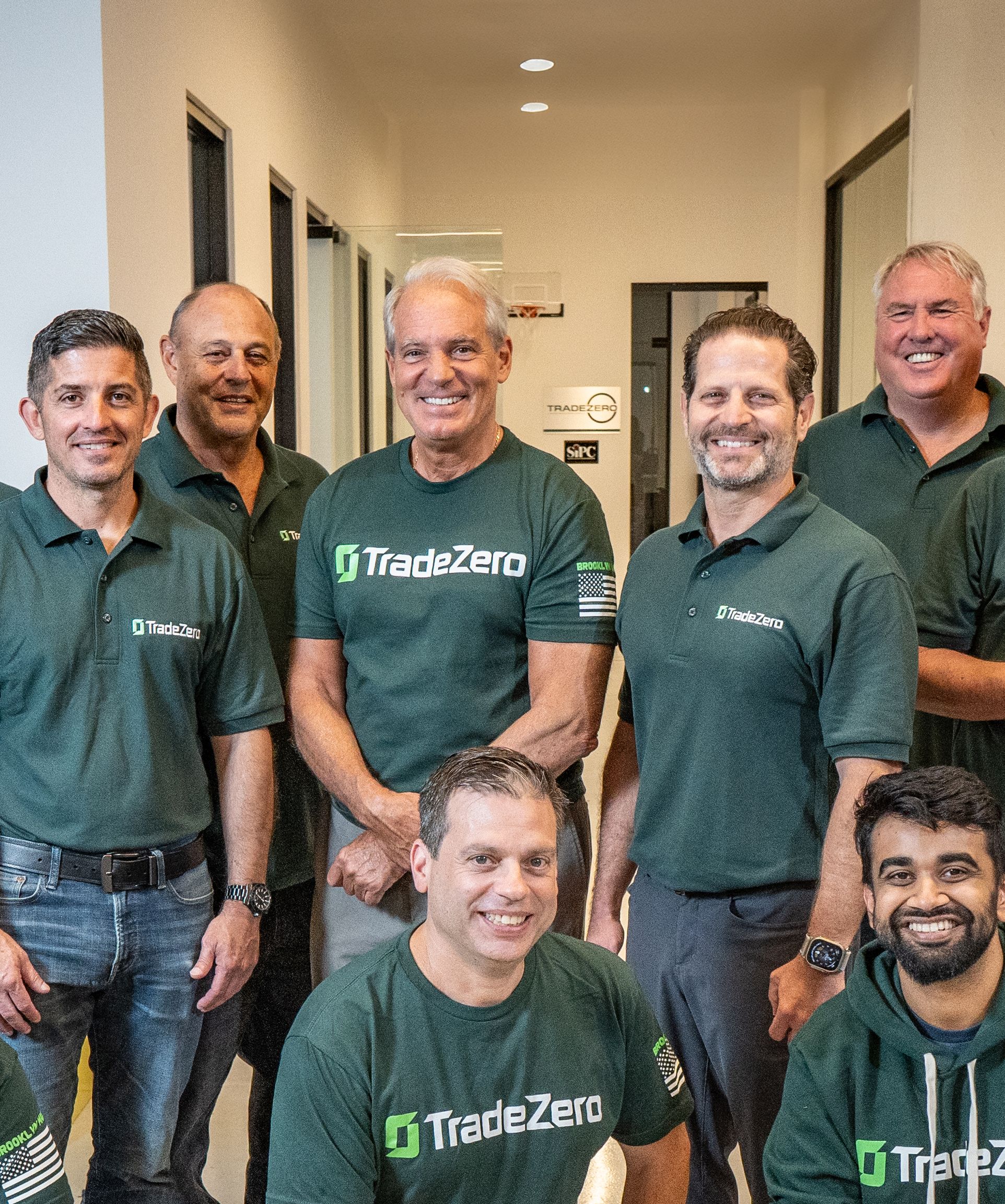
TradeZero’s founders had lived with traders’ demands before. Pipitone, John Muscatella and Giovanni Ferrara started Noble Trading together in 1999. TradeZero followed in 2015. Its operating footprint grew from international clients to the United States in 2019, Canada in 2022 and certain European clients in 2025.
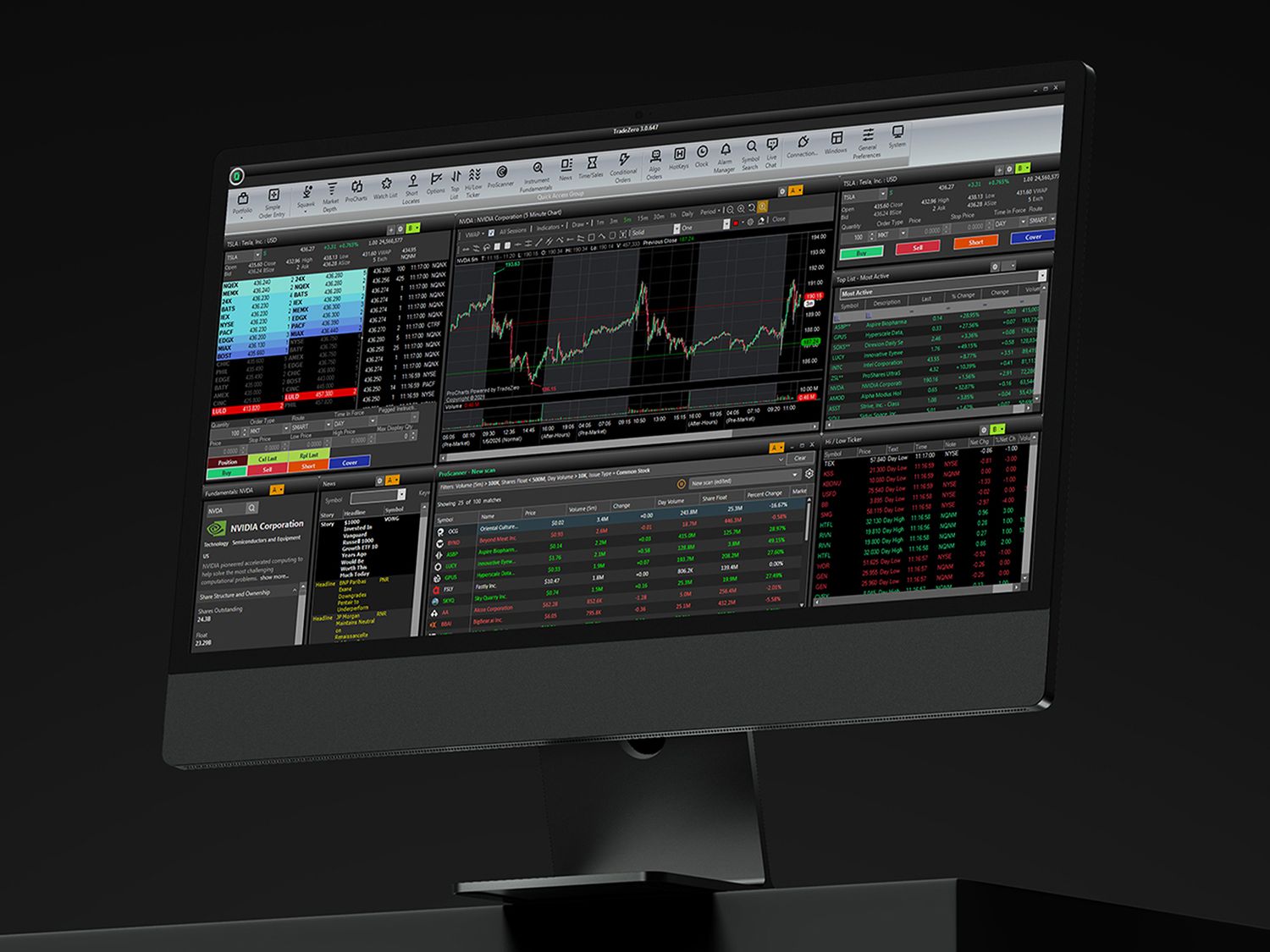
The software reflects that audience. ZeroPro, the Windows desktop platform, offers market-depth windows, configurable hotkeys and tools for conditional orders. ProScanner combines price, volume and technical filters. This is a workbench for people who repeatedly search, compare and execute during a session.
TZ1 moves that approach into the browser, with twelve ready-made workspaces and draggable widgets. ZeroFree provides a simpler browser option; ZeroMobile synchronizes trading activity with the other platforms. The choice matters when a trading routine spans several devices.
In July 2025, TradeZero added a TradingView brokerage integration. Customers could keep familiar charts while connecting their brokerage account. Developers can also use an API for orders, positions and locates. The company is making its execution services available through several interfaces, including software customers already use.
The zero has an asterisk
The customer is typically a self-directed trader who values execution controls, short availability and extended sessions. Interactive Brokers and Lightspeed occupy adjacent territory; Webull competes for people seeking accessible trading software. TradeZero’s distinctive pitch is the combination of its locate workflow and active-trading tools.
Commission-free does not mean every action costs nothing. TradeZero America advertises zero commissions on qualifying listed stocks priced at least $1, with exceptions including trading between 4 a.m. and 7 a.m. Eastern. Its schedule also lists charges for sub-dollar stocks, options contracts, borrowing, certain transfers and other services.
ZeroPro is listed at $59 monthly, while TZ1 and ZeroFree have no monthly software charge. Locate fees are quoted separately. Alongside margin interest and other charges, these paid services show how a broker can advertise a zero commission and still operate a business.
A locate has its own price.
Illustrative locate cost only. Actual quotes vary. This excludes commissions, borrow charges and other fees; any later credit is conditional.
Those distinctions determine who gets value. Someone buying an occasional ETF may have little use for a locate network. A short seller still faces unavailable inventory, changing borrow costs and potentially unlimited losses if a stock rises. Better access does not make the underlying judgment correct.
Ten minutes, and a public reckoning
The access story also has an uncomfortable chapter. On January 28, 2021, TradeZero initially resisted its clearing broker’s instruction to restrict purchases of GameStop, AMC and Koss. It eventually restricted purchases for roughly ten minutes before the clearing broker lifted the instruction.
The SEC later said TradeZero and Pipitone made misleading public statements suggesting those restrictions had never happened. In May 2022, they settled without admitting or denying the findings. TradeZero agreed to a $100,000 penalty and Pipitone to $25,000; an independent compliance consultant was also required.
The episode exposes a limit of the brokerage promise. An introducing broker depends on infrastructure beyond its own interface. Ten minutes can be brief operationally and consequential legally. The accuracy of the explanation matters as much as the speed of the software.
Two deals. Different destinations.
A planned 2021 merger with Dune Acquisition Corporation would have taken TradeZero public. It unraveled. A December 2022 settlement provided for mutual termination and a $5 million payment from TradeZero defendants’ insurers, received in January 2023. The announced listing never became the company’s destination.
In August 2026, another route emerged: eToro agreed to acquire TradeZero for consideration of up to $231 million in cash and shares. The buyer reported about $80 million of TradeZero revenue for the twelve months through June 2026. Closing was expected in the first half of 2027, subject to approvals and customary conditions.
“TradeZero was built by active traders, for active traders”
Daniel Pipitone / acquisition announcement, August 2026
Pipitone described eToro’s scale as a way to accelerate innovation. For eToro, the attraction includes regulated brokerage operations and proprietary tools. For anyone building a company, the interesting detail is how specific the original problem was: finding shares. Solve a recurring bottleneck well enough, and a larger platform may want the machinery behind the button.