The first important machine in the history of VIVAS was owned by somebody else. Luis Vivas had a laptop, a new banner business and a slogan - “online and on time” - but no large-format printer. Then, one week in, the San Francisco Marathon called. It needed banners by Saturday. The sensible answer was no. Vivas said yes, found a friend with a machine and went to work. The order began at 20 banners and ended, according to the company’s account, at 200.
This is a compact origin story, which is useful because it contains the whole company in miniature. A client has a fixed date. The work is physical. Capacity must be assembled quickly. Quality still has to hold. VIVAS is now a San Francisco visual-communications company with its own production floor, but the product is not really ink on vinyl. It is the removal of all the inconvenient space between an idea and an installed thing.
A little shop with a very large deadline
Vivas came to California from Peru in 2006 and found work in printing. At Fast Imaging, a colleague operating a new banner printer became mentor and model. By late 2010, Vivas was selling from a two-bedroom Alameda apartment. The marathon order in 2012 produced the first meaningful cash and helped open a Richmond District shop. It was 400 square feet: one printer, one desk, one production table. There was nowhere for abstraction to hide.
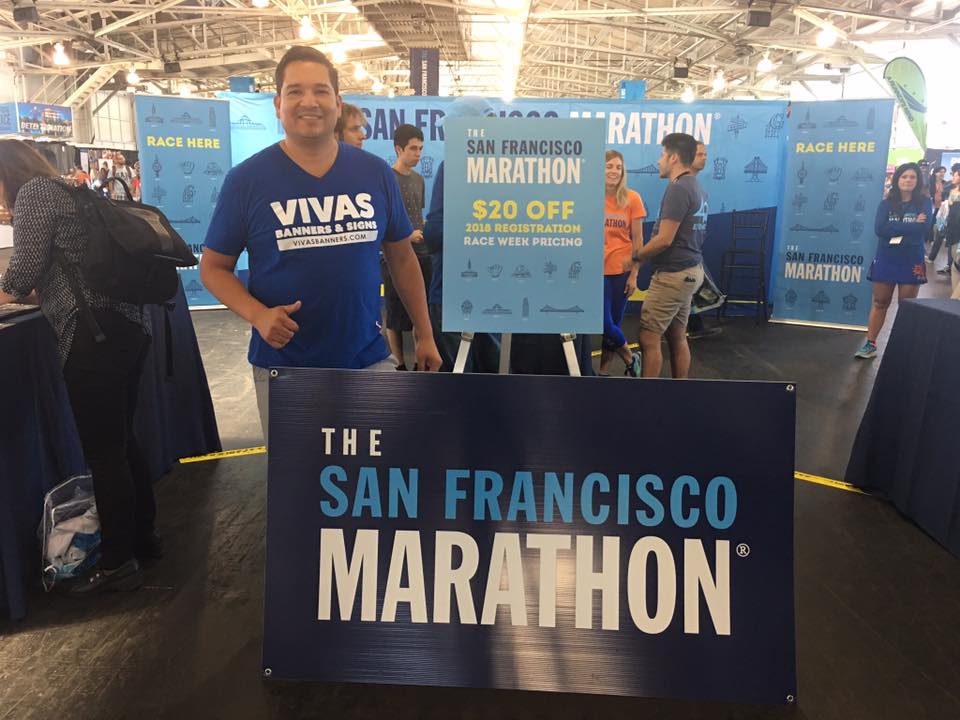
The San Francisco Marathon returned. In 2013, VIVAS produced 600 signs as a preferred vendor. Soon after, Lucasfilm ordered one wall graphic for its Presidio headquarters. The assignment was small because it was a test, though nobody told Vivas that at the time. The print had to match, the wall had to survive and the installers had to be patient inside a working office. The result led to a six-month project placing imagery from Star Wars and other Lucas productions around the campus.
“You never know who’s calling you.”Luis Vivas
That episode changed the company’s center of gravity. Banners are products. An office full of graphics is a system: every surface has dimensions, every material behaves differently, every color has to agree under real light. VIVAS moved toward interior branding and event signage, where the customer is paying for coordination as much as output.
The business between the file and the wall
A marketing team may arrive with artwork. A facilities team may arrive with an odd wall, a security rule and four hours of access. VIVAS connects them. Its work includes wall murals, frosted privacy film, perforated window graphics, dimensional lettering, wayfinding, banners, trade-show displays, event stages, vehicle wraps and custom signs. The company prepares files and mock-ups, tests color, chooses substrates, prints, laminates, cuts, labels, transports and installs.
This bundled workflow is the company’s distinction in a crowded market. A print counter can output a banner. A design studio can produce a lovely rendering. An installer can apply film. VIVAS sells continuity across all three, which becomes valuable when tolerances are narrow or the deadline belongs to a race, opening, conference or public building. Its public wall-graphic calculator is only an estimate; the actual model is custom, project-based work priced around dimensions, materials, preparation, production and site labor.
A stairwell is not a rectangle
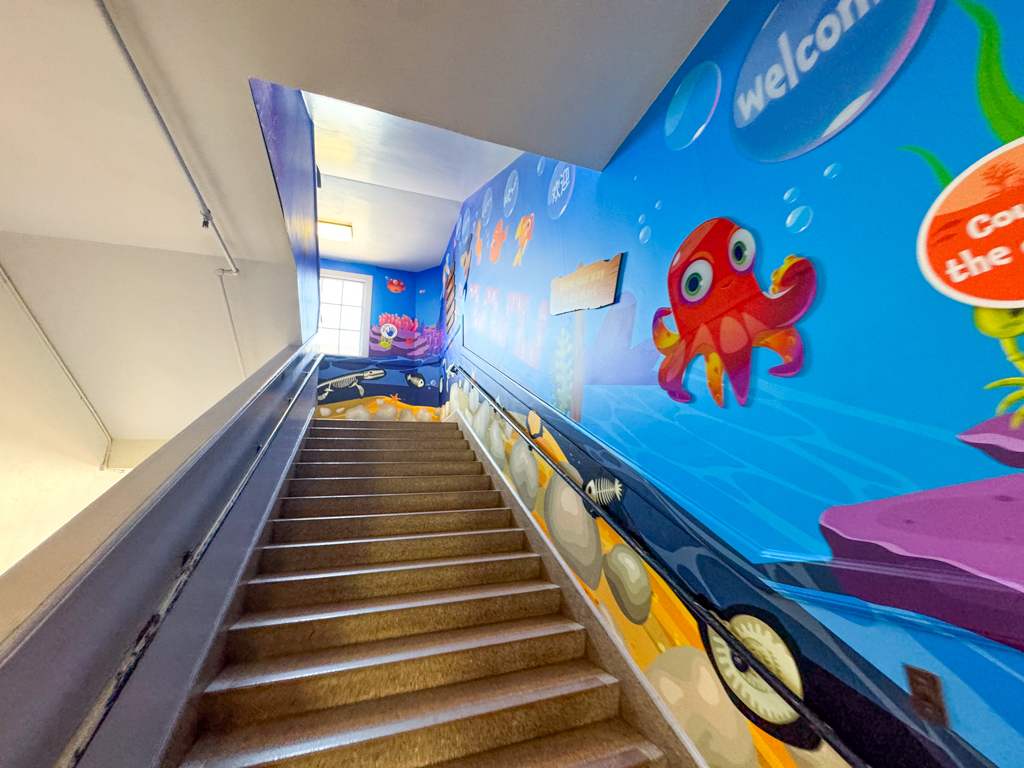
The Sherman Elementary project shows what “installation” really means. In 2024, VIVAS and Lane Displays helped transform a three-story stairwell into 2,900 square feet of ocean, sky and space. Students had influenced the themes. Educators and neurodiversity specialists added tactile and learning elements. The graphics had to be vivid, low-odor, durable and precisely fitted around railings, corners and three levels of daily traffic.
VIVAS used a Roland resin printer with Avery Dennison vinyl and a matte protective layer. The technical choice matters. Resin prints dry quickly and emit fewer volatile compounds than some alternatives, which suits indoor environments such as schools and healthcare spaces. The company had added that production capacity to handle higher-volume work and a wider set of surfaces. What began as borrowed capacity had become a deliberate collection of machines, each justified by the jobs the market was already asking for.
A year later, the team printed a temporary mural nearly 40 feet wide and 23 feet high for the San Francisco Main Library. Production lead Alberto Vidaurre’s crew spent a week printing, laminating, checking and labeling panels. On Sunday evening, workers assembled scaffolding over five hours. Installation began Monday morning; the scaffold came down that evening. The public saw art. The production team saw registration marks, access windows and a sequence that could not be reversed.
Who calls - and why
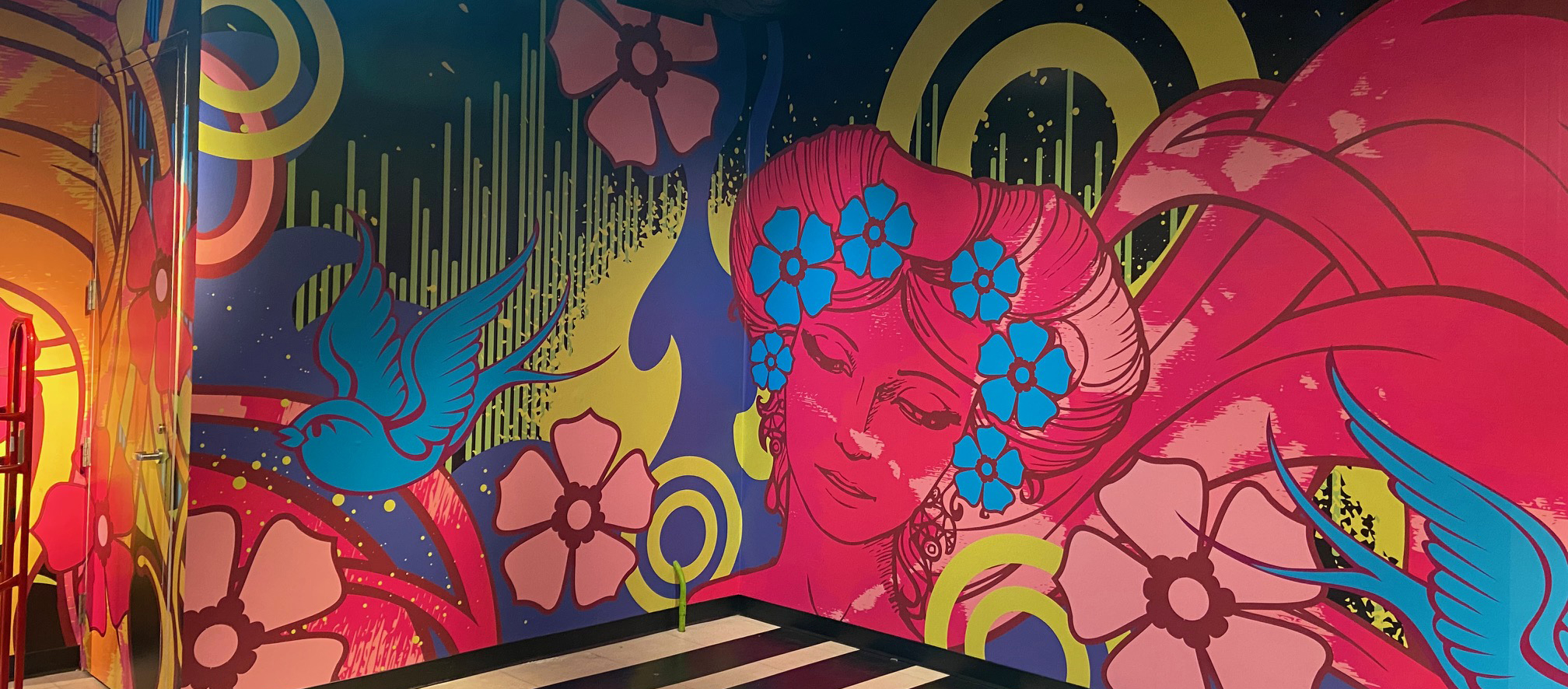
The customer list is broad but the buyer’s situation is remarkably consistent. Workplace teams need an office to feel finished. Retailers need windows to announce an opening or move. Event producers need a temporary world that looks permanent for one evening. Public agencies need durable graphics to explain a place. Brand teams need a fleet, booth or lobby to match the approved color on the screen.
VIVAS has worked for organizations including Lucasfilm, Google, Facebook, Nike, Sephora, Turo, Reddit, Uber, UCSF, UC Berkeley, Meals on Wheels and Fisherman’s Wharf. Awards followed: industry recognition for Google posters and Compass window graphics, then a 2021 best-of-category prize for a Turo interior that combined wall graphics, an elevator wrap and layered conference-room films. The awards are less interesting than the pattern. The best projects require more than one material and more than one kind of judgment.
The lesson worth copying is not indiscriminate optimism. It is staged commitment. Vivas accepted the first job, then found capacity. He let a customer pay for the proof that justified a shop. A one-wall test earned a longer engagement. Later, recurring demands for indoor and fleet work justified another printer. Each fixed investment followed evidence.
That approach has limits. Rush work succeeds when trusted suppliers, clean files and real production access exist. It fails when “yes” means skipping the proof, ignoring the wall or guessing at installation time. VIVAS’s mature process has more checks than its origin story: consultation, rendering, material selection, quality control and site work. The company still sells speed. It simply learned that the reliable form of speed is preparation.
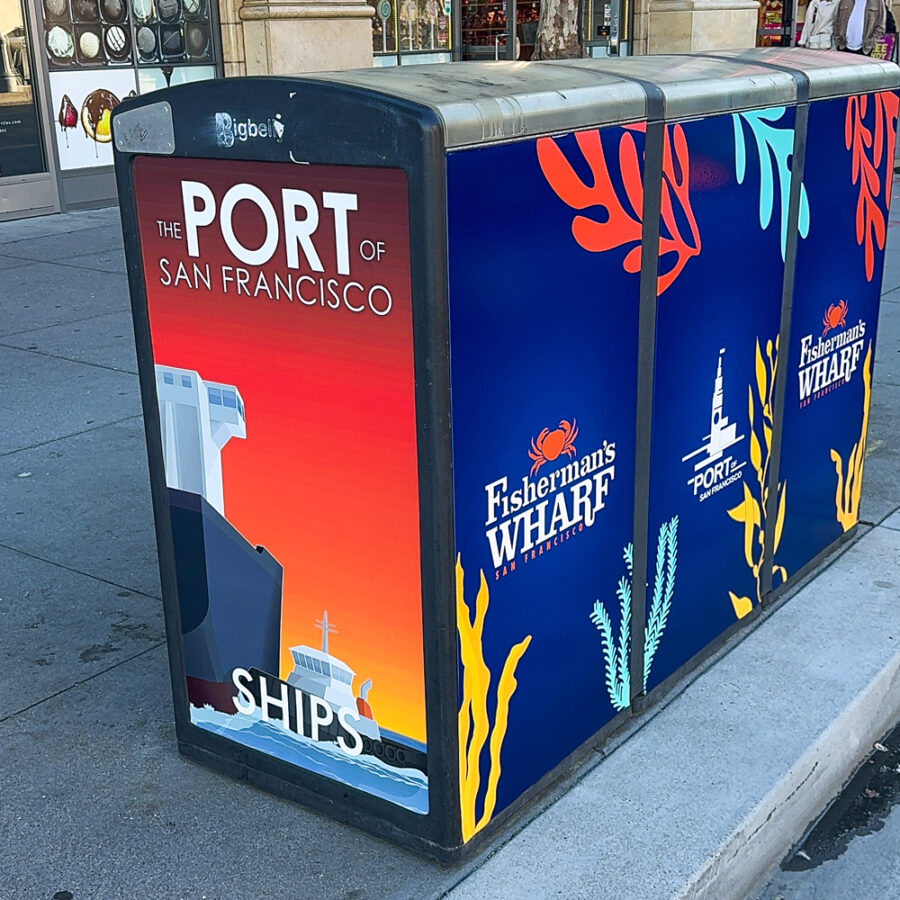
There is something pleasingly inverted about the business. Most companies place their own name on everything. VIVAS disappears behind everybody else’s: a shark in a school stairwell, a timeline in Reddit’s office, a luminous sign at Instacart, a painted-looking panel on a waste bin. Its craft is visible everywhere and credited almost nowhere. For a company devoted to making brands impossible to miss, that is exactly the point.