A person steps in front of a wall. A camera clicks. Somewhere in the resulting photograph, a sponsor’s logo remains perfectly legible. The guest gets a picture; the sponsor gets another appearance. The wall has done its job. Almost nobody asks who made it.
Creative Graphic Services occupies that overlooked part of the picture. The family-owned company makes the banners, wraps, signs and backdrops that turn ordinary spaces into branded occasions. Its work has surrounded Super Bowl festivities and appeared in retail and museum settings. Look at those assignments together and a particular kind of expertise emerges: making an idea behave when it leaves the screen.
A business hiding inside another business
The origins are pleasingly unglamorous. In the late 1970s, Ron Niner operated CAMCO Products, supplying automotive customization products to dealerships. Some products needed custom graphics. Buying basic signmaking equipment in the early 1980s opened another line of work, which became CGS. A tool acquired for one purpose revealed another market.
Then came a more specific invitation. In 1989, an NFL production-company representative contacted the business. Jim Niner later recalled the request:
“They needed a company to cut thick foam letters.”
Jim Niner, recalling the 1989 inquiry
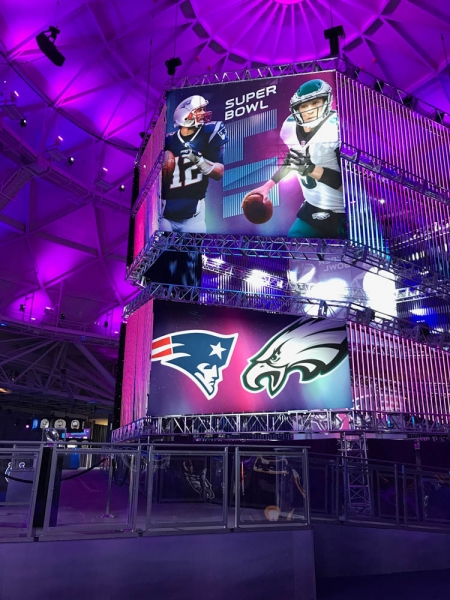
Foam letters are a wonderfully concrete starting point. They have thickness, edges and weight. The assignment asked for something that had to exist in a room. CGS’s subsequent work expanded into the displays surrounding Super Bowl activities. By 2021, local reporting counted 33 consecutive years of graphics for the event.
The camera is a demanding customer
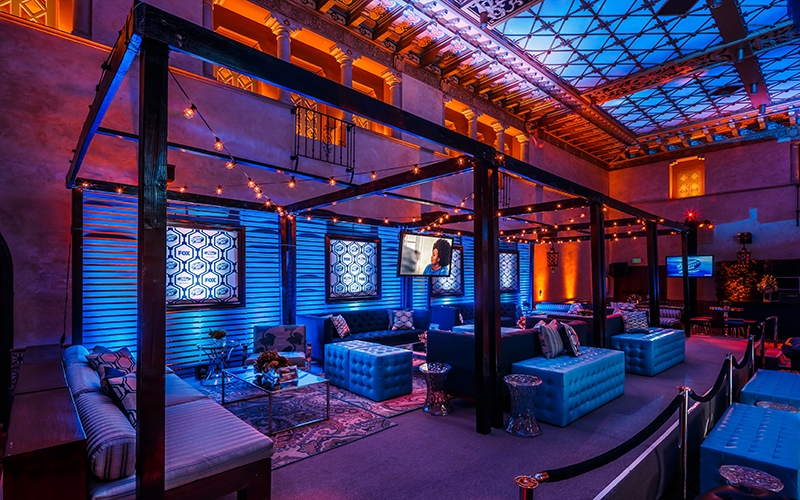
Consider the step and repeat, a CGS staple. Repeated logos spread across a backdrop make it more likely that branding survives the framing of a photograph. The pattern must work with people standing in front of it. A banner can look excellent by itself and become less useful once the guests arrive.
CGS’s own guidance calls attention to lighting, reflections, sturdy supports and placement. Those are practical concerns with creative consequences. A buyer should think about the final photograph while choosing the surface. The most elaborate artwork in the room may accomplish very little if glare makes its lettering disappear.
The company’s portfolio shows a dimensional L’Oréal Paris logo against a hedge wall. Here, the letters rise from the background. CGS describes materials including acrylic, foam and wood, with cutting, layering and different mounting methods. The design question becomes physical: how much depth, which finish, and what holds everything in place?
Backlit graphics introduce another variable. Light passes through the printed material, so the image and the illumination have to work together. CGS shows Museum of Modern Art work on its backlit-graphics page. The product can also suit retail or exhibition displays where a replacement graphic changes the message while the display system remains in use.
The expensive machine and the ordinary stitch
There is real capital behind these temporary worlds. A 2018 newspaper profile reported that a roll-to-roll printer CGS bought in 2016 cost about $900,000. In the same account, production also involved needle and thread. That pairing explains more about the business than a photograph of a printer alone could.
Reported purchase price of one roll-to-roll printer. A historical equipment cost, separate from what a customer pays for a project.
The current equipment list includes HP latex and textile printers, an EFI VUTEK press, sewing and welding equipment, laminators, a laser, routers and vinyl cutters. Printing is one operation among many. Fabric must become a finished object; cut material must become a sign. The equipment list reads like the contents of several workshops sharing an address.
For customers, the commercial arrangement is custom project work. CGS serves specialty clients and wholesale dealers, and its event-directory listing directs buyers toward a personalized proposal. A useful brief therefore starts with dimensions, material, placement and installation needs. A budget for the printed surface alone leaves much of the assignment undescribed.
One color, two coasts
CGS opened in Jersey City in 2018, adding an East Coast base to its Santa Clarita operation. The current company website describes a 25,000-square-foot West Coast manufacturing facility and says the Jersey City location has nearly doubled since opening. That geography gives the company a practical position near two major event and entertainment markets.
It also creates a coordination problem. In a 2021 Caldera case study, Jersey City general manager Kyle Niner described the importance of consistent color across equipment and locations. CGS used CalderaRIP software to help manage it. Different operators could adjust their working preferences while the business pursued consistent output.
The lesson is easy to borrow: when production spreads across machines or offices, agree on the result as well as the file. The same artwork is only the beginning. A color-management process gives the people making the work a common reference.
CGS operates among other specialist print and fabrication businesses. A JHD Group credit for Super Bowl LI’s FOX Sports environments names CGS alongside other graphics printers, with separate firms handling construction, lighting and audiovisual integration. Large productions are collaborative. CGS’s pitch makes sense within that network: direct access to its designers and production team, plus fabrication and installation capabilities that connect several parts of the job.
When there was nobody to gather
The business’s dependence on live events became especially clear in March 2020. Before temporarily closing for two weeks during the pandemic, Jim Niner and the staff used materials to make encouraging signs for their community. Local coverage later put the number at 125.
The immediate constraint was outside the print shop: people could no longer gather as before. Having machines and skill could not by itself restore an event calendar. That is a useful qualification for anyone tempted to copy the model. Production capacity pays its way when there are occasions that need it.
In February 2021, CGS supplied graphics for Super Bowl LV activities, including the Super Bowl Experience and the TikTok Tailgate. Later that year, the Caldera interview described festival work and returning Broadway and experiential assignments. The recovery described there was tied to places reopening and audiences coming back.
Bring the room into the brief
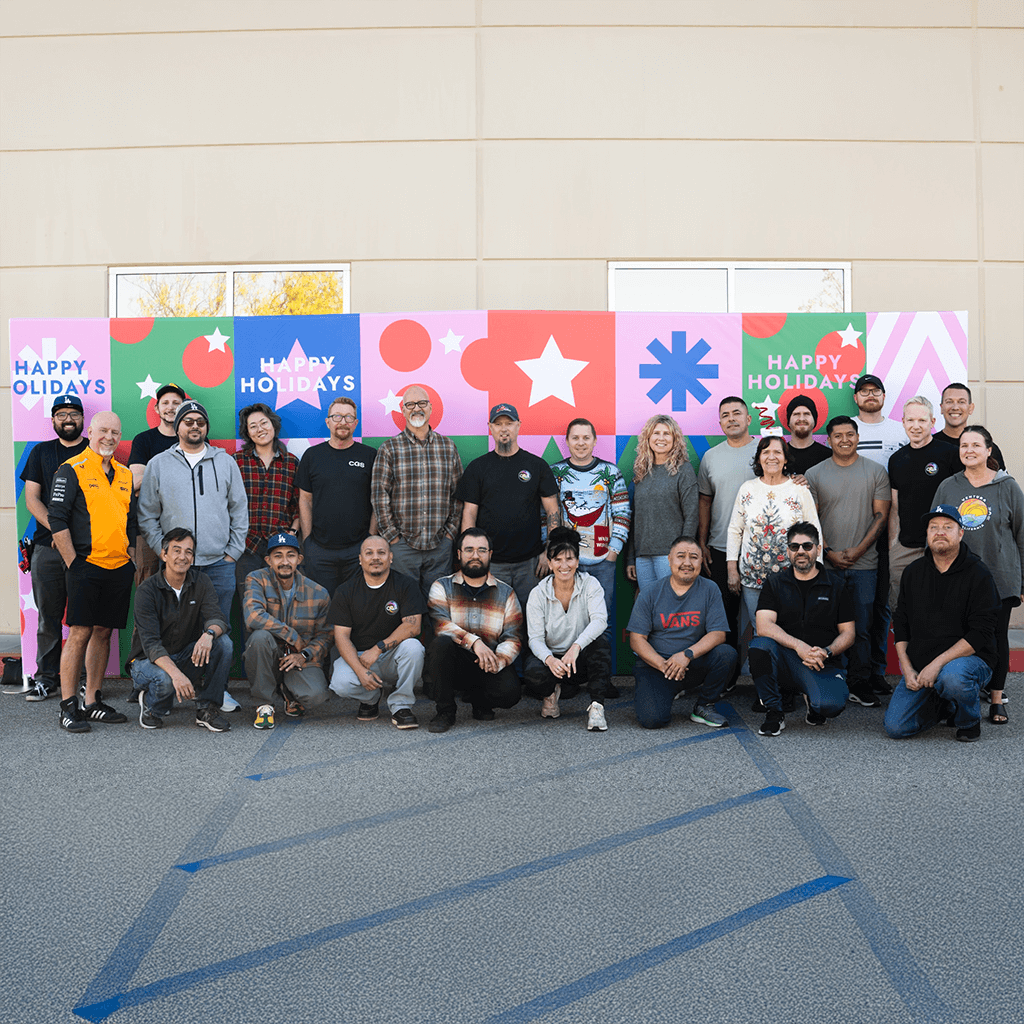
CGS makes particular sense for a buyer whose project crosses several physical disciplines: a backdrop with raised lettering, a wrapped environment, a fabric display that needs finishing and installation. An assignment confined to a simple printed item has fewer reasons to draw on that range. Complexity gives the combined service its purpose.
For an event producer, the copyable habit is to describe the use before approving the object. Where will people stand? What will the camera see? Will the graphic be lit from behind? How will it travel, attach and come down? Those questions bring production into the design conversation early enough to matter.
The family’s original move followed a similar logic. A customer needed something physical, so the business learned how to make it. Decades later, the job still ends in a room, with a surface, some lettering and people moving into position. Then the camera clicks.