Rod Voegele’s Cadillac Escalade was doing a little prospecting. Chris Welsh had seen the wrapped vehicle around Newport Beach and copied its number. He had something he wanted wrapped: a submarine. Welsh was involved in Virgin Oceanic with Richard Branson; the job included the explorer sub and a 125-foot catamaran. The craft were unveiled in April 2011. Voegele recounted the encounter in a trade interview the following year.
Most businesses should probably budget for fewer submarine inquiries. But the mechanism is worth considering. A visible example of somebody’s work found a customer while its owner was going somewhere else. The vehicle carried the demonstration and the contact details together.
Gatorwraps sells that combination. Its business brings graphic design, printing and installation under one roof, then extends installation through a wider network. The output might be a plumber’s van, a trailer, a restaurant on wheels or a boat whose owner wants a different look. Each begins with an ordinary physical surface and a decision about what it ought to communicate.
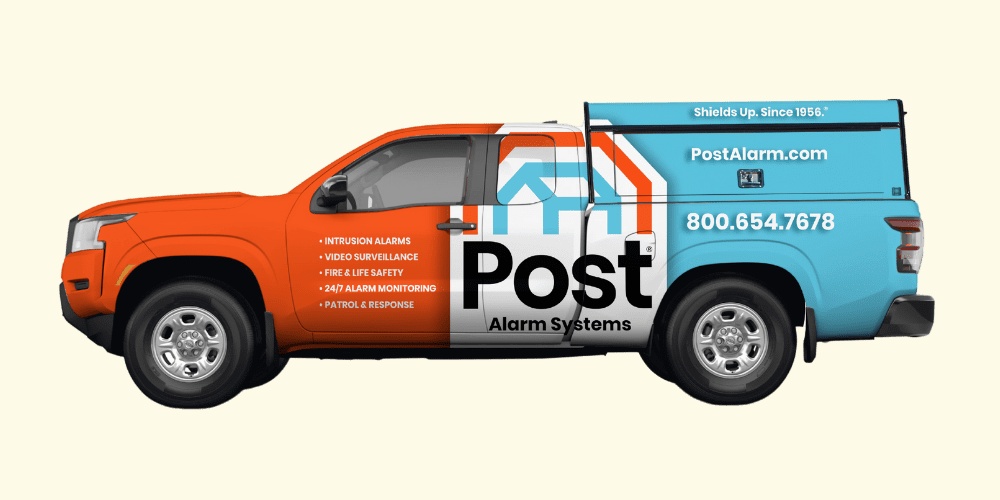
The customer was an hour away
Voegele founded Gatorwraps in 2006 with three employees, according to the company’s account. Its description of the early operation emphasizes training, design, installation and service. Those are useful clues to the kind of business it became: a production company whose work must satisfy a customer twice, first as an approved picture and then as an object in daylight.
By October 2016, Gatorwraps was announcing a second location in Laguna Hills. The 6,000-square-foot facility brought it closer to Orange County, which Voegele identified as its fastest-growing local market. Customers there were more than an hour from headquarters. The announcement also described added production capacity and an opportunity in custom vehicle restyling.
“Opening this shop will provide a more convenient location for those customers.”Rod Voegele · October 2016
The same announcement reported more than 40 wrap projects a week and named the NFL and Monster Energy among customers. That is a snapshot of the business in 2016. It also helps explain the location decision: a company can have national accounts and still need to solve a very local journey.
Today Gatorwraps advertises nationwide service and says its installer network reaches all 50 states and eight countries. For a fleet buyer, the practical appeal is coordination. A common design can travel to the vehicles, with installation organized around a dispersed operation.
A brand guide meets a door handle
A fleet presents a peculiar design problem. The vehicles need to look related without necessarily being the same shape. A logo that sits comfortably on a van can land across an awkward interruption on a truck. Gatorwraps describes creating vehicle templates and mockup proofs for customer approval. Its designers start by establishing the audience and the message, then arrange the artwork for the available bodywork.
Message, vehicle template, approved proof.
Color, resolution and material checks.
Surface preparation, application, edge review.
The print department describes checking color consistency, resolution and defects before installation. Installers inspect and prepare the vehicle, apply the material in controlled conditions and review alignment, bubbles and edges. That sequence explains where the expertise lives. The attractive image is only one stage in producing an attractive vehicle.
Gatorwraps’ July 2025 fleet-branding guide calls out inconsistent layouts, colors, fonts and finishes, along with the use of different installers without a brand guide. The useful lesson is to make those decisions explicit before expanding a fleet. A second vehicle should not require somebody to remember exactly which blue the first one used.
This places Gatorwraps between a design studio, a large-format printer and an installation business. Local wrap shops and national fleet-graphics providers are the natural alternatives. Its offer combines those tasks with geographic coordination and a named material system. A buyer comparing proposals should compare that whole job: who makes the proof, who produces it, who fits it and who handles a correction.
Buy the surface you need
The commercial model is project work. Customers request a quote for a particular vehicle, coverage level and design. Full wraps provide the largest canvas; partial wraps and decals reduce the area involved. Vehicle size and design complexity also affect the price. The purchase is a physical advertising asset, with later opportunities for updates, replacements and additional vehicles.
Design and revisions for jobs under 100 square feet, according to the FAQ. Design is included for wraps over 100 square feet. Confirm the treatment of a job at exactly 100 square feet.
The distinction matters: that hourly figure is a design charge, not a finished-wrap price. Gatorwraps also offers window graphics that can become part of a larger wrap later. And when a phone number or logo changes, its FAQ says the company can apply an overlay or replace a section. A useful buying brief therefore includes what might change next year.
There is a larger example in the company’s history. In the 2012 trade interview, Voegele described a 62-box-truck project that he rewrapped after the customer ended a sponsorship. A commercial message can reach its expiration date while the vehicle underneath remains useful.
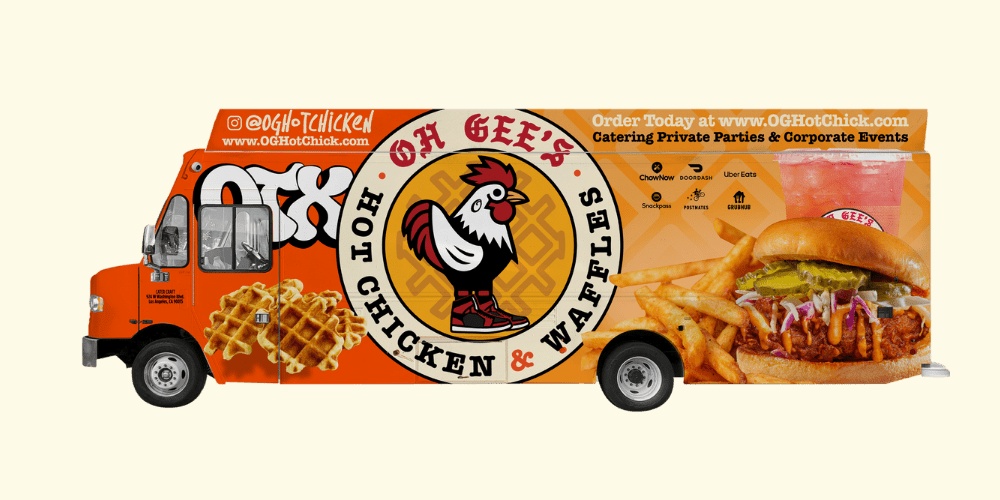
A food truck makes the value of the surface particularly easy to see. Gatorwraps offers custom graphics around the operator’s brand, audience and visual preferences, then measures and fits the material around the truck. In this setting the vehicle is also the business premises. Its sides can announce the food long before a customer reaches the serving window.
The same identity can continue onto storefronts, walls and event equipment. Gatorwraps offers printed canopies in several sizes, with options for frames and walls; its homepage advertises canopies starting at $1,500. Signs, banners, cards and flyers extend the print offering. For a business attending an event, the useful purchase may be a family of matching objects.
The roof gets a shorter promise
Look closely at Gatorwraps’ advertised 3M Tier 1 fleet warranty and the vehicle stops being one surface. Horizontal areas receive a stated two-to-three-year warranty; vertical areas receive five to seven years. The ranges depend on geographic zone. The offer specifies commercial printed fleet wraps, gloss laminate and a particular production combination, and took effect on October 1, 2024.
Gatorwraps names 3M IJ175 vinyl, 8528 gloss laminate and Mutoh eco-solvent printing in that offer. This is a reason to request the actual material specification and coverage for a project. The longest number on a warranty page should not become an assumption about every finish, every vehicle or every panel.
The company’s weather guidance identifies sunlight, heat, freezing conditions and moisture as sources of deterioration. It draws particular attention to edges and seams, where adhesive can weaken and water can enter after lifting. Its care advice includes gentle hand washing, sheltered parking where possible and periodic edge inspections. Those are modest tasks, but they belong in the ownership cost alongside the invoice.
Give the next driver something to remember
The most portable idea here is to treat existing surfaces deliberately. Start with the audience, choose a message that can be understood quickly and carry it consistently from vehicle to vehicle. Ask for the proof on the actual vehicle shape. Decide how future phone numbers, services and fleet additions will be handled. Leave room in the plan for care and eventual replacement.
There are limits to the advertising argument. As a practical inference, a vehicle that rarely meets prospective customers has less opportunity to earn inquiries. A crowded design makes a short encounter harder to use. A striking wrap also cannot make the service behind it dependable. Exposure creates an opening; the business still has to do something with it.
A stranger in the next lane may need a plumber, an alarm system or lunch. Give that person enough information to recognize the offer and act on it. The rest of the vehicle can get on with the driving.
See the work on the road
Gatorwraps website ↗ Project gallery ↗ Company blog ↗ Watch: Elite Restoration fleet wrap ↗ More project videos ↗