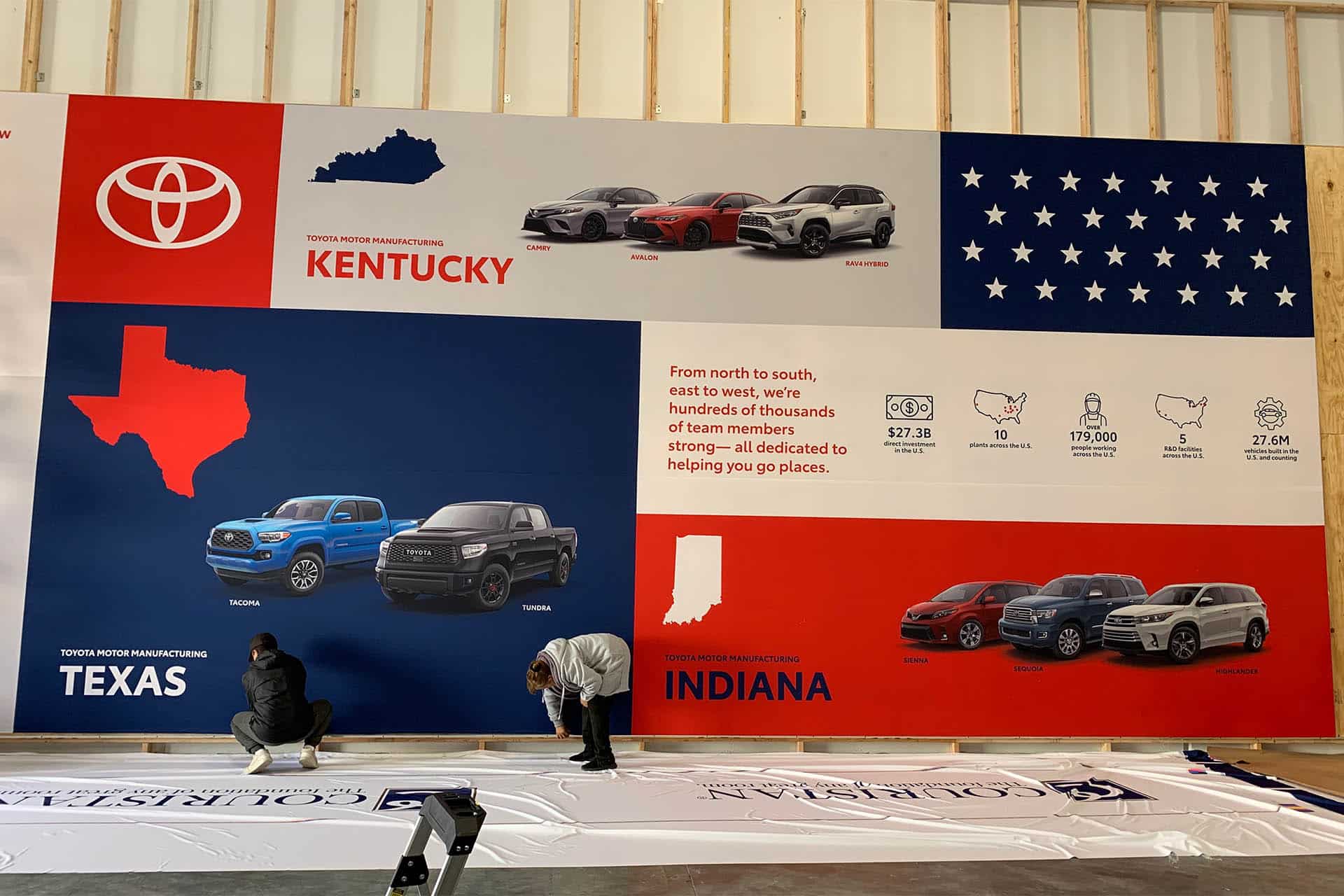
There is a wall at D’Andrea Visual Communications with a name worthy of a creature feature: Wallzilla. Its job is wonderfully prosaic. It lets people check whether a very large piece of printed fabric actually fits before they send it away.
In the company’s photograph, two workers crouch at the base of an enormous Toyota graphic. Cars, state outlines and corporate statistics tower above them. Down on the floor, the work is about edges. DVC introduced the wall in a 2020 post that asked readers to imagine a 30-by-18-foot graphic arriving at a venue and failing to fit its frame.
That is a useful place to begin understanding this company. A display is an image, certainly. It is also a manufactured object with dimensions, attachment points and a destination. The photograph is a reminder that somebody has to make all three agree.
A print shop grows a metal shop
DVC began in 2005 as D’Andrea Graphic Communications, a Los Angeles lithographic printer. Its public history describes an expansion into grand format printing and custom fabrication. A 2017 equipment announcement identifies David D’Andrea and David Schiller as founders. Today, its portfolio ranges from retail installations to elaborate entertainment packaging.
The breadth matters because a brand rarely experiences its own project as a list of manufacturing trades. It wants a store ready to open, an exhibit ready for visitors, or a package worth keeping. DVC brings designers, engineers, printers, fabricators and installers into that assignment. The customer can buy a graphic; the conversation can also extend to the structure behind it.
That places DVC among commercial printers and exhibit fabricators, with work overlapping both. Its useful distinction is the combination of capabilities. For a buyer juggling a printer, a metal shop and an installation crew, coordination becomes part of the product.
Wide format represented 75% of DVC’s reported $24.6 million in overall sales in the 2025 Wide-format Impressions ranking. The figures describe a past reporting period, with most entries reflecting 2024 sales.
The ten inches behind the experience
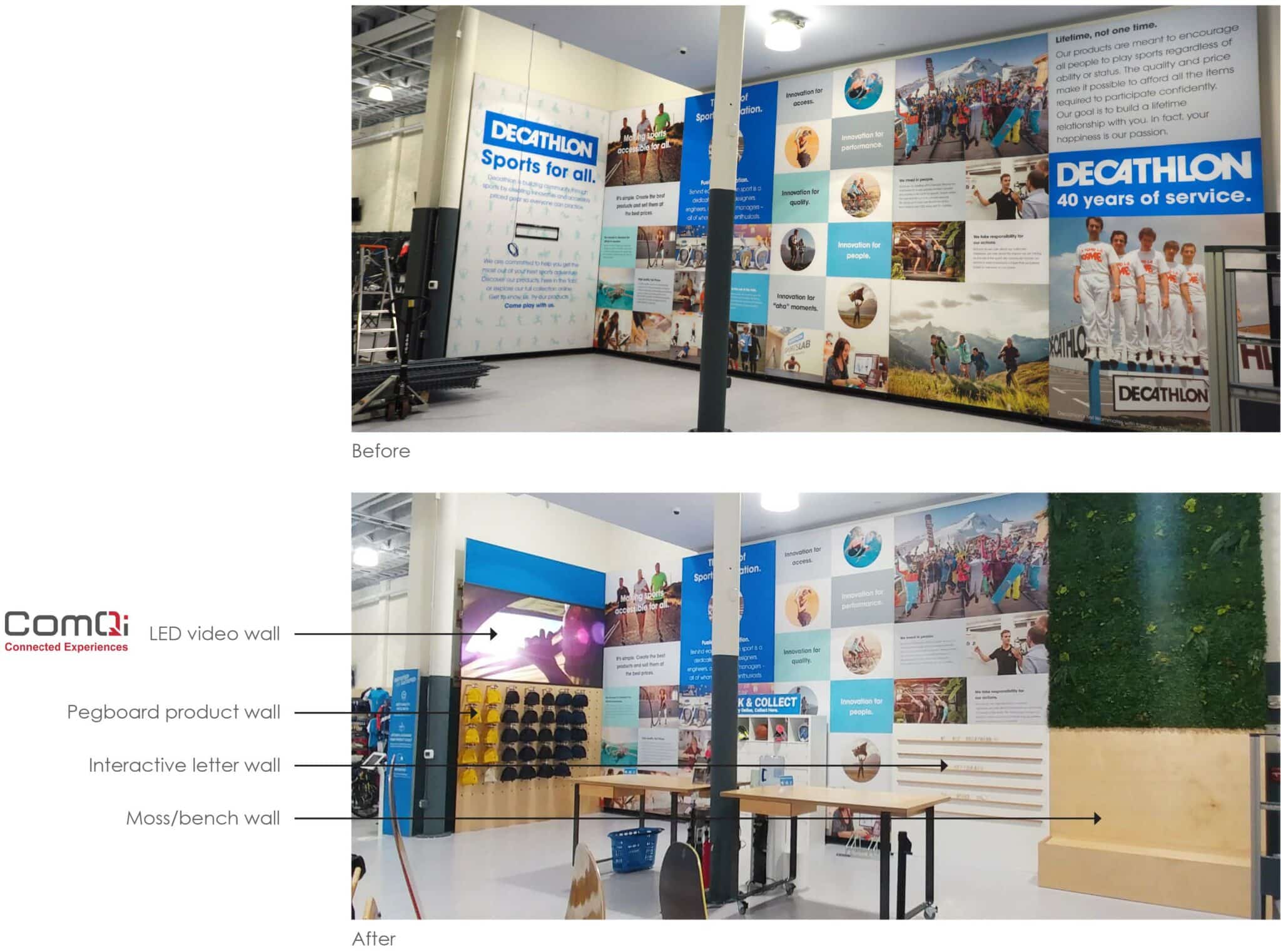
Decathlon’s store conversion makes that idea tangible. DVC had produced and installed graphics for the sporting-goods retailer’s opening. When the store wanted a more interactive environment, it returned to the company already familiar with the space.
The new elements included a video wall, a product pegboard, an interactive letter wall and a moss-and-bench wall. They needed to stand ten inches away from the existing wall. DVC’s task included making mounting brackets for components supplied by other vendors.
Its account emphasizes CAD drawings and coordination among those vendors, the store and the installers. DVC reports completing the job on time and within budget. The instructive detail is the bracket: a modest piece of hardware carrying the consequences of several other people’s decisions.
First build it. Then pack it.
For Consult Europe, DVC worked on a canopy spanning more than 40 feet and reaching 15 feet high. The hardware came from the client, so familiarity could not be assumed. DVC studied it, tested parts and assembled the complete structure at its facility, then supplied an artwork template and a fabric recommendation.
The finished display separated into pieces under 120 inches long and traveled in one crate. DVC credits OSI with the design and Consult Europe with production; its contribution was part of a shared effort. The booth received recognition at the 2019 DistribuTech show in New Orleans.
The transferable habit is straightforward: rehearse the physical assembly while there is still room to make adjustments. A rendering can communicate an intention. A trial assembly answers a different set of questions.
- 01UnderstandStudy the hardware
- 02AssembleCheck the whole structure
- 03PrepareMatch fabric and artwork
- 04PackDesign for the journey
An editorial reading of the Consult Europe project.
The box was part of the artwork
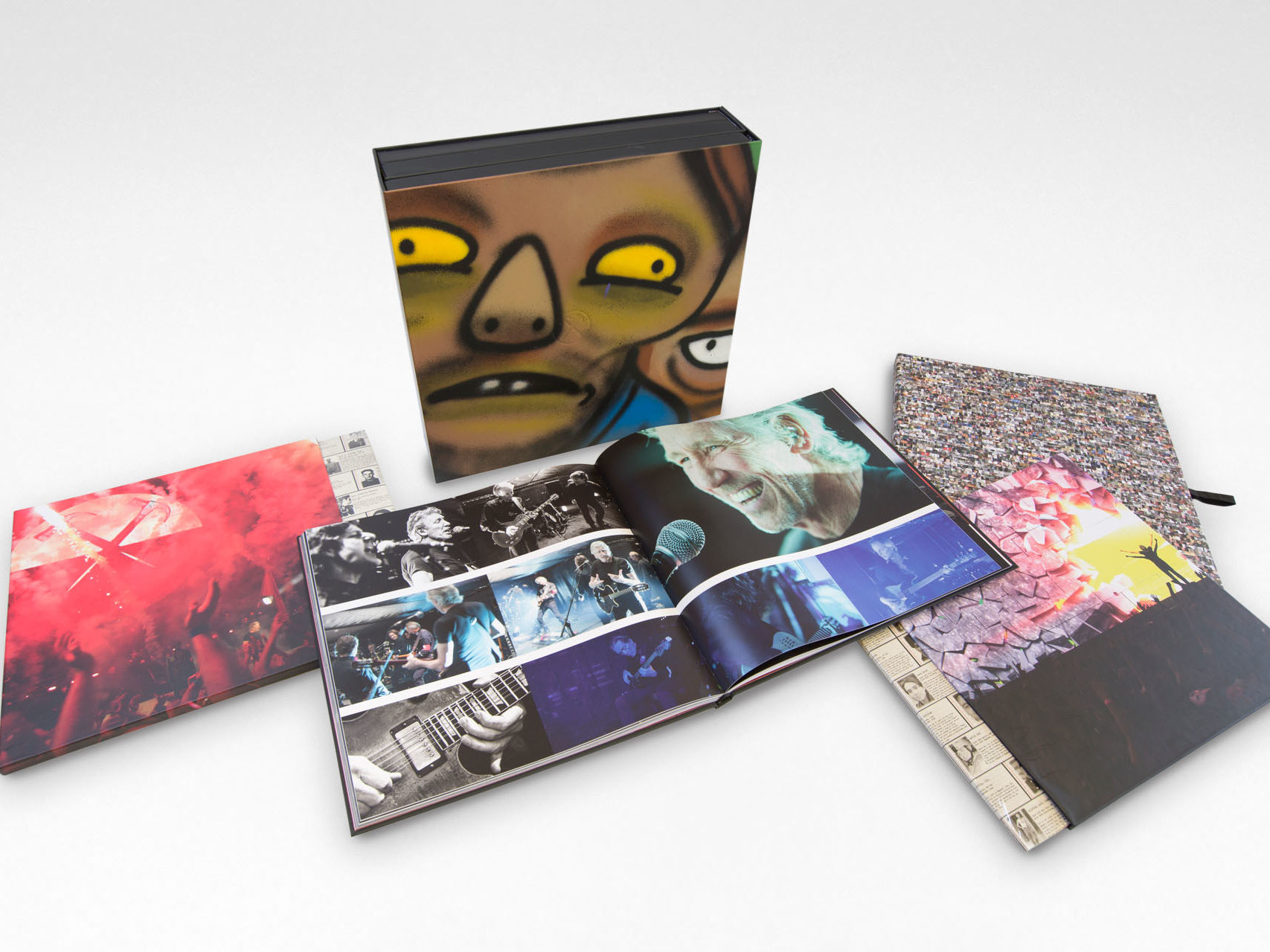
At the other end of the scale sits DVC’s limited-edition box set for Roger Waters’ The Wall. The triple-gatefold package opened to five and a half feet. Before the sets reached collectors, they formed a wall in a Los Angeles warehouse, where Brazilian artists Osgemeos painted a mural across them.
The company describes 3,000 signed sets, each carrying a fragment of that larger artwork. They sold for $500 apiece. That was the collector’s retail price; it should not be read as a production quote. DVC handled engineering, pre-media, printing and bindery, including a 170-page hardcover book.
Here, packaging had a job beyond containing discs. It connected an individual purchase to a collective event. The folds, printing and finishing helped make that idea into something a person could take home.
Shine has a production schedule
Cold foil is another example of the company’s interest in how things get made. In DVC’s process, a press prints adhesive onto selected areas of a sheet. Metallic foil adheres there, and subsequent printing units can put color over the foil. The metallic effect becomes part of the press sequence.
Selective placement leaves other areas of the paper available for ordinary printing. DVC also explains the material constraint: smooth coated stocks are the natural starting point. Uncoated paper or plastic calls for closer planning with the printer. A buyer choosing an unusual surface should involve production while the design is still flexible.
The company continued investing in litho even as its fabrication work expanded. In 2017 it announced a KBA Rapida 106 after two years of evaluating presses. Its litho manager pointed to quality control, speed and the opportunity to produce small packaging. That is a specific reason for buying equipment: the machine makes another kind of customer brief feasible.
Las Vegas was a customer request
Location became another production choice. In August 2019, DVC announced a 50,000-square-foot second facility in Las Vegas. A later company account dates the opening to November. Exhibit clients had asked for local support and indicated they could send more work once DVC was there.
“What prompted me to ultimately take the risk of opening a second location was the fear of standing still.”
David D’Andrea · 2019 expansion announcement
The announcement connects proximity to convention halls with faster responses to last-minute needs and potential shipping savings. DVC’s current contact page lists its Las Vegas-area address in Henderson. For an event buyer, the practical question is how close production is to the place where a revision must become a physical object.
That local presence has a current expression at Cashman Field. In April 2026, Las Vegas Lights FC named DVC its partner for the season, responsible for the venue’s print and installation projects. The club’s announcement identifies David Schiller as DVC’s president. A stadium gives the production team another setting where graphics must work as part of a larger public space.
The new operation soon faced an unexpected use for its capabilities. DVC says it produced hundreds of thousands of acrylic face shields during 2020. In 2021, it reported donating more than 60,000 to Opportunity Village and the Las Vegas Rescue Mission, after asking employees to identify organizations that could use them.
Buying the work between the steps
DVC’s business is built around project estimates and relationships with business customers. Its published retail offering includes site surveys, display engineering, fabrication, printing, installation, removal, packout and logistics. That gives a retail team several possible starting points, from a replacement graphic to a coordinated rollout.
Its approach to repeat fabric orders is especially practical. For simple rectangular or square frames, customers can provide accurate measurements rather than send the whole frame back. DVC describes an adjustable test system and says it retains dimensions for frames it originally built. The useful thing to preserve between campaigns is the specification, alongside the artwork.
As an authorized beMatrix graphics vendor, DVC also describes configuring its own frames to match a customer’s drawing, printing the fabric and checking the fit. The conditions matter: a reliable drawing, correct dimensions and a compatible frame system make that workflow possible. Complex shapes deserve a production discussion before anyone assumes the same shortcut applies.
A prospective buyer can copy this discipline into the brief. Specify the existing hardware, the installation setting, who approves dimensions, how the work will be packed, and who receives it. Ask for the quote to cover the required stages. A price for printed fabric alone answers a smaller question than a price for an installed display.
DVC’s May 2026 update adds custom neon, faux neon, rentals and illuminated installations to that conversation. The materials keep changing. The most revealing question remains close to the workshop floor: when the pieces arrive, will they go together?
See the work up close
Explore DVC’s project galleries, its neon update, the Lights FC partnership announcement, or start a project conversation.