At Sunstate Equipment, the machines were telling a people story. Headcount was falling. Overtime was rising. Equipment utilization was slipping. For a business that rents machinery, an idle asset has an obvious cost. The less obvious question was whether the explanation belonged in the HR department.
Sameer Raut, Sunstate’s vice president of HRIS, encountered a company with little workforce analysis. In Visier’s customer account, he describes it plainly: “There was almost zero workforce analytics.” His task was to make staffing patterns legible to the people running the business.
- Visier connects people data with operating results.
- Its software serves employers and other software makers.
- The useful output is a decision: where to hire, retain, reorganize, or spend.
The machine and the missing employee
Raut had built an analytics system at a previous employer. He chose to buy this time, secured support from HR and Finance, and deployed Visier in two months. Sunstate connected its staffing trends to equipment utilization, giving leadership a clearer basis for retention and workforce decisions. Its published results: turnover down 50%, overtime down 10%.
Those are Sunstate’s reported outcomes, rather than a forecast for every buyer. The instructive move is the connection: take an HR measure, follow it into operations, and find a problem someone has authority to fix.
Sunstate’s reported reductions. Bars show the remaining share against a starting index of 100; periods are not specified.
The spreadsheet has no memory
Visier occupies the space between an employer’s systems of record and the decisions those systems ought to inform. Payroll knows what someone earned. Recruiting knows how they arrived. A business system records what the operation produced. Understanding the relationship requires those records to meet.
Its platform brings data together, maps it to a workforce model, and supplies definitions, metrics, and analytical views. The documentation makes the work explicit: onboard data, configure concepts, validate results, then grant access. Historical context matters because employees move between jobs, managers, and departments. A current organization chart cannot explain all of yesterday’s turnover.
This is the competitive argument against assembling workforce analysis with general business intelligence tools. Power BI or Tableau can display the result; someone still has to build and maintain the underlying workforce logic. Visier sells much of that groundwork. Buyers also weigh analytics within their existing HR suite against the benefits of combining several systems.
“There was almost zero workforce analytics.”Sameer Raut · Sunstate Equipment
First, the kitchen-counter servers
The business began in a Vancouver townhouse in 2010. John Schwarz had run Business Objects; Ryan Wong brought engineering experience from the business intelligence industry. In the founding team’s retrospective, servers sat on the kitchen counter. Visiting executives arrived by limousine for an upstairs-bedroom demonstration of a prototype.
The more revealing detail came later. By late 2011, customers were live, but the team concluded that its desired combination of flexibility, speed, and security required its own database. Developers worked through the Christmas period and released an in-memory analytic database in early 2012. Selling answers had created an infrastructure problem.
It happened again at a different scale in early 2017. A surge of new customers brought difficult data requirements; roughly 15 developers were reassigned to help serve them. The lesson was expensive in engineering attention: a convincing demonstration and a repeatable delivery system are different accomplishments.
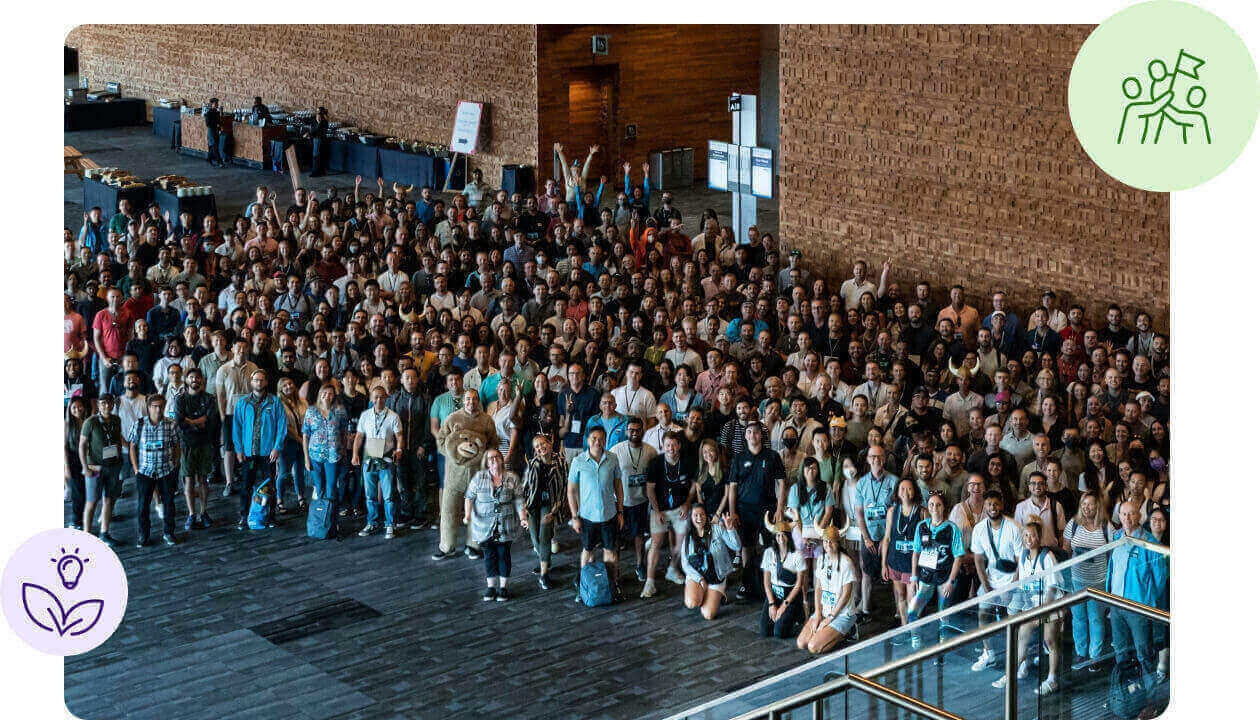
Visier’s current workplace description retains some of that emphasis on working together. Vancouver employees follow a hybrid model, while the wider team includes fully remote colleagues. The company describes inclusion programs intended to connect them. For a seller of workforce intelligence, its own arrangements offer a useful reminder: an organization is more complicated than the boxes used to draw it.
The product underneath the prompt
Today, the range extends from people analytics to workforce planning and organization design. Leaders can investigate retention, model future headcount and costs, or compare proposed structures before implementing them. Vee adds conversational access to workforce information. Its documentation specifies that answers follow the user’s permissions.
That qualification belongs near the center of the product story. A salary question can be perfectly reasonable for one manager and inappropriate for another. A conversational interface must preserve the boundary. Fluency alone cannot establish who should see what.
The business also reaches users through other software companies. Visier launched its embedded partnership ecosystem in 2018; partners can put workforce intelligence inside their own applications. Direct enterprise subscriptions and embedded relationships give it two routes to market. Its named customers span healthcare, manufacturing, retail, and financial services, where staffing choices have consequences beyond the HR budget.
Capital is a number. Value is a test.
In June 2021, Visier announced a US$125 million Series E led by Goldman Sachs Asset Management, at a valuation exceeding US$1 billion. That release put cumulative funding at US$219.5 million. The money was intended for product development and international expansion. Neither the valuation nor the capital raised tells a buyer what an implementation will return.
A practical evaluation starts with a narrow question and a baseline: replacement costs, reporting hours, or overtime. Budget for the subscription, integration work, internal ownership, and time to act. Visier offers a 30-day sandbox trial, which lets teams examine the software before committing to a broader deployment.
Which workforce decision would change if we trusted the numbers?
The next connection
The 2026 updates follow the same logic. A September connector for Microsoft Viva Glint brings employee listening results into the workforce model, with early access for mutual customers. A June Databricks Marketplace listing gives enterprise data teams another route to governed workforce metrics. In September, HR Executive named Organization Design a Top HR Product of the year.
The approach needs reliable records, agreed definitions, appropriate permissions, and managers willing to change a decision. If a company only needs a simple headcount report, the extra platform may be excessive. If nobody owns the response, better analysis can become another unattended screen. Sunstate’s story is useful because it begins with machines sitting idle. There was something concrete to improve, and a reason for Finance to listen.