The first thing to notice about a home sleep test is how much of the work happens while the patient is awake. Somebody orders it. Somebody checks the paperwork. A package arrives. A sensor needs fitting, an app needs permission, a battery needs charging. Only then does the patient do the one thing that sounds effortless: go to sleep.
VirtuOx has built a business around that sequence. Its proposition is pleasingly domestic: investigate sleep, breathing or heart rhythm without making every patient travel to a testing facility. But the company’s more interesting achievement is organizational. It brings the equipment, support, data and medical interpretation into a process that can begin in a physician’s office and continue in a bedroom.
- Home testing for sleep, respiratory and cardiac conditions.
- Devices, delivery, patient help and reporting in one operation.
- Sleepifi lets providers use the software behind the service.
- Resmed acquired the company in May 2025.
The bedroom is only the testing site
A patient’s bed is an attractive place to study sleep. It is already available, already familiar and rarely requires a parking ticket. Yet moving a test out of a laboratory also moves responsibilities onto the person being tested. Instructions become part of the diagnostic machinery. So does the person answering a setup question at night.
VirtuOx’s consumer pathway starts with a doctor or a telemedicine visit. A prescribed device is mailed to the patient, and sleep coaches help with setup by phone. Results lead back to a clinician, who discusses treatment when appropriate. The service delivers information for a decision; the arriving box is one step in that service.
order
setup
recording
review
That division of labor matters to the other customer: the medical practice. A provider may want to offer home sleep testing without buying a fleet of devices, managing shipping and returns, or assembling an overnight support desk. VirtuOx offers those pieces. The problem it addresses is as much administrative as technological: how to add a service without adding every job associated with it.
Buying the rival, keeping the front door
The company began in 2005 with founders who knew respiratory care and diagnostics. Steven Lica had led Infinity Diagnostics. Kyle Miko’s earlier work included that business and respiratory services. Jonathan Fedele brought home-care experience. This was a company built by people familiar with the practical distance between a prescription and a patient using equipment.
In August 2018, VirtuOx acquired Instant Diagnostic Systems from Cardinal Health. IDS supplied oximetry and sleep apnea testing. Kyle Miko’s explanation was admirably free of ceremony: “They were our No. 1 competitor.” The acquisition consolidated a familiar market and created an audience for additional services.
“They were our No. 1 competitor.”
Kyle Miko on IDS, August 2018
The telling detail was what VirtuOx preserved. Contemporary reporting said IDS would continue as a distinct operation in Alabama, with its user interface intact. Customers could keep using the front door they knew while the back-end billing changed. Acquisitions often advertise transformation. Here, continuity was part of the plan.

A sensor is a question, not an answer
VirtuOx’s range makes more sense when considered as different questions. A home apnea test asks about sleep-disordered breathing. Overnight oximetry records oxygen saturation. Ambulatory cardiac monitoring follows heart rhythm over time. These services share a location, but their measurements and clinical purposes differ.
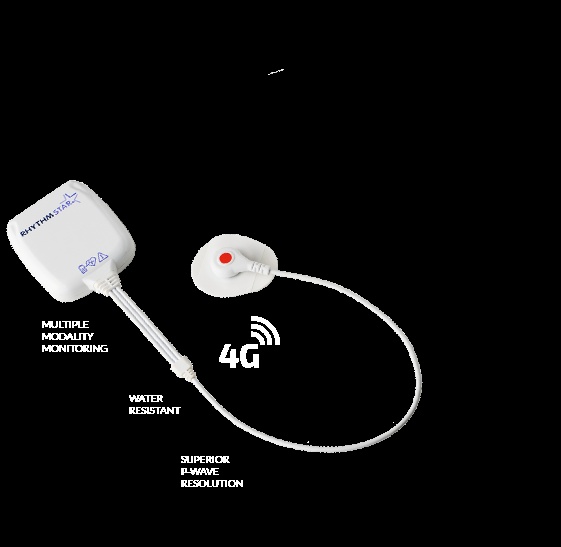
For cardiac monitoring, VirtuOx uses RhythmStar, a wearable with built-in cellular connectivity. That removes a separate phone or gateway from the transmission chain. Certified cardiographic and rhythm-analysis technicians staff its monitoring center, with support available around the clock. The physician receives clinical reporting; the patient wears the recording device through ordinary life.
The ordering materials also offer CardioSleep, combining sleep apnea testing and cardiac monitoring. Its value is the shared ordering pathway when a clinician wants both investigations. The company’s insomnia testing option uses EEG, EMG and EOG recordings, and a comprehensive sleep option combines insomnia and apnea testing. One mailing operation can serve several clinical questions without pretending those questions are interchangeable.
The distinction is especially useful for readers accustomed to consumer wearables. Collecting a number is the beginning. Choosing an appropriate test, obtaining an adequate recording and having it interpreted are what connect a measurement to care.
The software has already worked the night shift
Sleepifi is the other half of the company. VirtuOx says the provider platform grew from the technology it uses to manage its own home sleep apnea testing operations. It includes workflows, dashboards, reports and a physician interpretation portal. Providers can combine software with devices, logistics, patient support and interpretation.
This gives VirtuOx two related ways to earn revenue: perform diagnostic services, and supply tools for others performing them. Insurance and cash payment support the testing business; subscriptions support provider software. Office Plus, its hosted oximetry application, serves a separate non-IDTF workflow in which VirtuOx does not bill the test to the patient or payer.
VirtuOx’s published activity figure. Company-reported across diagnostic services, rather than a count of sleep tests alone.
The useful software lesson is straightforward: running the operation gives you repeated exposure to its awkward parts. Shipping, interpretation and patient support are places where a tidy demonstration can collide with an untidy evening. A system built around those encounters has a different starting point from a dashboard designed in isolation.
The bill belongs in the conversation
In a 2024 industry comparison, VirtuOx listed a $250 cash-pay option for home sleep testing. That is a dated reference point, not a quotation for every patient today. The same comparison listed insurance payment and practice-managed payment options. A patient needs the price and coverage for the particular order before treating “home” as a synonym for “cheap.”
Other providers offer home testing too. ZOLL Itamar, Wesper and Sunrise/Dreem Health appeared alongside VirtuOx in that comparison. VirtuOx’s distinction is its combination of multiple devices, several diagnostic services and provider software. The choice depends on what the practice wants to handle itself and what the patient’s clinical situation requires.
Technical convenience has conditions. Sleepifi Dream instructions require a compatible smartphone or tablet, internet access and Bluetooth permission. The phone must stay charging and close to the sensor overnight. A missed connection or inadequate recording can interrupt the path to a useful report. The first fragile point may be something as mundane as a phone moved too far from the bed.
Clinical suitability has conditions too. The American Academy of Sleep Medicine recommends laboratory polysomnography after a negative, inconclusive or technically inadequate home apnea test. Its guidance also favors laboratory testing for certain patients with significant cardiorespiratory disease and other complicating conditions. A convenient test does not make the next clinical question disappear.
Resmed buys an earlier place in the journey
On May 1, 2025, Resmed announced that it had acquired VirtuOx. The stated rationale was earlier access to diagnosis and better coordination among patients, healthcare providers and homecare companies. VirtuOx would become a wholly owned subsidiary, retaining its brand in the near term and its leadership team. Financial terms were undisclosed.
Resmed’s annual report placed the acquisition beside the US rollout of its NightOwl home sleep test. Read together, those decisions suggest an effort to connect testing more closely with the path into treatment. That is an interpretation of the strategy, rather than a claim that every patient will follow the same route.
What can another business copy? Pay attention to the handoffs. Give the person receiving the device a workable setup. Give the clinician information that can be acted on. Let partners buy the parts they need. The lesson travels beyond healthcare, even when the clinical rules do not: a product becomes useful when the surrounding work gets done. VirtuOx’s box arrives at the doorstep. Its business continues well beyond it.
Company website · Sleepifi & provider software · Company blog · LinkedIn · VirtuCLEAN on X · VirtuCLEAN on Facebook
ApneaLink Air patient video ↗
Alice NightOne patient video ↗
Resmed’s acquisition announcement ↗
The 2018 purchase of Instant Diagnostic Systems ↗