The problem was a form. Then another form. At a regional organization coordinating care for more than a million Medicaid members, care managers were entering the same information in several places. The homegrown system became harder to use as the population grew. Maintenance costs climbed. Healthcare’s grand ambitions had encountered the small, stubborn indignity of typing something twice.
- VirtualHealth built HELIOS for the work around a patient: care plans, coordination and authorizations.
- Its buyers are health plans and care organizations, rather than individual patients.
- A vendor case study reports an 85% efficiency increase at one Medicaid organization.
- Since January 2025, the business has continued within Elligint Health.
The form that ate the afternoon
The organization’s account, published by Elligint Health in August 2026, describes more than 800 care managers and a physician-led network reaching over 900 practices. In 2017, after an unsatisfactory experience with another platform, it chose HELIOS. Automated assessments and task assignments reduced repetitive documentation. The case study reports an average 85% increase in care manager efficiency, while also highlighting improved completion of care plans. Those descriptions deserve separate measurement.
It is a vendor-published account of one organization, rather than an independent experiment. Still, the mechanism is intelligible. Repeated entry consumes time; assigning a task automatically can return some of it. An anonymous case manager described the change plainly.
“Today, we are so much faster with a typical member interaction than we used to be.”Case manager / regional Medicaid organization
Reported average care manager efficiency increase in Elligint’s regional Medicaid case study. An operational claim, not a clinical outcome.
VirtualHealth’s business grew around precisely this territory. A patient may appear in a clinical record, an insurance system and a social-service referral. The information exists. The troublesome question is who has to assemble it, interpret it and do the next thing.
A record needs somewhere to go
HELIOS is cloud-based enterprise software for care management and utilization management. Care management concerns assessments, care plans, outreach and coordination. Utilization management concerns reviews, authorizations and the processes around coverage decisions. Bringing them together gives teams a shared working environment instead of another round of copying between systems.
Today, Helios CM handles care planning and coordination; Helios UM organizes authorization work, deadlines, appeals and grievances. Text messaging and virtual visits extend member contact. Earlier VirtualHealth product guides describe HELIOSgo, a mobile application with offline capabilities for staff working in homes or the community. Its intended users include teams supporting long-term services, behavioral health and home health.
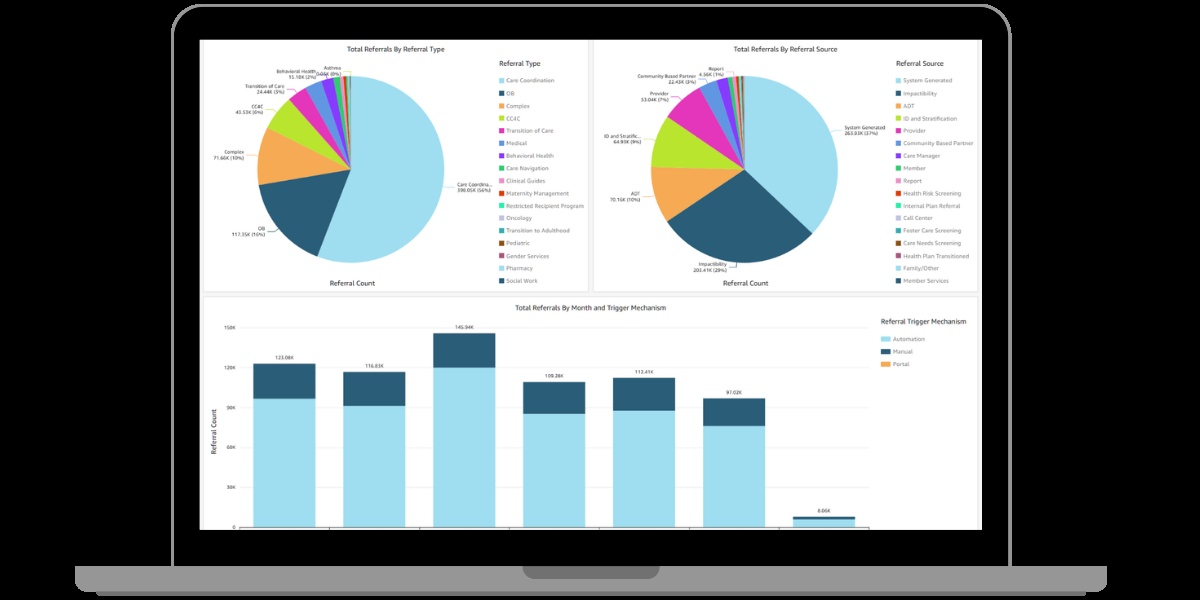
The distinction from a conventional electronic health record is its organizing job across a population and its care teams. HELIOS connects information to assessments, interventions and assigned work. FHIR, the healthcare data-exchange standard, helps connect systems. Configurability lets organizations adapt workflows to their programs. Elligint advertises 90% configurability; buyers should test that claim against the actual work they need performed.
- 01 / CONNECTClinical, claims and social information
- 02 / ORGANIZEAssessment, care plan and assigned task
- 03 / FOLLOW THROUGHOutreach, review and documented action
The partner ecosystem adds specialized tools. Itiliti Health supplies prior-authorization capabilities; community-resource integrations help address social needs. That breadth matters because a missed appointment can begin with something a diagnosis code will never explain. A referral has little practical value if the patient cannot reach the service.
The buyer is a health plan
VirtualHealth sells to organizations managing care and financial risk: Medicaid and Medicare plans, commercial insurers, health systems and specialty providers. PacificSource selected HELIOS to support more than 500,000 members across four Northwest states, including behavioral health and rural care needs. UPMC Health Plan and Innovation Care Partners also appear in VirtualHealth’s customer materials.
Its market includes ZeOmega Jiva, HealthEdge GuidingCare, Medecision Aerial and other payer care-management platforms. Combining functions is a competitive proposition, rather than an exclusive invention. VirtualHealth’s emphasis is the combination of whole-person information, configurable workflows and care and utilization management in one environment. The advantage depends on how well those pieces fit a buyer’s existing operation.
The business model is enterprise SaaS. One public number offers a useful glimpse of its scale: Cook County Health’s June 2021 finance records list a $1,606,198 fiscal impact for a VirtualHealth care-management-system contract. That is a particular procurement figure. It should not be read as a standard annual subscription or a price available to every customer.
The awkward part of connecting everything
Integration has a calendar as well as an architecture. PacificSource’s 2023 Oregon health IT roadmap says it selected HELIOS in 2020 and expected its first phase in 2022, but the project was delayed. The document describes phased work across utilization management, pharmacy, appeals and care management. It records the delay without establishing its cause.
Customer experience also deserves scrutiny. KLAS’s 2023 payer care-management table gave HELIOS a historical score of 59.8 out of 100, based on just three evaluations and marked as limited data. That small, unranked sample cannot establish current performance. It does, however, complicate any assumption that broad functionality automatically produces satisfied customers.
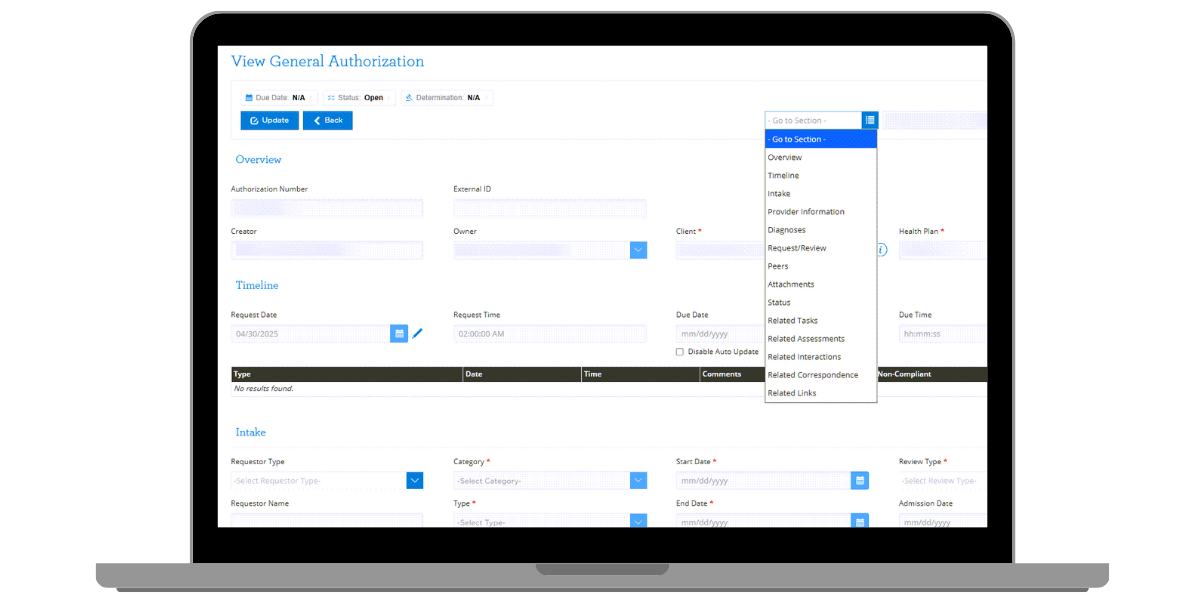
A buyer can copy a useful discipline here: demonstrate one member’s journey from incoming information to assigned intervention and completed follow-up. Count repeated entry before deployment. Measure completed work afterward. Include the people using the system in the demonstration. A handsome dashboard is a poor witness to an unfinished task.
The next name on the door
In January 2025, VirtualHealth joined HealthEC to launch Elligint Health, pairing HELIOS medical management with population-health analytics. Chris Caramanico became CEO; founder Adam Sabloff took a board and strategy role. Elligint now reports supporting organizations managing more than 13 million lives. That figure belongs to the combined business.
The combination offers a coherent proposition: identify risk, then organize a response. Its usefulness still depends on connected data, workable processes and people able to act. Software can arrange a referral; an available service must complete it. VirtualHealth’s most transferable idea is modest enough to survive that distinction: make the next useful action easier to carry out.