A bicycle has two kinds of value: what it costs to buy, and what it lets its owner do. Vince Cifani’s first business idea lived in the uneasy space between them. A bike could make a Toronto commute easier. Leave it outside, and the next journey depended on whether it was still there. The lock was a small piece of equipment with a rather large responsibility.
Cifani, an avid cyclist, started Joyride in 2014 with a theft-prevention and tracking tool. Twelve years later, he is still concerned with where vehicles are and how people get to use them. The vehicles now include e-bikes, scooters, golf carts and other low-speed electric machines. The person using his software might own an entire fleet. The original problem has acquired colleagues.
The bicycle came first
In its early form, Joyride used open public Wi-Fi to track a bicycle. A device attached to the bike kept a record of location information; contact with an open network allowed that information to reach the app. It was intended for a bicycle someone already owned, avoiding the need to buy an entirely new smart bike. The practical appeal was plain: make the familiar object a little easier to keep.
By April 2015, the app was in beta testing. This was a modest beginning, with an obvious constraint. The system depended on finding enough open networks to provide a useful trail. A city’s invisible infrastructure mattered as much as its streets. A cyclist looking for a missing bike would have reason to become unexpectedly interested in public Wi-Fi.
The early project also had a place in Toronto’s startup community. A university incubator listing named Cifani alongside Chris Anderson and Ray Siddiqu, with Vincent Hui as mentor. Its description focused on tracking stolen bicycles without the recurring data fees associated with other approaches. Before Joyride became a fleet platform, it was an attempt to make a specific tool accessible.
Attention brought a change in audience. Bike-sharing companies wanted to use the technology. Cifani subsequently developed a dockless bike-share management system and the software behind it. That sequence matters. The company’s direction changed through requests from businesses that had more bicycles, more customers and a different set of daily responsibilities. One tracker had opened a conversation about running a fleet.
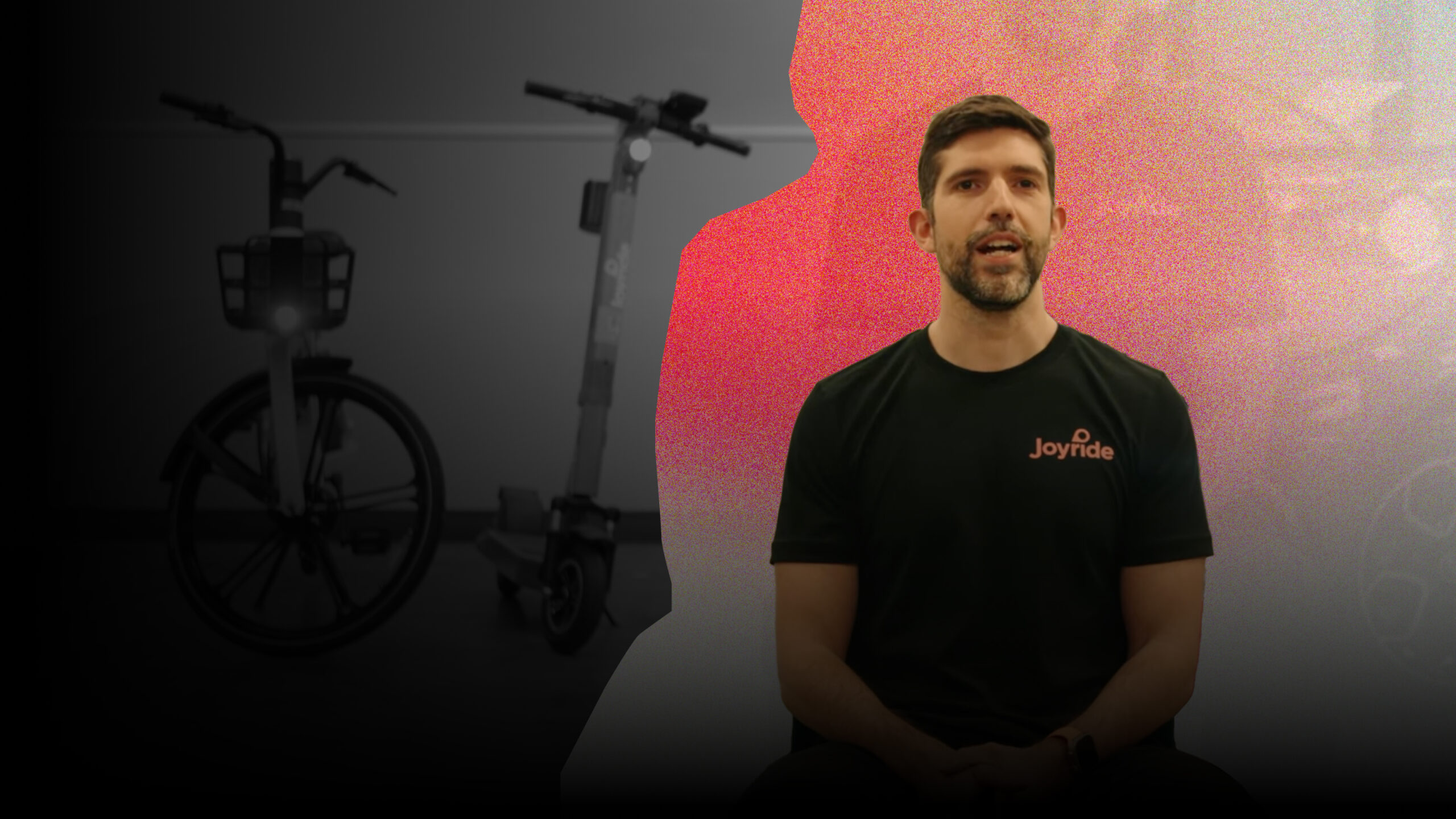
A town is a market, too
A shared vehicle needs a place in someone’s day. That place may be a city street, a college campus or a hotel. Cifani has repeatedly discussed the opportunity for businesses serving smaller or more specific markets. A town does not need to resemble a capital city to have people who would like a convenient short ride.
Joyride supplies the software layer: a rider application bearing an operator’s brand, management tools and connections to the vehicles. The local business can put its own identity in front of the customer. Behind that identity sits a collection of tasks that would otherwise need separate solutions. The arrangement gives Cifani a particular role in the industry: he helps other people operate the service the rider encounters.
In 2021, Joyride announced a CAD $4.6 million post-seed funding round while serving more than 160 markets. It charged operators per vehicle, per month. The model connected Joyride’s business to the working fleet, rather than requiring it to own every bike or scooter. Additional capital was intended to speed onboarding and expand the team and partner network.
That year also brought a London office. Joyride described working with Ginger, a UK scooter-sharing operator, and adding tools such as in-app identity verification. Expansion involved accommodating the local conditions under which a ride could take place. A vehicle arriving in a market is one event; making its service fit that market is an ongoing job.
Scale also creates a less photogenic question: can the platform cope? Joyride used CENGN’s testbed to assess capacity for more operators, vehicles and users. The work identified areas for improving the architecture and managing resources. It is the sort of achievement that rarely appears in a rider’s holiday photograph. It matters when the rider opens an app and expects the vehicle to respond.
The business around the wheels
Cifani’s public account of successful operators gives considerable space to the people doing the work. In a 2023 podcast discussion, he emphasized operational teams, fair pricing, a recognizable brand and customers who return. The examples included long-term rentals and businesses serving amusement parks. A vehicle’s commercial life can be more varied than a quick trip across downtown.
His insistence on local relationships also complicates the idea of software as an automatic business. A dashboard can show where a scooter is. Someone still has to move it, prepare it and answer for the service. Cifani’s interest in community-based operators places those responsibilities close to the customer. Familiarity with a place becomes a business resource.
“Operations are so important for this kind of business.”Vince Cifani, 2022
Some of the friction lives before the first rental. Cifani found that prospective customers needed advice about the wider business, which led to Joyride Academy. Its early offering contained three courses and developed through feedback and collaboration. He described an Amsterdam workshop as a useful moment in getting the learning platform in front of its intended audience.
There is a pleasing tension in teaching people who may eventually become customers. Some learners may choose another supplier. Knowledge does not report back to the sales department before it travels. Cifani nevertheless made a case for building relationships through education. It reveals a founder attending to the gap between wanting to launch a fleet and knowing how to run one.
The range of customer uses helps explain why that gap keeps changing. In Boston, CargoB used Joyride for electric cargo bike-sharing, with vehicles in Boston, Cambridge and Somerville. Cargo bikes expand what a ride can carry. They bring a different daily purpose to shared mobility, and another set of requirements for the platform behind it.
A golf cart enters the conversation
In March 2024, Joyride announced a US $5.2 million Series A led by Yamaha Motors. Returning investors included Urban Innovation Fund, Proeza Ventures and Two Small Fish Ventures, with Export Development Canada also participating. The company described a stronger focus on manufacturers and integrated vehicle software. Cifani’s business was moving closer to the people who make the equipment.
A golf cart is an instructive addition to this story. It already belongs in places where people take short journeys: resorts, courses and private properties. It also comes with a rental process that can contain keys, paperwork, reservations and a person at a desk. Connecting the vehicle changes what that process can look like. The cart itself remains quite recognizable.
Joyride introduced Revii in November 2024 as a ready-made rental app and management solution for carts and low-speed vehicles. It offered keyless access, payments and tracking without requiring each rental business to commission a custom app. For a dealer or operator, the attraction was less time spent assembling a system before the first customer could use it.
By March 2025, Joyride had added Neon, its proprietary connectivity device. The company presented it as hardware already integrated with its software, intended for lightweight vehicles. Cifani was again working on a physical device that helped an operator understand and manage a vehicle. The resemblance to the bicycle tracker is suggestive, although the commercial setting had grown considerably.
The company’s 2024 review reported operations in 42 countries and support for more than 40 vehicle models. Those figures describe breadth rather than one uniform fleet. Different vehicles, owners and rental arrangements have to find their place in the same platform. For Cifani, following that variety has become part of the work.
Still asking what happens next
In April 2026, Joyride announced an integration with Bosch Connected Biking. Bosch-powered e-bikes could connect with rental applications, fleet analytics, location tools and payments. Cifani described the arrangement in terms of time returned to fleet and rental providers. The manufacturer and software company would handle connected tools while operators attended to their businesses.
Two months later came three AI additions: rider support, demand predictions and guidance within the operator dashboard. Their purposes were concrete. Help with customer questions. Estimate where vehicles will be needed. Explain how to use the system. The promise still depended on the familiar chores of a shared fleet, with automation applied to particular parts of the day.
Maintenance remained equally practical. Joyride’s Work Orders tools connect assignments, parts, labor costs and repair records to an operator app. They address a plain fact about transport businesses: a vehicle awaiting repair cannot deliver the ride someone wants. The software’s usefulness is tied to what happens away from the screen.
By October 2026, Cifani was addressing golf-cart dealers and manufacturers in Charleston in a talk called “Autonomous Advantage.” Joyride’s account explored autonomy on contained properties such as courses and resorts. It described future work alongside an existing connected-fleet business. The next chapter remains a proposal to develop, rather than an excuse to treat every cart as already driving itself.
His earlier ambition was to bring micromobility to 10,000 cities. The number is a target, with all the distance a target implies. The recurring question beneath it is more immediate: what would help another operator put useful vehicles into service? Cifani began with a bike he wanted to keep track of. His career has grown through paying attention to the people responsible for the next ride.