A school laptop has a peculiar commute. It belongs to an institution, travels in a child’s bag, and spends its evenings in a household whose rules may differ from those of the classroom. The machine is quite happy with this arrangement. The adults have more questions. Vinay Mahadik helped build Securly around that awkward journey, bringing an enterprise security engineer’s experience to a problem that followed students through the front door.
As Securly’s co-founder and founding CEO, Mahadik had to think about several customers at once: the school buying software, the administrator managing devices, the teacher trying to teach, and the parent encountering the results at home. A filter could block a page. Building a business meant understanding the people gathered around the screen.
The school bell was only half the story
Mahadik’s background was in the protection of corporate networks. Fatherhood added a closer perspective. In a 2020 interview, he discussed how those two experiences came together in Securly. The connection makes sense without requiring a grand conversion scene: technical expertise meets a concern that has become personal.
The early ambition was access with safeguards. Wharton’s Winter 2013 startup Watch List featured Securly while Mahadik was a second-year student, describing a service that helped K-12 pupils use YouTube, Google and Wikipedia safely. These were places children might need for learning. Closing every door would make the internet a remarkably tidy and rather useless library.
By 2015, Mahadik was discussing the movement from textbooks toward Chromebooks and iPads. He described parents and school staff wanting those devices to support productive work. His attention extended to what families could understand from the activity: a dashboard, reports, a view of how a child was using the internet.
That widened the product’s territory. A school’s purchasing decision could open a route to parents, and the parent’s experience could continue after the device left campus. In 2016, he put the ambition plainly:
“Our focus has been on building a unified layer of security that keeps kids safe both in schools and at home.”
Vinay Mahadik · 2016
The geography mattered. A device connected to home Wi-Fi was still the school device. The software had to accommodate the journey, while its interface had to make sense to adults who were unlikely to regard network administration as an evening hobby.
One laptop. Different settings. A continuing set of responsibilities.
An engineer learns a different customer
Before any of this came a conventional technical education: telecommunications at the University of Mumbai, followed by a master’s in computer networking at North Carolina State University. His early work included research at MCNC and an internship at Lawrence Berkeley National Laboratory. He joined Qualys as a vulnerability engineer, then moved to McAfee, where he became a senior manager.
The work was specific and demanding. His McAfee responsibilities included application control, competitive testing and malware and botnet research. Security patents form part of his record. This was experience with the machinery underneath the interface, the systems that must recognize trouble while ordinary users carry on with their day.
Securly brought complementary experience to the table. Co-founder Bharath Madhusudan had worked in enterprise security and wrote the first version of its filtering engine. He also led the sales team that sold its first 200 accounts. Nikita Chikate, a former Citrix product designer, built the company’s brand and user experience as co-founder and chief design officer.
Mahadik’s MBA at Wharton overlapped with the company’s beginnings. His class was part of an entrepreneurship community in San Francisco in which several students were leaving jobs to start companies. For him, school and startup were happening in the same stretch of life. Securly had already attracted attention before graduation supplied its punctuation mark.
There was also a question of trust. In June 2016, Securly’s cloud-based filtering product received the iKeepSafe California Privacy Program badge following review against the program’s guidelines. The badge concerned that product and those guidelines. For a company asking schools and families to use a shared system, the handling of information belonged alongside the more visible discussion of features and price.
The price of a filter
In October 2016, Securly announced a $4 million Series A led by Owl Ventures. An earlier $3 million seed round had been led by Founder.org. At the time of the Series A announcement, the business reported a team of 30 across San Jose, Charlotte and India. The next phase called for more specialized hires and a broader relationship with parents.
The company’s direction soon produced a striking pricing decision. In July 2017, Securly announced that its Chromebook filtering service would be free to K-12 schools in the United States, following availability outside the country the previous month. Mahadik described filtering as a commoditized market. He wanted the free offering to encourage competitors to improve.
A security business giving away a filtering service could look peculiar if filtering was the entire business. Securly was already pursuing a wider product range. The decision belongs in that context: the company could make a basic service broadly available while building additional tools around the needs of schools and families.
In December 2018, a $16 million Series B led by Defy Partners, with Owl participating, gave the business more capital for research, sales and support. Securly reported serving more than seven million students, with over 2,000 paid school districts and more than 500,000 parents on its portal. These were company figures from that point in its development, a snapshot of the operation Mahadik was helping run.
A company outgrows its first label
The expanding business created a small linguistic problem. Securly’s original web filter and the company itself had become closely associated in customers’ minds. By May 2018, that original product was being renamed Filter, making room for the broader company identity to cover the rest of its services.
Those services included a parent portal with weekly activity reports, classroom management, a home Wi-Fi hub and mobile apps for parents. Naming was part of explaining how the pieces belonged together. A company can ship several products before it has found an equally useful sentence to describe them.
Working with branding firm New Kind, Mahadik valued the effort to bring interviews and perspectives from founders, employees and customers into a coherent message. The business had both institutional and family audiences. Explaining the connection between them had become an operating task of its own.
“Their ability to blend our B2B and B2C stories into a coherent message was the most striking aspect of our work with them.”
Vinay Mahadik · on working with New Kind
It is an unglamorous part of company building, which is precisely why it deserves space. Someone still has to explain the catalogue. Someone has to make the promise intelligible to a parent as well as to a purchasing team.
The parent portal illustrates the distinction between adding a feature and adding a participant. Weekly reports gave parents a recurring view of activity; controls outside campus gave them a role in managing it. Each addition changed who might open the product and why. For Mahadik, running the company meant keeping those different expectations connected as the catalogue grew.
Leaving the chair, keeping the curiosity
Mahadik stepped down as Securly’s CEO in August 2020. His public farewell described seven years as a first-time co-founder and chief executive, and expressed enthusiasm for another entrepreneurial move in commercial business software. He later introduced that venture as Ayraa, which he was building with Chikate.
In March 2021, Golden Gate Capital’s proposed acquisition of Securly named Mahadik among the selling shareholders, alongside Defy Partners and Owl Ventures. Bharath Madhusudan was then the CEO who would continue leading the company. The sequence matters: Mahadik’s departure from the executive role preceded the acquisition announcement.
By that announcement, Securly was described as serving more than 10 million students across 2,500 K-12 districts globally. A student startup had become an operation with a much wider footprint. Mahadik was already working on what came next.
The next missing piece
Ayraa addressed knowledge at work: discovering it, organizing it and making it searchable across a company. The setting had changed from school devices to workplace information. Anyone who has tried to recover a decision buried in a long conversation can understand the attraction. Organizations have an impressive talent for possessing answers that their own employees cannot locate.
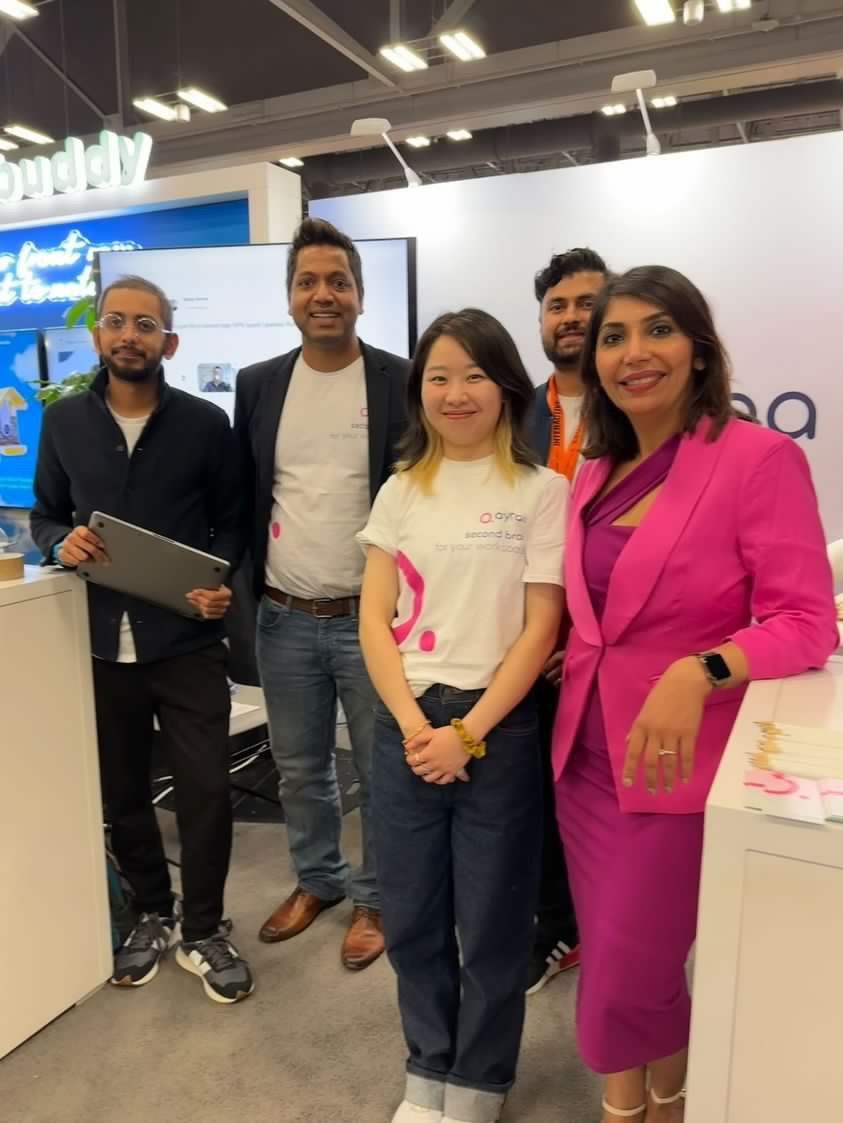
At SXSW in 2023, the team showed a private preview. It later described more than 350 conversations at the event helping it sharpen the product’s knowledge-management direction. That is a useful detail in a second venture: experience did not remove the need to take the product outside and listen.
The current business operates as Ayraa, Inc. under the xdge name, with Mahadik identified as co-founder and CEO and Chikate as co-founder and chief design officer. Its offering now combines search with workflow automation across workplace tools. The continuing partnership brings product and design into the same founding conversation.
Mahadik had changed some of his own methods, too. For Ayraa, his first two hires were a business operations manager and a head of engineering. He wanted more room to concentrate on product. He also recalled testing the name by photoshopping “Ayraa, Inc.” beside companies in the S&P 500. A modest typography exercise with an immodest guest list.
That combination is revealing: attention to operational plumbing, paired with the willingness to imagine a company at a different scale. His career keeps returning to practical friction. A school device leaves campus. A useful answer disappears into office chatter. Somewhere between the system and the person using it, there is work still to do.
Keep the conversation going
COMPANIES, PROFILES & FURTHER READING
- Securly
- xdge: the current venture
- Twitter / X
- Listen: the Gun.io interview
- Read: first-time and second-time founder
- Wharton’s startup Watch List
- Securly’s 2016 financing announcement
- Free Chromebook filtering announcement
- Securly’s 2018 financing announcement
- The Filter product renaming
- The branding collaboration
- The 2021 acquisition announcement
- Ayraa’s 2023 product Q&A
- The SXSW team photograph