The currency was blue, rectangular, and vulnerable to laundry. At Park Avenue Elementary in Nashville, Robin Sykes printed Bear Bucks, cut them apart, bundled them with rubber bands, and gave them to teachers. Students earned the slips for positive behavior and saved them for rewards. The program changed the school climate. Sykes says violent incidents fell 47 percent in its first year. The paperwork, however, remained resolutely made of paper.
At least once a semester, a child would arrive in distress, certain that enough Bear Bucks had been earned for the sock hop but unable to produce them. A backpack had swallowed the evidence. A washing machine had converted the school economy into pulp. There was no ledger to consult, only an eight-year-old, an adult, and a judgment call. It is a small story with the sturdy proportions of a parable: a good idea can produce a real result while its operating system makes everyone miserable.
Sykes told that story in 2026 because Securly Pass, the company's digital hall-pass product, had added tools for positive behavior support. By then she was Securly's chief marketing officer. The former administrator of a paper reward economy was explaining software designed to preserve the reward and lose the scissors. Careers rarely hand a writer a circle this neat. Hers does, although the line between those points is more useful than the symmetry.
Before the message, the school day
A native New Yorker, Sykes moved south for the work that would define her professional vocabulary. She joined Teach For America as a founding Nashville corps member in 2009 and taught elementary school. She also directed positive behavior support, the assignment that produced the Bear Bucks story. Her résumé from those years contains the familiar verbs of education: teach, support, manage, mentor. It also contains an early fascination with systems. At Lipscomb University, her master's research examined conflict resolution as a practical tool for individual teachers. Metropolitan Nashville Public Schools approved the study, and the completed thesis was selected for the district's research site.
The distinction matters. Sykes did not enter education technology by admiring education from a conference stage. She entered after experiencing the small frictions that determine whether a program lives: the hand-cut currency, the missing record, the child waiting for a decision. A school is an institution, but it is also several hundred improvised Tuesdays in a row. Software eventually arrives inside that reality, not above it.
“Many moons ago I was the Director of PBIS at Park Avenue Elementary in Nashville.”Robin Sykes, recalling the Bear Bucks years
That grounding became her durable advantage. Education companies frequently sell to one person, implement with another, and depend on a third to make the product useful. District leaders, school administrators, classroom teachers, families, and students occupy the same system with different clocks and different definitions of urgency. Someone who has stood in a classroom does not need the complexity explained. She has watched it ring for lunch.
The same customer, seen from four seats
Learning the company from the customer inward
In 2013, Sykes joined EVERFI in customer success. The position sits close to the truth. Promises made in a sales cycle meet calendars, rosters, passwords, implementation plans, and users with other jobs to do. She advanced into account management, then moved into communications. By 2017 she was vice president of K-12 marketing and communications. Two years later came a senior vice presidency, followed in 2021 by the executive vice president role for global marketing.
The progression reads less like a leap than a widening lens: one customer, a portfolio of accounts, a market, then a global team of 70. During her EVERFI years, she received the company's Founders' Award, given that year to three people in a workforce of more than 550. She was also one of 15 employees selected for an internal C-suite leadership program. When Blackbaud acquired EVERFI in early 2022, the announced transaction was worth roughly $750 million. Sykes had learned scale from inside an organization living through it.
Her next major post was senior vice president of marketing at NoRedInk, the instructional writing platform used across more than 60 percent of U.S. school districts. Former colleagues describe work that is less glamorous and more consequential than a campaign montage: clarifying messaging and customer personas, improving marketing attribution, consolidating tools, rebuilding the website, strengthening sales enablement, and creating closer alignment across marketing, sales, product, and finance.
Start near the user. Learn where the promise breaks. Build a shared language across teams. Then make growth measurable enough that finance and marketing can look at the same picture.
Blake Sipek, NoRedInk's former finance leader, praised her composure and clarity in high-stakes conversations. Product executive Rebecca Sanchez pointed to the same instinct from another angle: Sykes's work on messaging and personas changed not only how the company presented itself, but how teams thought about value and differentiation. This is the less visible function of a strong marketing leader. The job is partly to tell the market a story. It is also to help the company agree on which story is true.
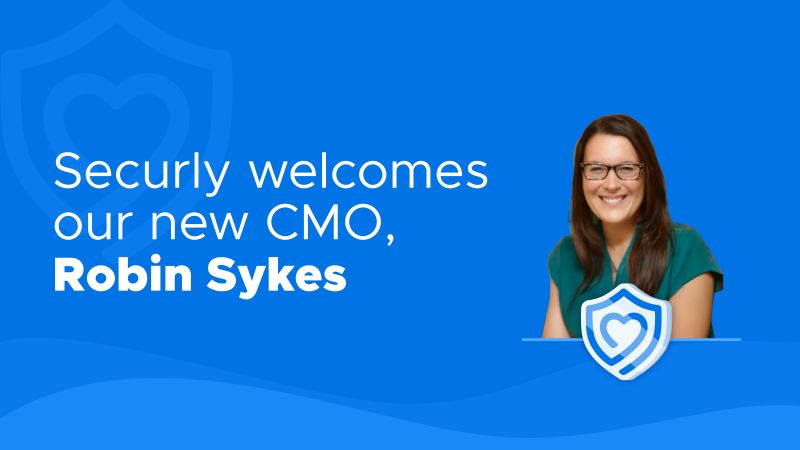
The CMO with a teacher's red pen
Sykes began working with Securly in 2025, first as a fractional communications leader and then as interim CMO. Her permanent appointment followed in January 2026. The remit covers global brand and growth for a company whose products address online safety, classroom management, digital hall passes, school device use, and visibility into student interactions with artificial intelligence.
That last category makes clarity unusually important. Schools are being asked to form policies around technology that changes faster than procurement cycles. The temptation for vendors is to dress uncertainty in capital letters. The useful task is more prosaic: show leaders what is happening, explain the guardrails, and connect a new capability to the work a district already understands. Sykes's career has prepared her for the translation, because every earlier role required a version of it.
Teaching translates an idea into an experience a student can use. Customer success translates a contract into adoption. Communications translates an organization's work into language. Executive marketing translates strategy across a company before carrying it into a market. The methods differ, but the discipline is recognizably the same: know the audience, remove needless friction, and check whether the result survived contact with reality.
The product story has to survive a school day.
There is wit in the contrast between Bear Bucks and a modern software platform, but Sykes does not tell the anecdote merely for nostalgia. It makes the product legible. Anyone who has watched a paper behavior system work can understand why a digital record matters. Anyone who has made a judgment call with a disappointed child can understand that administrative design is not administrative trivia. The story earns its place because it moves from human scene to practical consequence without needing a fog machine.
A career that refused to leave the room
Away from the executive sequence, the record has its own continuity. Sykes mentored an Iraqi refugee through World Relief Nashville for nearly four years, helping with algebra, ACT study, community resources, and the ordinary practice of showing up. Long before that, her Girl Scout Gold Award project required more than 100 hours and brought girls from different schools together through outdoor skills. Gordon College included her in its “50 under 50” alumni feature in 2014. Service, education, and organized systems keep recurring, even when the venue changes.
The NoRedInk team once summarized her geography with an affectionate joke: a New Yorker who had spent most of her adult life in the South and was finally embracing “y'all.” It is a tiny detail, and a revealing one. Good operators learn the local grammar. They notice how people speak, what they resist, and which shortcuts create more work later. The lesson applies to communities, companies, and classrooms.
Sykes's public ambition at Securly is straightforward: lead brand and growth while helping districts find the resources to keep students safe, secure, and ready to learn. The harder ambition is contained inside the easy sentence. It asks a company to grow without losing contact with the people who live with its products every day. It asks marketing to be commercial and credible, clear and specific, ambitious and useful.
The Bear Bucks did not fail. They produced the behavior the school wanted and a result worth remembering. The trouble was that the machinery depended on paper surviving childhood. Sykes has spent the years since working on that space between a worthy idea and a system sturdy enough to carry it. Now the scissors are gone. The evidence remains.