The awkward thing about a football final is that everybody wants the same bit of television at the same time. A quiet afternoon becomes a rush of people pressing play. The picture has to arrive quickly, keep moving and survive the next surge. Somewhere beneath the app, an operator has to provide the capacity. Then somebody has to pay for it.
Velocix works in that less glamorous part of the entertainment business. It supplies the software that moves video through telecommunications networks, stores programmes, manages recordings and helps operators earn money from advertising. Its customers include TELUS, Proximus and Liberty Latin America. Viewers encounter those operators’ services; Velocix sits deeper in the machinery. Its published deployments make a useful tour of what modern television requires behind the screen.
TELUS gives the cloud a seat
In March 2024, TELUS announced the first phase of a streaming project using Velocix’s Hybrid-cloud Origin and CDN software. The arrangement combined Google Cloud Platform with on-premises caching and streaming technology. Recording services were an early application; cloud capacity could supplement the operator’s existing delivery infrastructure when demand climbed. The TELUS deployment gives the company’s hybrid pitch something more substantial than a diagram.
The appeal is straightforward. A television operator has recurring traffic as well as exceptional peaks. Equipment that works hard every evening can be a sensible investment. Equipment bought for a rare surge may spend too much time waiting. Cloud resources offer another way to handle the variable portion. The financial question is where to place each workload, with network location and delivery performance in the calculation.
Velocix makes that choice available across private, public and edge-cloud environments. Its software can run on bare metal, too. For the buyer, “cloud-native” therefore describes a way of building and operating software, without requiring every video byte to take the same route. That flexibility matters most when the operator already has infrastructure worth keeping. The company’s CDN architecture explicitly supports this mixed estate.
Close to subscribers
Broader reach
Architecture illustration, not a measurement of TELUS traffic or savings.
Twice the room for Pickx
Belgium’s Proximus offers a sharper, narrower result. According to its Velocix case study, an on-net licensed CDN deployment doubled HTTP streaming capacity for its Pickx service. The configuration used dense server designs and solid-state edge caches. That is a capacity result, not a claim that every viewer’s picture became twice as good. It also says nothing by itself about profit. The distinction makes the reported doubling useful rather than magical.
HTTP streaming capacity at Proximus
Reported in Velocix’s customer case study
The mechanism is less exotic than the vocabulary. Caches keep content available closer to where it is requested. Velocix’s Hi-Fi caching system analyses activity across network tiers to decide what to retain and where. Its routing software considers several layers of network information. The objective is to avoid unnecessary fetching and move requests towards suitable capacity. Better decisions can make existing resources work harder before an operator buys more.
Other deployments show the range. Liberty Latin America began its rollout in Puerto Rico, Panama, Costa Rica and Chile. Entel used CDN, origin and recording software alongside managed services. TDS deployed the same core product combination for TV+. The common buyer is an organisation assembling and operating a television service, with responsibilities that extend beyond making a video file available online.
Your recording has acquired a manager
A cloud DVR sounds simple until the household starts using it. One person records a series. Another resumes an episode on a different screen. Someone reaches a storage limit. Velocix Recording Manager administers schedules, quotas, bookmarks and content lifecycles. It can work across recording engines and middleware from different suppliers. Those recording controls turn a storage system into something an operator can package as a service.
Origin performs another set of jobs: storing content, preparing streams and supporting live, on-demand and time-shifted viewing. Multi-site redundancy and failover are part of its design. Private-copy, shared-copy and hybrid recording options let operators configure the service around their content arrangements. Software supplies the choices; the operator still has to select the appropriate one. The Origin platform is where many of those delivery and storage decisions meet.
Advertising brings another layer. Velocix’s Personalisation Platform inserts ads on the server side and modifies the manifest, the instructions that guide playback. That supports targeted advertising, alternative content and regional blackout workflows. It connects with multiple advertising platforms. In practical terms, operators can vary what a stream contains without rebuilding the entire delivery network. Those are the jobs described in its personalisation offering.
The bill follows the bytes
Velocix earns money through business software and services. Its catalogue includes licensed CDN software, hosted products and managed operations. Cloud Recording Manager advertises pay-as-you-go pricing; existing CDN customers can add Open Caching through software licences. This is an enterprise purchasing conversation, shaped by deployment scope and operating requirements. The hosted recording model illustrates how the company can sell ongoing service as well as software.
For an operator evaluating the architecture, the useful cost model includes servers, cloud consumption, storage, bandwidth, integration and the people running it. A lower delivery cost can be cancelled by unnecessary complexity. Conversely, a more expensive component may earn its place by reducing a recurring operational burden. The sensible comparison uses the ordinary evening and the exceptional event, then asks what remains provisioned after the crowd goes home.
Open Caching adds a commercial twist. Velocix’s open-caching proposition lets an ISP deliver content on behalf of outside providers from caches inside its network, in exchange for a fee. Private CDN and open-caching services can share hardware. The opportunity depends on more than installing compatible software: there must be a content relationship, useful demand and economics that reward the operator for doing the delivery.
When the thief also borrows your bandwidth
CDN leeching gives streaming piracy a particularly irritating second act. Unauthorised viewers consume content directly from delivery infrastructure, so the legitimate operator can bear the traffic burden as well as lose potential subscription income. In September 2025, Verimatrix and Velocix announced a collaboration pairing protection in the client with controls and detection on the server side.
Token controls, revocation, rate throttling and anomaly detection are among the capabilities described. The purpose is to distinguish authorised use from abuse and deny the latter. It is another reason raw traffic growth can be a misleading success measure. Before buying capacity for a growing audience, an operator needs to understand who is using it. The partners’ technical announcement makes that connection between security and delivery economics explicit.
Velocix Analytics watches the system from several angles, including throughput, cache efficiency and playback trouble. It offers predictive models and custom dashboards. Liberty Latin America’s Pedro Muñoz describes its purpose in refreshingly practical terms:
“The Velocix Analytics product allows us to track streaming efficiency, ensuring the best customer experience.”Pedro Muñoz · Video Core Engineering, Liberty Latin America
Velocix Analytics customer statement
The newer Control Plane presentation gathers delivery oversight, security, advertising and recording operations into a common interface. Its proposition is reduced fragmentation: fewer disconnected views when an operator needs to act. For a buyer, the test is whether a shared view helps a team diagnose and resolve an actual incident.
A startup with several corporate passports
The business began as CacheLogic in Cambridge in 2002. Contemporary records identify Adam Twiss and Andrew Parker as co-founders. Twiss had previously built Zeus Technology; Parker also came from Zeus. The company’s early story involved peer-assisted content distribution. By January 2008 it had raised a reported $25 million fourth round, following $20 million in 2006. Reporting at the time put cumulative investment at roughly $50 million.
Alcatel-Lucent acquired the business in 2009; Nokia acquired Alcatel-Lucent in 2016. In 2018, Nokia announced the sale of most of its IP video business to Volaris, with the team continuing under Velocix. The agreement made Nokia a minority shareholder and global channel partner. That announced carve-out preserved a route to customers while creating a standalone streaming business. Today Velocix operates within Lumine Group.
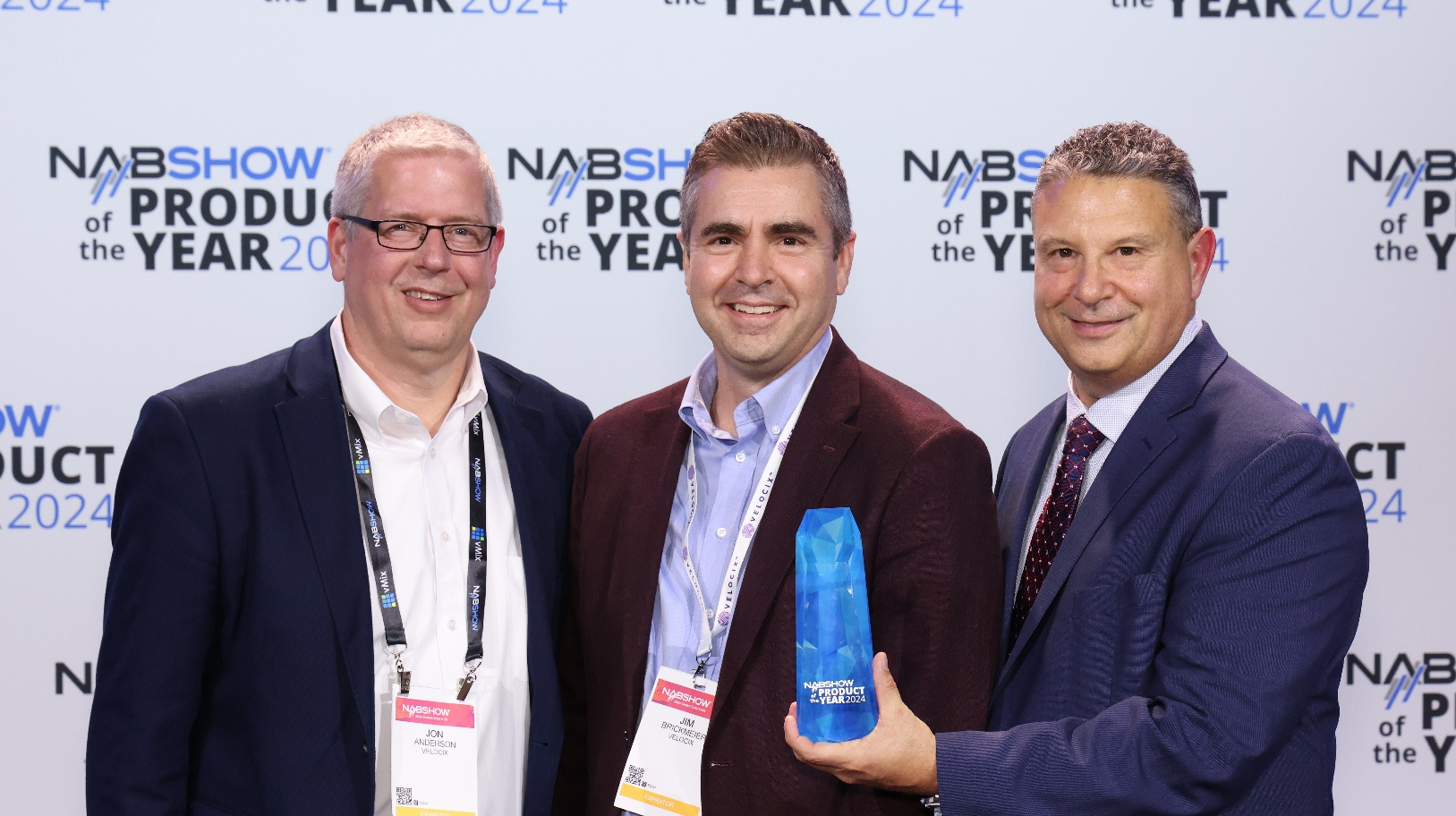
The accumulated expertise has earned some hardware for the trophy shelf. Its network DVR lineage includes Thirdspace, named among the 2013 Technology & Engineering Emmy recipients. More recently, its Hybrid-cloud CDN won a Streaming-category NAB Show Product of the Year award in 2024. Awards are evidence of recognition; the deployments tell a buyer more about the work.
Control is the new calling card
Patrick Ferguson’s appointment as CEO was announced in July 2026. In August he described weeks spent listening to employees, customers and partners. His account emphasised technical knowledge and established relationships. That is a statement of leadership priorities, rather than a window into every employee’s working day. It suits a business whose software must remain useful through years of changes in a customer’s network.

On September 7, Velocix announced a new visual identity and an upcoming IBC showcase. The refreshed message centres on operator control across infrastructure and commercial decisions. The brand announcement is a useful marker of direction, but it is not a performance result. A new colour palette cannot rescue a congested stream.
Nor does Velocix own the hybrid idea. Broadpeak also offers mixed cloud and on-premises deployment, alongside other video infrastructure specialists such as Vecima. Velocix’s case rests on its particular combination of delivery, recording, personalisation and operational experience. Buyers should compare that combination against their own network and integration requirements.
The lesson to copy is to examine the workload before choosing its home. Test capacity, recording behaviour and failure recovery against real operating conditions. An operator with sustained local demand has different economics from a small service with scattered viewers. Hybrid delivery adds coordination work, so the savings have to justify it. When the match starts, the useful architecture is the one the team can run and the business can afford.
Follow the signal
Velocix website · LinkedIn · X · Product guides · Latest company news
WATCH & EXPLORE
TELUS explains its hybrid-cloud strategy
Streaming, security and cloud DVR webinars
Arrange a product demonstration