Seven television channels should not sound like a crisis. Yet in a case study published by Corpus, seven live streams had become precisely that: viewers could not reliably watch on a web portal because traffic gathered at one point and congested the internet link. The channels existed. The encoder existed. The streaming software existed. The route out was the problem.
- Corpus supplies the software and integration behind operator-branded IPTV and OTT services.
- Its customers own networks and subscriber relationships; Corpus connects the video machinery.
- Reusable components meet customised devices, interfaces and existing infrastructure.
- A rural-service pilot now tests those integration skills beyond entertainment.
Seven channels, one crowded exit
Corpus proposed changing where the work happened. An origin server would feed copies of the channels to distributed edge servers. Those edges, placed near subscribers in telecom operators’ premises, would cache and serve the streams locally. Instead of making the original connection carry every viewer’s demand, the design moved repeated delivery closer to the audience.
Under the case study’s stated assumptions, seven channels encoded at two megabits per second needed fourteen megabits per second of upstream bandwidth per edge. That figure describes a proposed configuration, not a universal performance guarantee. Its appeal is nevertheless easy to grasp. The programme stays the same; the number of expensive journeys it makes changes.
This small engineering problem is a useful entrance to Corpus Enterprises Private. The company operates in a part of television most viewers never meet: the arrangements that make a programme arrive, recognise a subscriber, respect the content owner’s rules and appear on the right screen. When these arrangements cooperate, nobody admires them. People simply watch television.
The app is the shop window
Corpus’s Video Corpus platform brings together content management, video processing, encryption, distribution, audience analytics and subscriber operations. IPTV delivers television through an operator’s IP network; OTT reaches viewers over internet connections. Corpus works across both. Its customer is typically the organisation selling the service, rather than the person hunting for the remote.
For an internet provider, this is a way to add television to the connection it already supplies. For a cable operator, it is a route to serving additional screens. For a content owner, it can be the infrastructure for a branded viewing service. Corpus’s solutions material also describes bundled plans and a single bill across services. A household buys convenience; the operator has to manufacture it.
The customer-facing layer includes white-label applications and Android TV launchers. Corpus describes support for AOSP and Android TV set-top boxes, while its wider app offering covers devices including phones, browsers and smart TVs. Behind the menus sit less photogenic products: a subscriber-management system, a customer payment portal and tools that measure viewing by user and device.
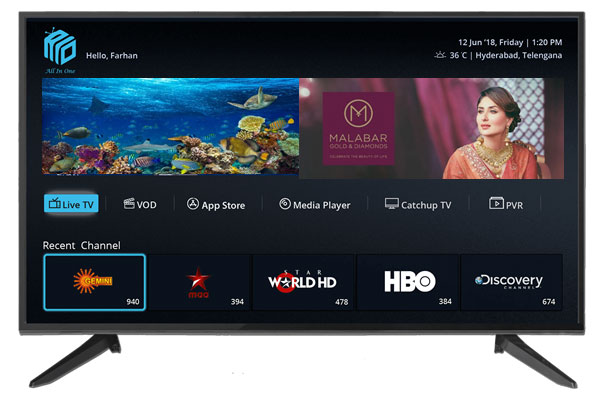
The difference from buying an app-development project alone is the breadth of responsibility. An attractive menu cannot authenticate a subscriber by itself. Nor can it settle a partner’s revenue share or make an incompatible set-top box behave. Corpus’s proposition is to connect those jobs, with its own software and components supplied by other vendors.
A business built at the joins
The company dates its beginnings to 1999. Its management page identifies founder Sachin Tummala as a technology specialist who worked at Silicon Graphics and Imation before serving as a financial consultant at Lucent Technologies. It also records an Executive MBA from SMU’s Cox School. The combination is apt for a business in which technical choices and commercial arrangements keep interrupting each other.
By October 2009, Corpus Media Labs had announced selection for OpenTV’s System Integrator Partner Program. The arrangement offered integration access to middleware and early visibility into its development plans. That is a revealing kind of advantage: familiarity with another company’s machinery can be as useful as owning more machinery yourself.
“Frameworks driven execution.”
Corpus’s description of its approach
Corpus’s stated method is to reuse frameworks rather than restart each assignment from a blank page. Its value-proposition material describes reusable tools and resources, alongside experience with vendors including Envivio, Elemental and Akamai. The logic is straightforward: retain the parts that recur, then spend engineering effort where the customer’s network or business differs.
Its integration services extend from design and component evaluation through deployment, testing, acceptance and training. The engineering detail is unusually tangible. Corpus discusses fitting middleware to the chipset, memory and graphics capabilities of set-top boxes. Its careers page asks for embedded-software skills, Java and Android knowledge, plus QA automation. This is a business where the box under the television still matters.
A 2017 project with Conax offers a concrete example. Indian operator Triple Play selected cloud-based multi-DRM security combined with Corpus middleware, with Corpus handling integration. Conax’s announcement described it as the first joint deployment and the first Indian launch of its cloud multi-DRM platform. The point was to make secure multiscreen delivery easier to adopt and expand.
Who pays for the moving parts?
Corpus combines enterprise software with engineering and integration work. Its public company description also points to revenue-share and joint-venture models. That makes the commercial relationship more varied than a standard app subscription: supplying a platform, making it work and participating in the resulting services can be different parts of the same proposition.
In December 2019, Corpus announced a deployment at GTel, or Gigantic Infotel, and reported that its service-delivery platform reached more than one million subscribers globally. In April 2020, it announced Video Corpus at Pioneer Online, allowing the ISP to add live television and on-demand viewing over its existing broadband network. These are dated company reports, useful evidence of deployments rather than a current subscriber census.
The Asianet Digital announcement in July 2021 described integrating existing video infrastructure with linear television, OTT platforms and device apps. Later that year, AIO Smart TV extended the bundle to smart televisions and local franchises. Corpus advertised monthly service subscriptions from ₹400 to ₹1,500. Those historical consumer prices belong to the bundle; they do not reveal what an operator paid Corpus for software or integration.
The distinction matters whenever a platform story becomes a growth story. Corpus’s public releases set much larger household ambitions. A target is a statement about what management hopes to deliver. It should not be slipped into the column reserved for customers already served. Likewise, a cheap monthly bundle tells us little about content rights, equipment, support or the economics of an individual contract.
The television company goes to the village
In October 2025, India’s Ministry of Communications named Corpus as the implementation partner for the Samriddh Gram pilot at Narakoduru in Andhra Pradesh. The programme uses BharatNet connectivity and physical service centres to bring digital services closer to rural residents. Education, healthcare, agriculture, government access and financial inclusion sit within its intended remit.
On June 6, 2026, Akashvani reported the inauguration of Narakoduru’s Samriddhi Kendram. The report put its cost at ₹1.16 crore and described eleven service sectors under one roof, including health screening, telemedicine, soil testing, skills programmes, high-speed internet and free Wi-Fi. That is the reported cost of the centre, not Corpus’s contract value or revenue.
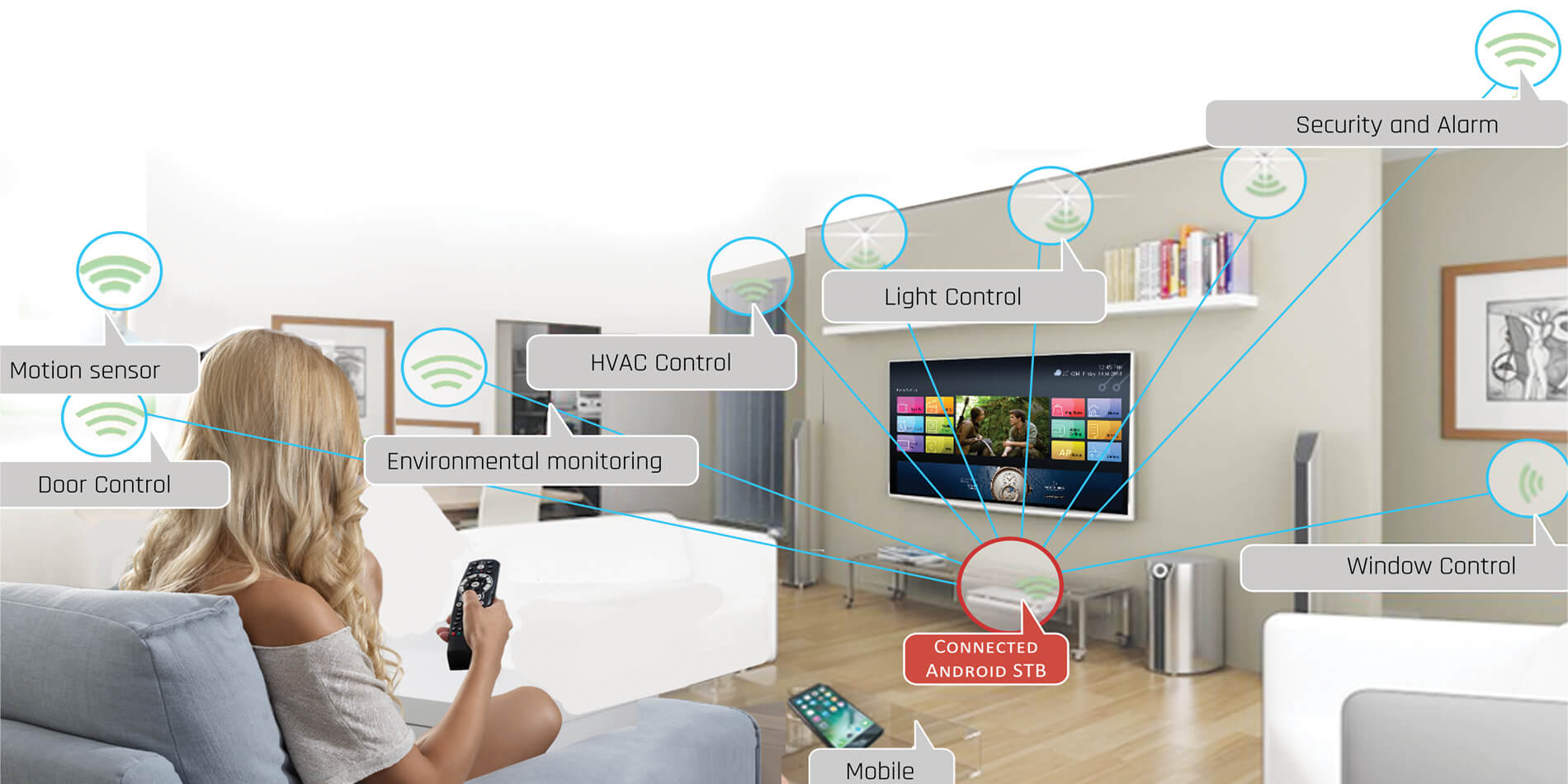
The connection with Corpus’s television work is an analytical one: both assignments require separate services to meet at a usable access point. A video platform connects rights, networks and devices. A village centre adds physical assistance and local operations to digital access. The latter cannot be reduced to a streaming-software deployment, but the habit of integration carries across.
Move the traffic. Keep the lesson.
For operators considering Corpus, the practical question is where their complexity lives. If it sits across billing, content security, device behaviour and network delivery, a platform with integration responsibility deserves a look. If the need is a narrowly defined application, the same breadth may be unnecessary. The alternative is to assemble specialist vendors and carry responsibility for the connections between them.
The seven-channel proposal offers a lesson readers can copy: map the repeated journeys before expanding the central connection. Local caching is attractive when viewers cluster around reachable operator edges. Its usefulness depends on that geography, adequate edge capacity and the actual mix of video profiles. More encodings require more bandwidth; placing servers badly can leave the original congestion unsolved.
The broader lesson is equally practical. Reuse what repeats, test what varies and be explicit about who owns each dependency. That advice travels beyond television. Corpus’s story is interesting because its product is often the relationship between products. The viewer sees a play button. The operator has to make an entire chain of decisions agree with it.
Follow the work
Explore the platform, published projects and company updates.