The most revealing thing in a factory may be the drawing that no longer quite describes it. A pipe has moved. A motor has been replaced. The person who remembers why is on another shift. The machinery is physical; the knowledge needed to run it is scattered among files, screens and people. VB Group has built its business around bringing those pieces together.
- Engineering first: electrical studies, plant scanning and drawings establish the physical baseline.
- Software next: Wistwin connects asset information with live data and operational analysis.
- People included: AI vigilance, workforce systems and VR training address the work around the machines.
That sequence explains this Hyderabad company better than the fashionable words surrounding it. Digital twin. Industry 4.0. Metaverse. Each can sound like a substantial purchase in search of a practical purpose. VB’s proposition is easier to grasp when approached from the other end: a plant team needs to understand an asset, make a decision about it, and carry out the work.
The drawing has to earn your trust
VB’s engineering practice began in 2014. The group identifies Dr. Maruthi Kasyap GNV as its founder, chief executive and managing director. Its initial work included power-system engineering and arc-flash studies. These are close to the equipment and its consequences: what an electrical network can withstand, how its protection behaves, and where work presents hazards.

Today, VB Engineering’s practice extends to scanning, piping and layout work, electrical assessments and engineering support for existing industrial sites. Its method describes a verification chain in which deliverables are versioned and connected to the engineer responsible for them. This is an unusually revealing place for a software story to begin. A model acquires value when someone can explain where its information came from.
The engineering wing’s published heritage places the expansion of its LiDAR and as-built practice in 2020. Laser scanning supplies a record of physical geometry; the engineering work turns that record into useful drawings and models. The distinction matters. Capturing a plant and understanding a plant are separate jobs, even when the finished screen makes them look delightfully inseparable.
“Software should obey the plant. Not the other way around.”VB Group’s published principles
That principle also describes VB’s commercial positioning. It brings field engineering into the same group as operational software and immersive content. A buyer could assemble those capabilities from several specialists. VB offers a route through them under one group, with engineering knowledge carried forward into the later work.
A twin with somewhere to go
Wistwin is the centre of that argument. Its published architecture starts with an asset register, adds telemetry and a spatial model, then builds operational intelligence and reporting above them. The point is to connect the identity of a machine, its position and its changing condition. A beautifully drawn pump is pleasant to inspect. A pump linked to a maintenance decision has an operational job.
The platform also reports 12,547 twinned assets. Company-reported operating figures, as published in 2026.
Wistwin presents functions for prediction, energy analysis and environmental reporting. Its buyers include plant leadership and operations teams. The broader group serves sectors such as refining, metals, pharmaceuticals and manufacturing. VB Engineering lists companies including Bayer, Pfizer, Tata and JSW among selected clients; that does not imply every client buys every platform.
- 01EstablishDrawings + asset identity
- 02ConnectEquipment + telemetry
- 03InterpretModel + operating context
- 04ActMaintenance + follow-up
The other digital products cover adjacent problems. Vijai applies computer vision to existing CCTV for industrial vigilance. Zentry handles access and workforce governance. Forgecore focuses on contract workers and Indian industrial compliance workflows. They reach different desks: safety, security, administration, HR and finance. The portfolio recognises that a factory’s information problem extends beyond equipment.
For a buyer, the breadth creates a useful possibility and a scoping obligation. An equipment-health project, a gatepass system and an operator-training programme have different owners and acceptance criteria. Putting them in one portfolio does not make them one purchasing decision. The practical question remains pleasantly unglamorous: which problem is worth solving first?
The headset returns to earth
Drona, VB’s VR training platform, provides perhaps the easiest answer to picture. An operator rehearses a procedure in a headset before performing it on equipment. Its library includes electrical safety, cleanroom operations, confined-space work and other industrial tasks. The company positions the product around environmental, health and safety expertise, with scenarios adapted to the customer’s standard operating procedures.
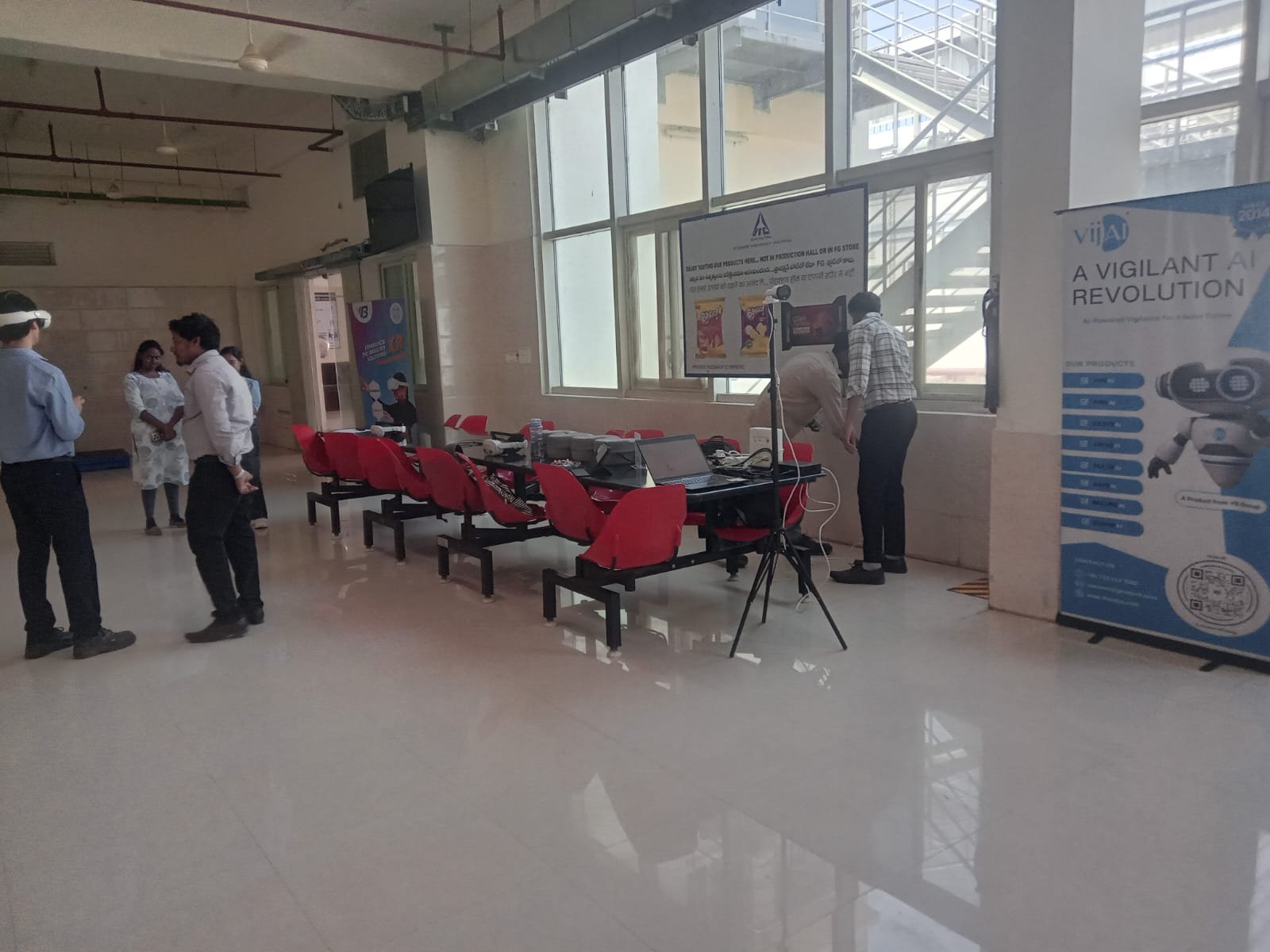
The delivery details are more instructive than the futuristic packaging. Drona’s offline documentation says scenarios execute locally on supported headsets, with learner records synchronised when a connection returns. Initial downloads and subsequent updates still need connectivity. Permanently losing a device before synchronisation can affect its unsynchronised session records.
Live supervision introduces another condition. Trainer Cast View lets an instructor see a learner’s view and intervene during practice, but that feature requires connectivity. A plant can therefore choose disconnected rehearsal or connected observation according to the task. “Works offline” should prompt a conversation about which functions work offline, where records live, and when they become visible to a supervisor.
This is where training software becomes interesting to people who will never wear the headset. The training manager wants evidence of the procedure performed. The IT team wants a workable deployment. The operator wants a scenario that resembles the job. A purchase must satisfy all three. Drona names STRIVR, Pixaera and Immerse as alternatives in the wider VR training market; VB’s own positioning emphasises industrial procedure knowledge and local execution.
What the budget buys
Drona’s published pricing makes the discussion unusually concrete. Its indicative pilot range is US$14,000–30,000, or ₹12–25 lakh, for a year-one engagement. The described scope includes two to four customised scenarios and four to eight headsets. A fuller single-plant programme is listed at US$42,000–95,000, or ₹35–80 lakh. These are vendor proposal ranges, rather than prices paid by a named customer.
2–4 scenarios
4–8 headsets
Fuller curriculum
Scope calibrated per plant
The same page says annual content and support typically run at 25–35% of the year-one engagement. It gives the pilot eight to twelve weeks to first session and describes a longer rollout for the plant tier. Geography, languages, scenario complexity and hardware count affect the quote. Buyers should budget for the content’s continuing relationship with the real procedure, as well as the hardware on the table.
That reveals the business model: engineering work and tailored enterprise delivery alongside software, licensing and ongoing support. The company operates across the boundary between a services firm and a software vendor. Customisation helps the product fit the plant; it also makes the site’s particulars part of the commercial scope.
Start with one useful decision
Wistwin’s smart factory programme offers a staged path: an energy baseline, a connectivity assessment, then a single production line made live. The published sequence is a useful buying discipline. Establish what exists, discover what can be connected, and create a reference before expanding. A company-wide ambition becomes easier to judge when one line supplies the evidence.
The lesson a reader can borrow is equally specific. Choose a machine, a procedure or an access workflow. Name the person who will act on the information. Agree on the baseline and the result that would justify further spending. A twin without reliable input cannot tell a reliable story; a training scenario built around an obsolete procedure rehearses the wrong work. These are conditions to settle during scoping.
VB Group’s most distinctive proposition is that engineering information should survive its original assignment. A drawing can support a model. A model can give an operating team context. That same industrial knowledge can inform a rehearsal. The company’s appeal rests on keeping those connections useful as the plant changes. The factory already has a history. VB is selling it a way to remember.
VB Group · Portfolio · Company story · Drona demonstrations · Drona Cleanroom on Meta Quest
LinkedIn · X · Instagram · Facebook · VB Engineering on YouTube