The first important promotion in Valerie Stachurski’s career did not come with the usual script. She had entered Lucreative Media as a freelance writer, helping a Toronto marketing agency with search-oriented copy. Then the company asked her to become a partner. Not an employee. A partner. Years later, when asked for the milestone she remembered most, that was the one she chose.
The distinction explains a lot. Writing asks for attention to a sentence. Partnership asks for attention to the outcome. Stachurski’s career has been a long conversion of the first discipline into the second: words into strategy, taste into trust, campaigns into business decisions. She would go on to found an agency, direct a rebrand, move into technology, and become Chief Marketing Officer at RxPx. But the earliest version of the operating system was already there. Make the idea clear. Take responsibility for where it goes next.
The apprenticeship hiding inside the writing job
Stachurski studied English at Carleton University, where her activities included the Ottawa Literary Society. Her early publication credits included lifestyle writing and an entertainment contribution about The Wire. The degree and bylines were not ornamental details. They trained the work she would keep doing under different names: finding the point, understanding an audience, deciding what belongs, and cutting what does not.
At Lucreative Media, that editorial base expanded quickly. Her remit covered social media, online content and communications. The agency also worked on web design and search. She was learning the full route a message takes, from a blank document to a search result to a person’s screen. In a 2012 interview, she said she had moved to Toronto without knowing exactly where she would end up. The uncertainty did not disappear. It became useful. It kept her close to the work and open to the next form it might take.
“Happiness and satisfaction in the work I do everyday … and a Louis Vuitton purse.”Valerie Stachurski on success, 2012
That answer still works because it refuses the costume of solemn ambition. Stachurski could talk about gratitude, self-respect and integrity, then land the thought with a handbag. The joke is not an escape from seriousness. It is a communication choice. People remember an idea when it arrives with a human edge.
The founder chapter
In 2012, Stachurski founded Charming Media, a Toronto public relations and social media agency. Its client work reached across fashion, beauty and lifestyle brands, including international names entering the Canadian market. Founding the agency turned communications into a daily exercise in judgment. A client does not only need coverage. A client needs to know what to say, where to say it, which opportunity fits, and which fashionable distraction to ignore.
By 2018, she had repositioned Charming Media around green beauty and wellness brands. She explained the move through her own changing consumer habits: reading labels, looking for cruelty-free products, and paying closer attention to the values behind a purchase. The business shift was specific. The larger principle was broader. If a brand makes an ethical promise, the operations have to carry the cost of that promise. She later put it plainly: ethical marketing can mean choosing the slower, more expensive route.
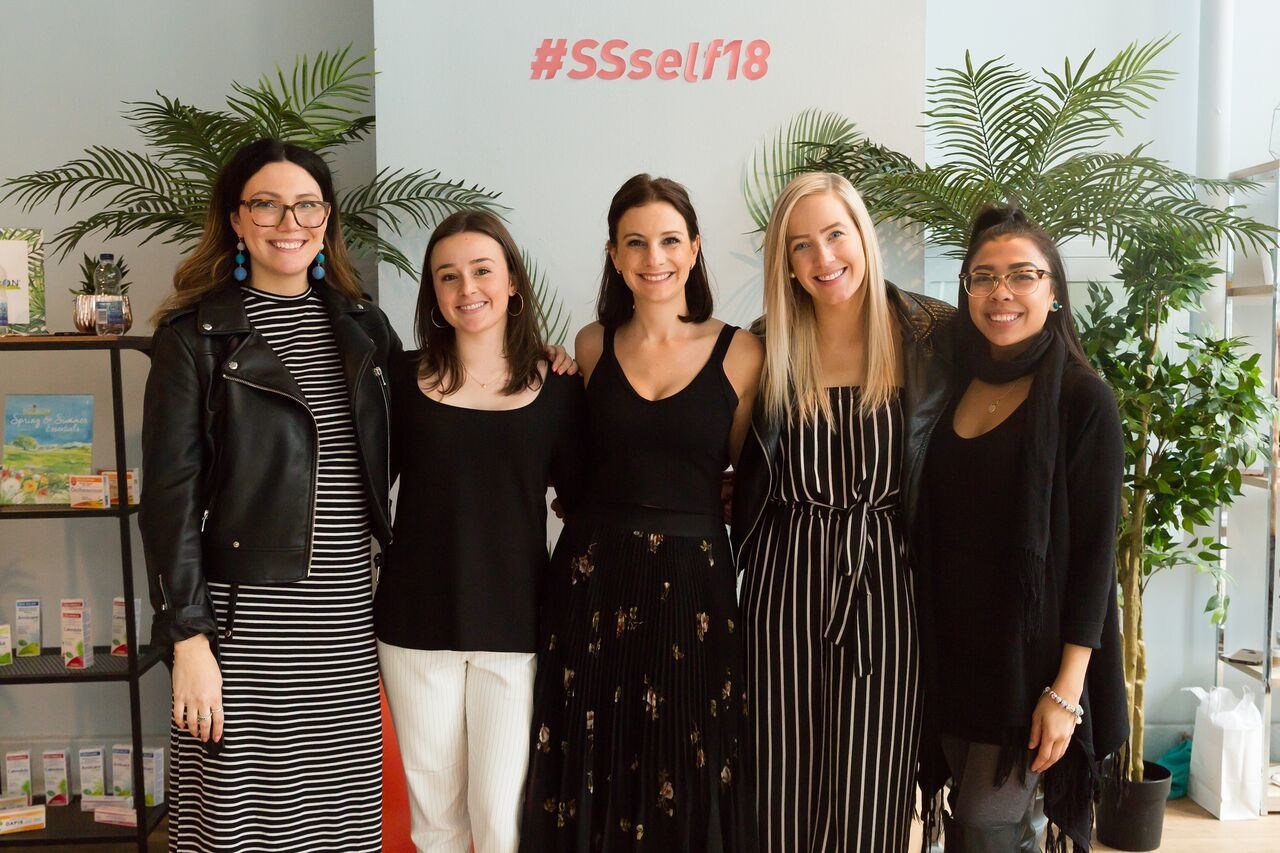
The agency years also made her a node in Toronto’s creative network. When publicist Amira de Vera reflected on mentors who had supported her growth, Stachurski was one of two women she named. It is a small connection, but a revealing one. Marketing careers are often narrated through campaigns and clients. Their less visible output is confidence transferred between people.
Giving the work room to breathe
When Stachurski later led marketing at Curatio, a design studio described the working relationship in unusually candid terms. Her enthusiasm and trust, it said, gave the creative team freedom to explore. The collaboration produced a new palette, typography, icon and website. The compliment matters because creative freedom is frequently praised in retrospect and rationed in practice.
Good creative leadership is not passive. It requires a sharp brief, a defined problem and the restraint to avoid editing merely to demonstrate involvement. Trust shortens the distance between a specialist’s judgment and the final work. Stachurski’s collaborator remembered the conditions she created, not a clever line from a meeting. That may be the more durable brand contribution.
“A commitment to ethical marketing means a commitment to spending the money and time to adhere to the principles you’re touting.”Valerie Stachurski
A larger room, a tighter message
The move from consumer PR to digital health changed the context. It did not erase the method. At Curatio and then RxPx, Stachurski entered a market where products, buyers and rules are complex. The job of marketing is not to flatten that complexity into slogans. It is to make the relevant part intelligible to each audience without losing precision.
Her progression inside RxPx can be read through her titles: Director of Marketing, General Manager of Marketing, then Chief Marketing Officer. By 2024 she was speaking at DigiPharma Connect about AI, content generation, predictive analysis and ethical practice. In 2025, Swaay.Health named her Marketer of the Year in the Health IT category. The award recognized a body of work. Her public comments reveal the operating choices underneath it.
On The Healthtech Marketing Show, Stachurski described LinkedIn as the channel producing the company’s lowest cost per lead and highest volume of marketing-qualified leads. She said it accounted for 85 percent of her paid digital budget. Those numbers are useful, but the transferable insight is not “spend on LinkedIn.” It is to locate the place where an audience is already thinking professionally, build an always-on presence, personalize the creative, and judge the channel by business movement rather than applause.
There is an appealing loop here. The freelance SEO writer learned to meet people where they were searching. The agency founder learned to connect narrative with reputation. The CMO applies both instincts to a narrower audience with a longer buying cycle. Channels changed. Editorial judgment compounded.
The useful part is the sequence
Career stories are often edited backward. Once somebody reaches the executive floor, every earlier job begins to look like an intentional step toward it. Stachurski’s public account is messier and more instructive. She moved to Toronto without a settled destination. She took freelance work. She grew inside a small company, tested ownership, built another company, and changed sectors. The path makes sense because the capabilities accumulated, not because every title had been plotted in advance.
That sequence offers a practical model for creative people who want operating responsibility. First, become dependable at the craft. Then learn the system surrounding the craft: the client conversation, the deadline, the distribution channel, the budget and the handoff. Next, accept responsibility for a result that cannot be explained away by the quality of your individual contribution. Finally, keep enough contact with the original craft to know when a strategy will survive its translation into actual words and images.
Stachurski’s career also resists a familiar false choice between brand and performance. Her agency work made brand tangible through events, relationships and visual identity. Her recent public comments are comfortable with cost per lead, qualified demand and budget allocation. The two modes reinforce each other. A recognizable point of view makes a campaign easier to notice. Performance data shows whether recognition reached the right people. Brand without feedback can become self-regard. Performance without a brand can become an auction for increasingly expensive clicks.
The bridge is editorial: a clear promise, repeated with enough variation to remain interesting and enough consistency to remain recognizable. It is less glamorous than a reinvention. It is also easier to carry from one market to another.
Integrity as a career technology
Stachurski’s early interview contained a sharper piece of advice than the usual young-professional script. If a workplace strips away self-respect, she said, leave. Less money and happier work can be the better bargain. She defined a notable life as advancing while maintaining personal integrity and treating others with respect.
It is tempting to file those lines under youthful conviction, something said before budgets and executive tradeoffs complicate the page. Her later work suggests continuity. The ethical-marketing argument, the trust remembered by collaborators, the public enthusiasm for colleagues, and the focus on human language all point in the same direction. Integrity, in this career, is not a framed value. It is a constraint that shapes how the work gets made.
Today Stachurski’s public role spans brand, content, paid media, partnerships and company narrative. In 2025 she appeared on a marketing podcast to turn campaign experience into tactics others could use. In 2026 she was sharing RxPx research intended to benchmark the pressures facing pharma brand teams. The movement is from telling one company’s story toward helping define the questions an industry asks.
The clean version of her career fits inside four titles: writer, partner, founder, CMO. The more useful version is a set of practices. Start close to the sentence. Learn how the sentence travels. Own the result. Give talented people enough clarity and trust to improve it. Measure the behavior that follows. Keep the joke that makes the idea stick.
A writing career did not sit behind Stachurski’s operating career like an abandoned first draft. It became the machinery inside it. That is the lesson worth stealing. Clear language is not decoration added after the strategy. Used well, it is how the strategy becomes real.