At Uptech, an employee who wanted a raise once had an unusual assignment: write down the case, invite colleagues to examine it, and listen. The final decision belonged to the employee. In a business that sells other people’s judgment by the hour, this was a revealing place to put authority.
- Custom software, from customer research to launch and maintenance.
- Client work includes Dollar Shave Club, GOAT, and MicroGenDX.
- A product studio with its own ventures and a documented taste for management experiments.
The experiment tells you something about the company. Uptech’s pitch rests on people taking responsibility for an outcome. Its clients bring a missing Android app, a tangled property search, or an AI model that needs a usable interface. Uptech brings researchers, designers, and engineers to figure out what should happen next.
A different kind of permission
In February 2016, Andrii Bas and Dmytro Kovalenko left their jobs and started Uptech. Both were 21. Their initial investment was $2,000; their first office was the apartment where they lived. A project arrived through friends in the United States. Bas later wrote that the first three years were financed through the company’s own cash flow.
The founders disliked the working environment they had encountered in Ukrainian outsourcing. By autumn 2016, with almost 20 people, they needed more structure. Frederic Laloux’s Reinventing Organizations gave them a vocabulary for self-management. They borrowed practices and revised them as the team grew.
The pay system, introduced in January 2017, required a written proposal and peer advice. One early casualty was discretionary bonuses: once responsibility for awarding them shifted to the team, nobody gave them. Freedom had left a task without an owner. That admission is more useful than a polished culture slogan.

There is a practical idea to borrow here: make responsibility visible, then build a feedback process around it. Bas identified trust, transparency, management support, and personal accountability as prerequisites. A team unable to discuss performance honestly would struggle with the arrangement. The current careers page still emphasizes autonomy and reserves up to 10% of work time for learning or side projects.
A razor subscription, made usable
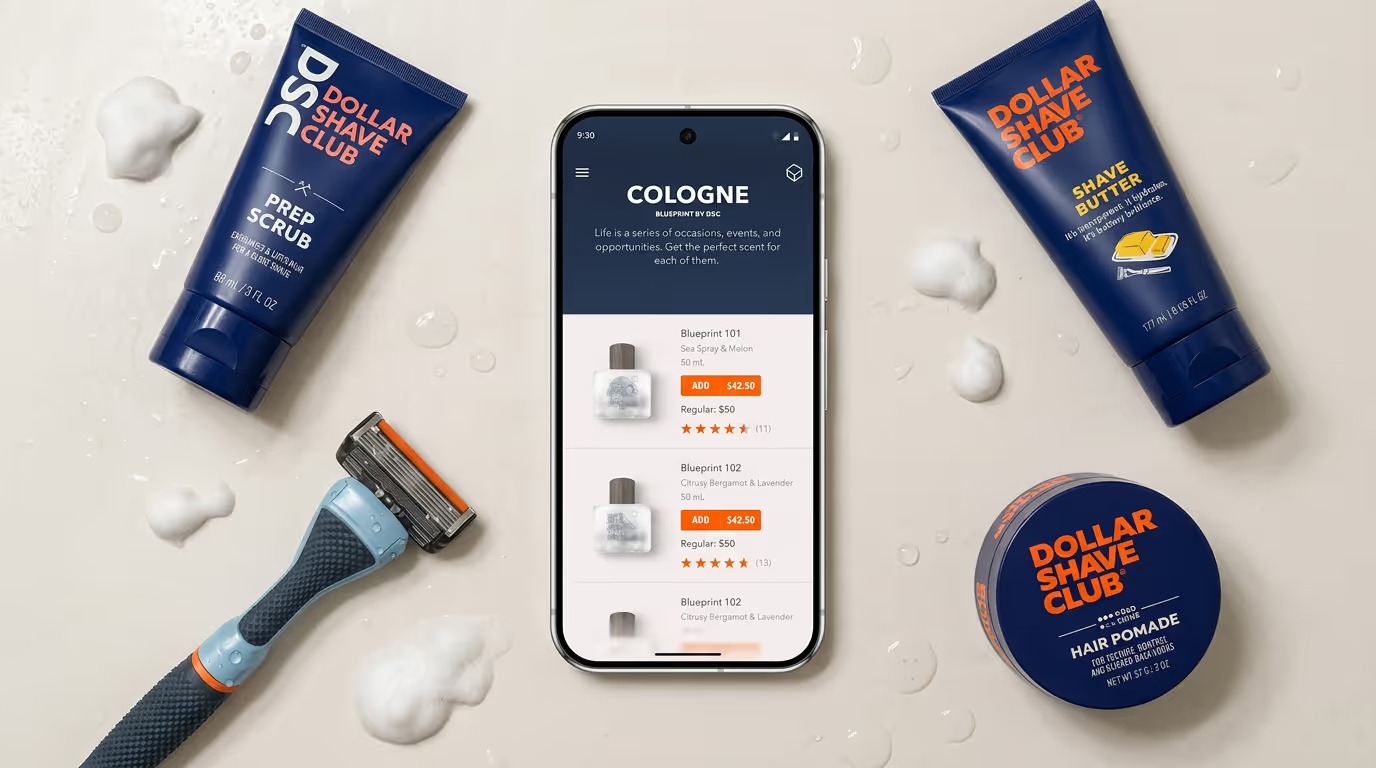
Consider Dollar Shave Club. The problem described in Uptech’s case study was wonderfully unglamorous: the grooming subscription business had an iOS app, while Android customers lacked a dedicated equivalent. A growing business had left a group of customers outside its mobile experience.
Uptech built the Android application with a team of two to four people. Members could change deliveries, manage subscriptions, buy products, and adjust their accounts. The team added analytics and support for experiments, coordinating releases with marketing. It continued maintaining the application after Unilever acquired the business.
GOAT presented a different kind of pressure. Uptech supported buyer-facing iOS and Android development for the retail platform, including work around high-traffic events. A launch can look finished in a quiet testing environment. A shopping event asks whether the same product can cope when everyone arrives together.
“We’re impressed with Uptech’s commitment to the product’s success.”Chris To, SVP of technology, GOAT
The work before the work
For Nomad, a UAE property platform, the uncertainty began earlier. House hunting meant scattered listings, inconsistent communication, and difficult comparisons. Before those problems could become screens, someone had to understand how people actually searched.
Uptech describes dozens of interviews and a shared workflow involving product, design, and development. Discovery continued alongside implementation. Search, maps, saved properties, and viewing requests served the central journey; less essential features waited. The lesson for a founder commissioning software is concrete: agree on the decision a user needs to make before debating the size of the feature list.
- 01Interview
- 02Prioritize
- 03Build
- 04Revisit
Research continues while the product takes shape.
The same concern appears in Angler AI. Its models could identify promising customer audiences. Uptech helped build a web platform that let marketers generate those audiences, send them to advertising platforms, and review campaign performance. The engineering connected a prediction to something a customer could do on a Tuesday morning.
Experiments with a customer attached
Uptech also works on its own ideas. Labs lists Plai, a people-management platform; Dyvo.ai, an image tool; and Natively, which turns websites into mobile applications. Then there is StartupBlowUp, a website offering random reasons startups fail. A development company making a toy about failure has at least found a productive outlet for professional anxiety.
These projects give substance to its product-minded positioning, although a portfolio alone cannot establish commercial success. The range also helps explain a company comfortable moving between consumer experiences and business workflows. Its public GitHub organization shares mobile libraries and engineering cookbooks, putting some of that working knowledge where other developers can inspect it.

Its Ukrainian roots remain part of the story. When Uptech joined Lviv IT Cluster in October 2024, the association described support for employees and families affected by the war, alongside donations and volunteer initiatives. For an international buyer, that context belongs beside the portfolio: this is a company whose working relationships extend beyond the contract.
The price of a working partnership
Today the company emphasizes healthcare, finance, and AI. For MicroGenDX, Uptech describes separating business and consumer experiences, developing web and native mobile products, and improving the path from ordering a test to accessing results. These are connected journeys with different users and expectations.
The business model is client services: discovery, design, development, testing, and continuing engineering. Clutch lists a $25,000-plus minimum project and a $25-$49 hourly band. Those figures are buying signals, not a completed budget; scope, team composition, integrations, and ongoing support determine the bill.
Uptech fits buyers who need a team to help define and deliver a product, particularly when the brief still contains unanswered questions. That requires client participation. If every requirement is immovable, discovery has little room to change the outcome. The useful question for a prospective customer is simple: which decisions are we prepared to revisit together?