The financial advisory firm already had the impressive part: a Snowflake data lake collecting information from five core systems. Yet managers still logged into four QuickBooks entities, stitched quarterly reports together in Excel and hunted through applications before client meetings. The expensive infrastructure had arrived. The ordinary working day had barely changed.
This is a useful place to meet inVerita. Its business becomes clearer when you follow the person copying information from one screen to another. Somewhere between the database and the decision, work has become somebody’s manual responsibility. The Ukrainian engineering company gets hired to close that distance.
- What you buy: custom software, data engineering, AI integration or a dedicated development team.
- Where it concentrates: healthcare, pharmacy, finance and logistics, where systems must exchange useful information.
- What to copy: inspect the handoffs before commissioning another application.
01 The warehouse wasn’t the finish line
In the advisory project, inVerita describes four interventions: unifying accounting data, replacing a fragile quarterly report, linking new client accounts across platforms and building a Client 360 dashboard. The firm kept its existing business systems. Snowflake, AWS services and Power BI supplied the connections and reporting.
The sequence matters. The spreadsheet report was first populated automatically, then moved into a version-controlled BI report. Replacing everything at once would have been a different assignment. Here, the opportunity was to make a previous investment usable. That distinction gives a software buyer something concrete to investigate before approving another platform purchase.
What had broken was the final stretch of reporting and synchronization. What prompted the work was the accumulation of reconciliation errors, audit risk and manager time spent assembling information. The lesson is wonderfully unglamorous: a centralized database can coexist with a thoroughly decentralized mess.
“If it could be automated - it should be automated”
Mike Shevchenko · Full Stack Developer · inVerita team page
02 Follow the medicine
Healthcare supplies a more physical version of the same problem. In one published project, inVerita built four applications for a US healthcare technology company. The platform connects patient care with pharmacy operations and delivery. The patient’s medication calendar sits beside an entire chain of work that the patient should never have to supervise.
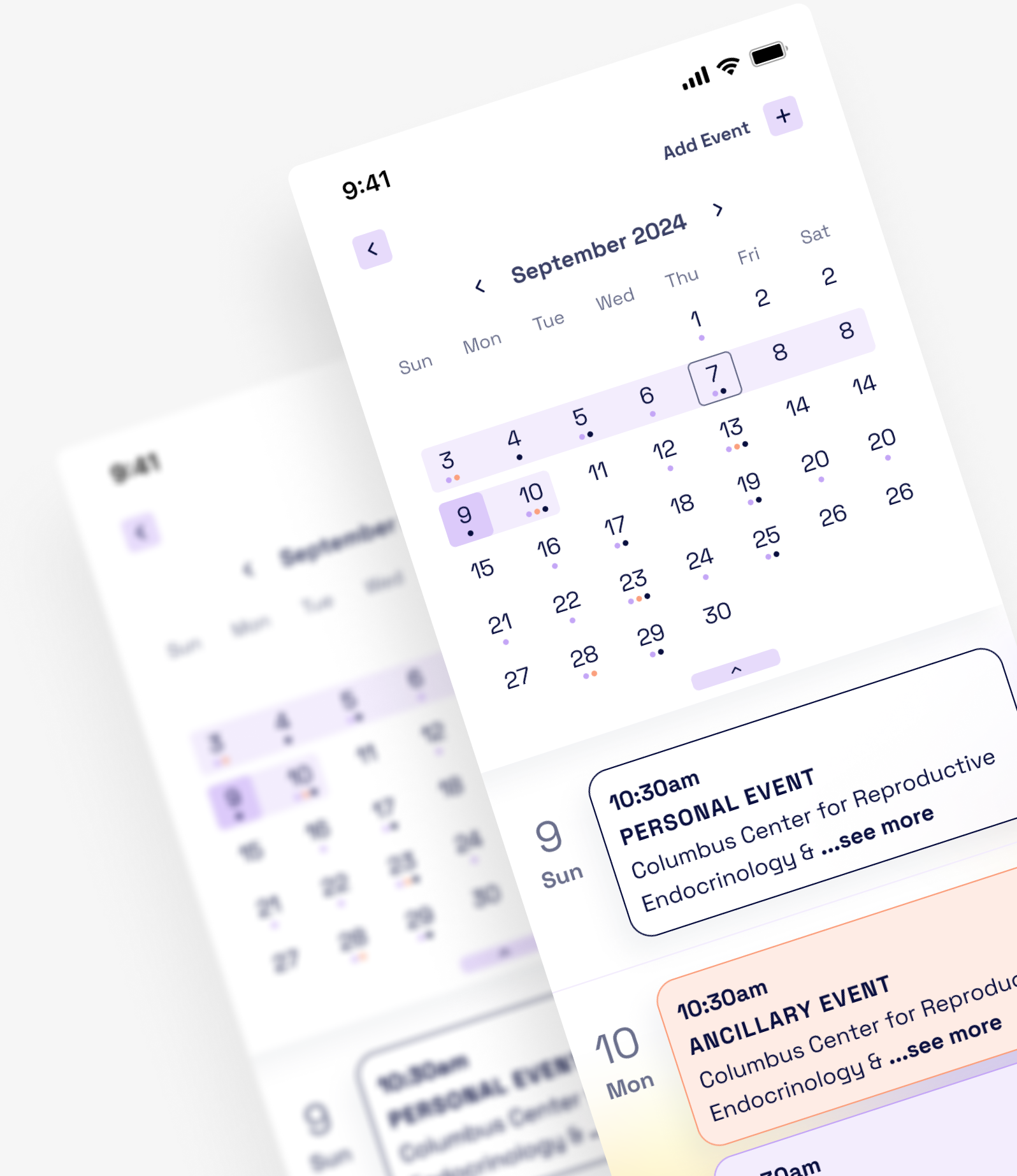
A back-office portal handles medication, treatment plans, insurance coordination and deliveries. The patient app supplies reminders. A logistics dashboard tracks shipments. A driver app handles routing and updates. The stack includes C#, .NET, Angular and React Native. The important design decision is that different people get interfaces suited to their jobs.
Connected responsibilities, rather than a chronological clinical pathway.
This is where inVerita’s specialization has substance. Its portfolio includes surgical scheduling, ventilator data and dose-controlled medication delivery. The recurring requirement is coordination across people, devices and records. Buyers evaluating the company can examine those specific workflows, then ask how the same engineering decisions would survive their own operational constraints.
03 Buying a team, buying uncertainty
Founded in 2015 by Zoryan and Orest Hudziy, inVerita combines custom engineering with staff augmentation. Zoryan is listed as CEO; Orest as COO. Its service range includes its QU’ARTE design division, quality assurance, cloud operations, data work and AI development. Clients can commission a project or add people to an existing team.

The commercial menu exposes a practical truth about software: the less certain the destination, the harder it is to price the journey. inVerita offers time-and-material billing at agreed hourly rates, monthly dedicated teams and fixed-price projects with defined requirements. Scope changes under the last arrangement can change both price and schedule.
Clutch lists a $50,000 minimum project and a $25-$49 hourly band. Treat those as directory indications. They are neither a healthcare-platform quote nor a promise about the total bill. Integration depth, team composition and continuing maintenance matter more than multiplying one attractive hourly number.
A dedicated team also leaves work with the buyer. Someone must prioritize, review progress and make decisions. inVerita’s cooperation page explicitly describes that involvement. A company without an available product owner may acquire engineering capacity faster than it can use it.
04 AI meets the existing machinery
Its current positioning puts AI beside software and data engineering. In July 2026, inVerita announced OpenAI Select Partner status; a September article described investment in Claude architecture certification. These are company announcements. The relevant buying question remains how an AI feature will connect to real records, permissions and working routines.
A separate migration case illustrates the surrounding work. Faced with an expensive, fragmented Databricks-based platform, inVerita describes a phased move to Snowflake, redesigned data handling and revised orchestration. It reports savings of up to 70% through Snowflake usage optimization. That is one reported outcome, with no basis for treating it as a forecast for another workload.
05 A company with a country in its mission
There is another distinctive detail. inVerita’s published mission names Ukraine and its representation abroad. Lviv IT Cluster described it as family-owned when it joined in 2021. Its community work includes education and sport; a January 2024 report put allocations from inVeritaSupport above UAH 12.5 million.
In the market, this places inVerita among custom engineering partners competing with internal hiring, packaged industry software and other development firms. Its case rests on domain familiarity and carrying a project across design, implementation and operations. A workflow already served well by a standard product may offer little reason to commission a bespoke replacement.
A useful comparison would start with a recent project resembling yours: the same records, similar users and comparable approval requirements. Ask who designed the interfaces, who maintained the pipelines and who handled changes after launch. A provider’s list of technologies gives you a starting point. The account of how those technologies worked together tells you considerably more. For inVerita, the connected healthcare applications and unfinished reporting workflow make that conversation possible.
The useful move to copy is smaller than a transformation programme. Find one repeated handoff. Identify who owns the record, who checks the result and where the next action stalls. The advisory firm’s spreadsheet and the patient’s delivery are different scenes with the same question: after the software finishes its part, who still has to do the work?