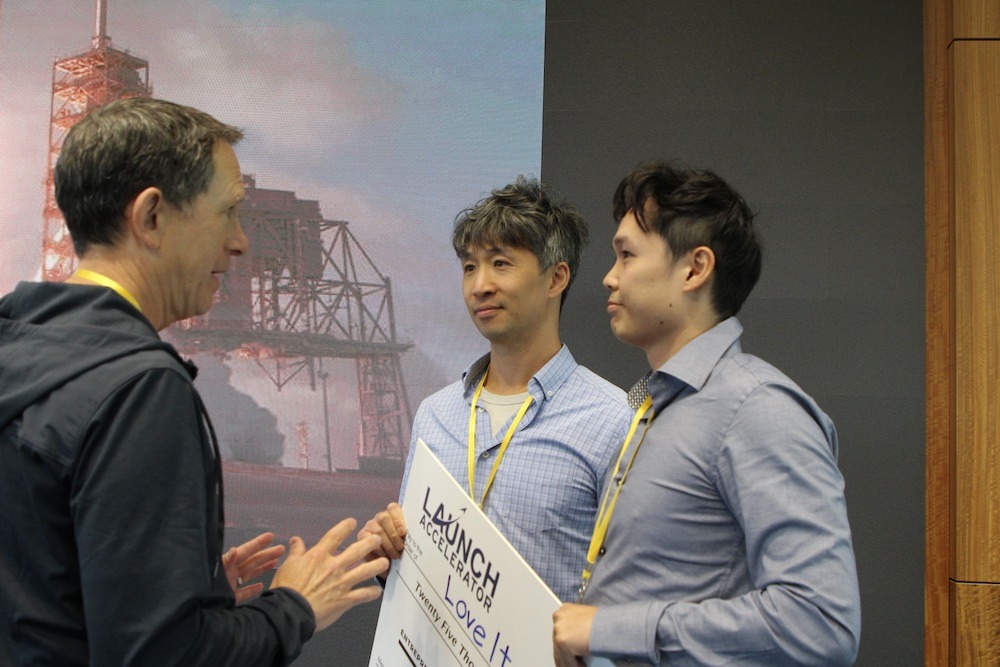
Tom Lee and Harry Jiang had an idea. Then they talked to more people. The idea did not survive. Over two months, they worked through 13 possibilities before settling on a tool to help brands understand their visibility in AI search. In April 2025, their company, LoveIt AI, won UC LAUNCH’s $25,000 first prize. The useful part of the story happens before the check: customer conversations made them abandon something they had wanted to build.
- Three months of startup training, with no program fee or equity taken.
- A UC connection and evidence of demand are the entry ticket.
- Mentors, customer discovery and a competitive Demo Day give the work a deadline.
A competition changes its own mind
LAUNCH has practiced a version of this revision itself. Its predecessor, the Haas business-plan competition, began in 1999. By 2014, the organizers were moving away from long documents toward a one-page business model canvas and a ten-slide presentation. They renamed the competition LAUNCH. The change acknowledged something awkward about a beautifully written plan: it can describe a business that nobody needs.
In 2015, the format changed again. Fifteen semifinalists received boot camps and months of coaching before the finals. Co-chair Franklin Russell explained that the accelerator was intended to help companies navigate early growth. The first version lasted four months; today’s program describes a three-month course. The prize ceremony remained, but preparation became a larger part of the product.
There is a lesson in that sequence for anyone designing startup support. A contest measures a performance on a particular evening. Coaching creates more occasions to notice a mistake and act on it. LAUNCH kept the public finish line while putting more work before the applause.
The customer gets a vote
The distinction matters because LAUNCH serves founders who have already begun testing demand. Its application FAQ names sales, letters of intent and more than 100 customer-discovery interviews as examples of evidence. Those are different kinds of signals. An interview is not a purchase order. The sensible reading is that teams must show their work, then keep investigating what the evidence means.
The curriculum uses Lean Startup methods: refine a value proposition, get a minimum viable product into customers’ hands and develop a business model that can scale. Teams also get help with intellectual property, industry connections and investor pitching. A founder may arrive wanting a better deck and discover that the customer, the product or the revenue assumption needs attention first.
Free admission. Serious homework.
The published price is unusually easy to understand: no program fee, no equity surrendered to LAUNCH. Prize money is competitive. Admission should not be mistaken for a guaranteed investment. Founders still have a company to finance and a calendar to manage.
This is a university entrepreneurship program, operated by the Berkeley Haas Entrepreneurship Program, with sponsors and resource partners. Its partners include Google Cloud, AWS, Microsoft for Startups, Carta, TriNet and Western Alliance Bank. These relationships address ordinary company needs: infrastructure, equity administration, people and banking. They make the support more practical than a sequence of inspirational talks.
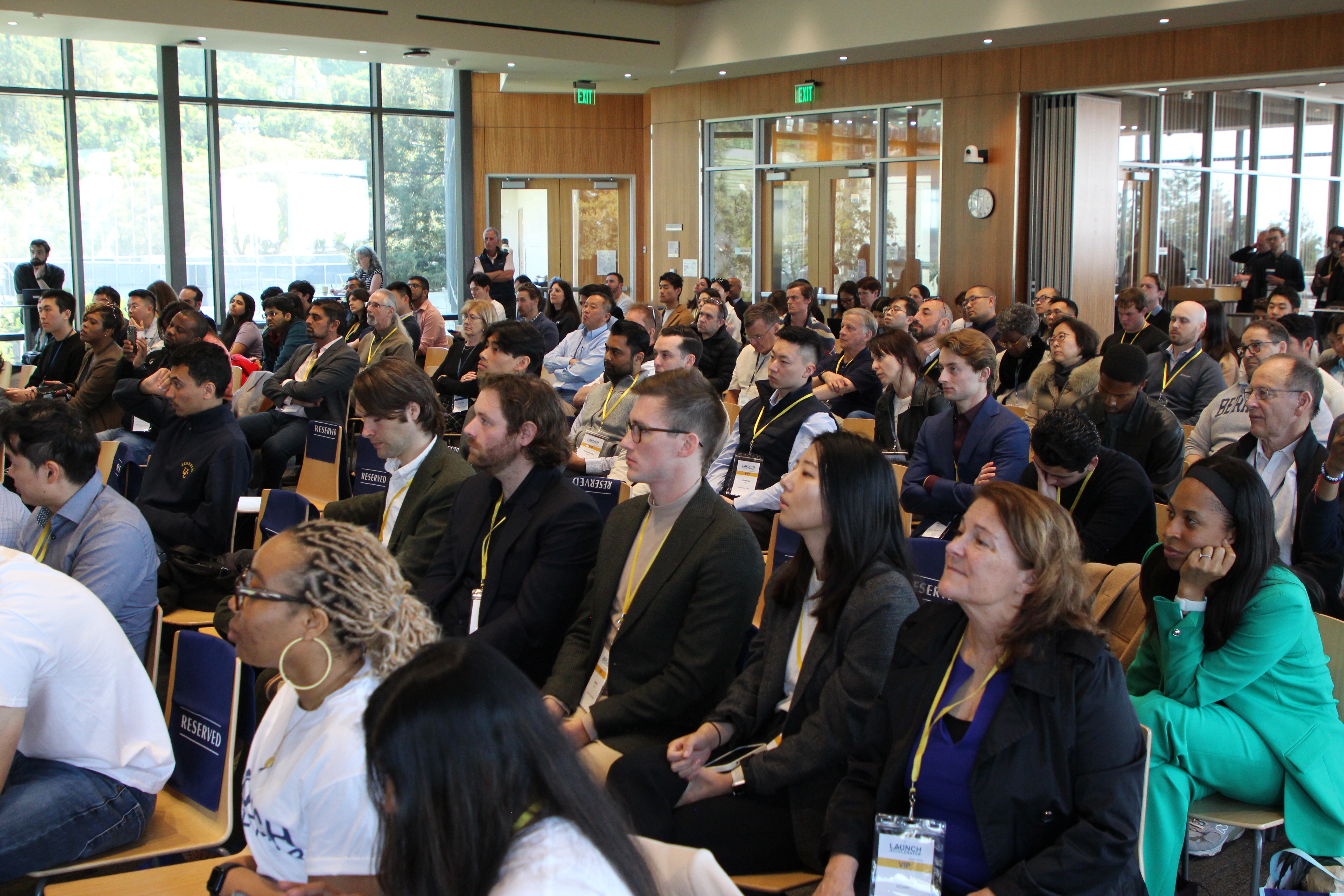
The time requirement is less optional. At least one team member must attend every session. The program runs spring and fall cohorts, generally with 15 to 25 startups. Virtual Wednesday sessions let eligible founders participate beyond Berkeley. The Fall 2026 recruitment notice explicitly reached all ten UC campuses.
The program supplies structure.
The team supplies the evidence.
The difference between program cost and company cost deserves a line in a founder’s budget. Free mentoring does not pay salaries or extend runway by itself. A competitive award might help build a prototype, but a team still needs a plan that works if another startup wins the check.
When introductions turn into something
The expertise comes from several directions. The current faculty page lists Rhonda Shrader, Apoorva Ruparel and Adeeba Fazil. Entrepreneur mentors bring operating experience; venture investors appear as judges. This puts founders in contact with people who can question both a product decision and the financing story attached to it.
Xendit, a 2015 participant, offers a concrete example. Its public testimonial says a mentor became an investor and a judge did too. That is a specific use for a network: repeated contact can turn advice into a relationship with consequences. It still requires a company somebody wants to back.
“The feedback and the tough questioning were critical.”Mark Murphy, Players’ Lounge co-founder
Players’ Lounge described another benefit. The gaming startup moved from live events to an online tournament platform, and co-founder Mark Murphy credited LAUNCH with pushing the shift. For a founder, an uncomfortable question can be worth more than an agreeable introduction.
Read the label on the billions
LAUNCH’s homepage reports more than $2.54 billion raised by its founders, over 290 accelerated companies, at least 15 acquisitions and three unicorns. Those are program-reported outcomes across alumni. The fundraising total is money raised by founders, rather than a LAUNCH investment fund. It cannot tell an applicant what their own odds will be.
The portfolio is more useful for understanding range. It includes medical companies, consumer businesses and software startups; its 2015 list contains Xendit, Ava and WeTravel. In the wider Berkeley ecosystem, StEP serves as a pre-accelerator, while SkyDeck offers a six-month accelerator. LAUNCH’s particular proposition combines a short course, UC affiliation and an explicit demand for customer evidence.
The latest named winners also keep the story grounded in individual companies. Spring 2026 results list Stork Labs Medical first, Mycsology Foods second and Offerloop.ai third. Following what those teams build next would tell an applicant more about the experience than treating a combined fundraising number as a forecast.
Bring proof. Keep some doubt.
There is a practical lesson to borrow without joining: choose an assumption, talk to prospective customers, put something testable in front of them and let the response change the next decision. Ask an experienced outsider to challenge the conclusion. Set a date for deciding what to keep. This is an editorial distillation of the method, rather than a promised formula for success.
For applicants, fit is concrete. A qualifying UC connection is required, and teams cannot have raised more than $1 million in dilutive funding. A founder without validated demand needs earlier exploration. Someone seeking guaranteed cash, unable to attend or unwilling to revise the product will find the arrangement less useful. As of October 27, Spring 2027 applications are scheduled to open in November; Fall Demo Day is advertised for December 1 at Haas.